


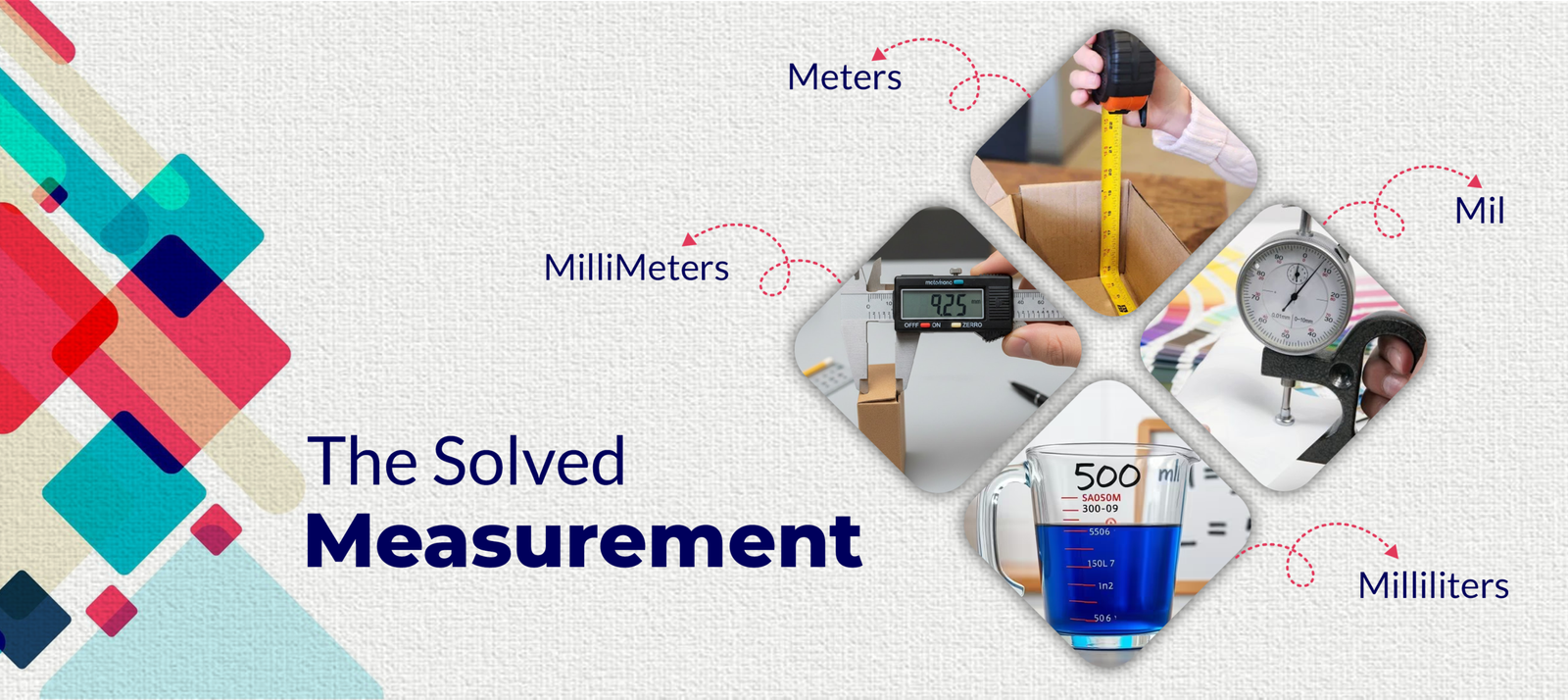
The Solved Measurement – Difference B/W M, mm, ml, and mil
Have you ever thought about drawing, a recipe, a product label and wondered what all those measurement abbreviations really mean? It doesn't matter, if you’re a packaging pro, a DIY enthusiast, or someone just trying to make sense of a spec sheet, terms like M, mm, ml, and mil can feel confusing. These terms play a crucial role in measurement for liquid and other products. To understand perfectly, you can trust our clearer insight and the right context.
At Custom Boxes Deals, we know that customizing packaging or reading engineering specifications, understanding measurement units is crucial to getting things just right. In this blog post, we’re demystifying these commonly misunderstood units. We will know how they differ, and when to use each one. Are you ready to start? Let's go!
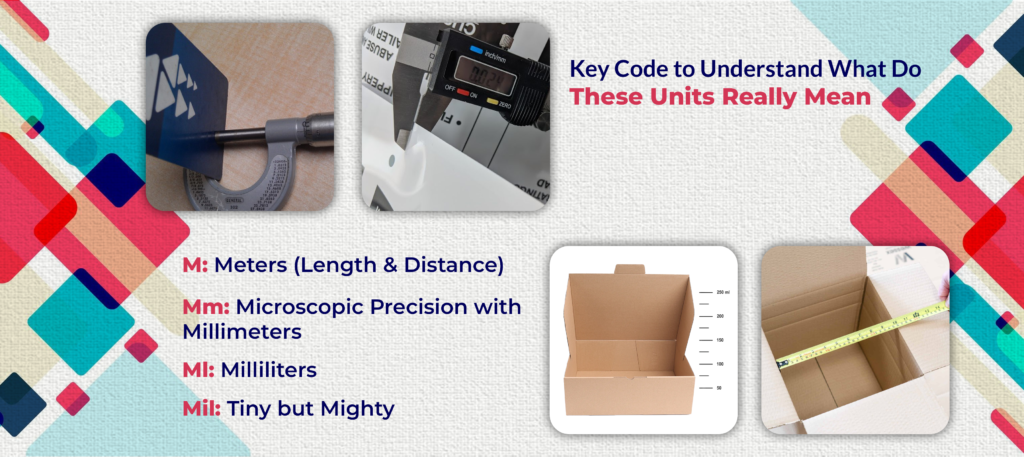
Key Code to Understand What Do These Units Really Mean
When it comes to measuring, every letter tells a story about what’s being measured. Besides this, it tells how precise the measurement is of your products. However, some units express distance while others capture volume. On the other hand other parts of the global metric system from older or regional measurement standards. You must understand these differences which helps you avoid misunderstandings especially in fields like design, manufacturing, and logistics.
As we know, length, volume, and thickness are all part of everyday decision-making, and mixing them up can lead to costly mistakes. Therefore, estimating material thickness for packaging, calculating space on a shelf is essential. This follows a recipe that calls for precise liquid amounts.
Let’s break down these four abbreviations from M (Meter), mm (Millimeter), ml (Milliliter), and mil (Thousandth of an Inch). By the end, you’ll confidently decode measurement specs like a pro.
Let’s understand them one by one:
M: Meters (Length & Distance)
When you see M which can be written like m, you’re looking at the meter. The base unit of length in the metric system is used worldwide for most scientific and daily measurements. It's a perfect option to describe large distances like the height of a box, the length of a table, or the width of a room.
Think of M as the “macro” measurement that gives you scale. If someone says a production line conveyor is 2 m long, that’s two meters and a comfortable way to picture it without squinting at decimal points. One meter equals 100 centimeters or 1,000 millimeters, which brings us neatly to our next unit.
Mm: Microscopic Precision with Millimeters
When you need to understand the abbreviation. You must know that mm stands for millimeter, a unit that is 1/1,000th of a meter. In practical terms, millimeters are ideal when you need high-precision measurement for small objects. Whether that’s the thickness of cardboard, the width of a bottle neck, or the tolerance in a part design. This is a great choice to understand accuracy.
A millimeter might be tiny and also comparable to the thickness of a dime. But still it’s indispensable in technical specifications where a couple of millimeters can make the difference between a perfect fit and an awkward mismatch. Because mm is part of the metric system, it’s also easy to scale up or down. Just remember: 1 m = 1,000 mm.
Ml: Milliliters
While M and mm measure length and width, then ml enters the scene to measure volume of any liquid item. Aside from this, Milliliter (ml) is used everywhere from cooking recipes and beverage labeling to lab measurements. This helps in packing the required amount of products. One milliliter is 1/1,000th of a liter. This makes it an accessible and consistent way to describe small volumes. Hope you have understood the right way to measure beverage items for specific needs.
Moreover, you can imagine pouring water into a measuring cup marked in ml. Which means you’re directly seeing how much space the liquid occupies. Regardless, if it's 250 ml of juice or 5 ml of medicine, the milliliter is universally used for all. The perfect measure is the key to perfection. Therefore, you must learn these terms in depth!
Mil: Tiny but Mighty
For now may things get a little tricky for those not familiar with imperial measurements. So the term mil doesn’t belong to the metric system at all. Instead, it’s an imperial unit that represents one-thousandth of an inch (0.001 in). This measurement is common in the United States and other industries where precision thickness matters. From coatings, films, shrink wraps, and materials this plays a crucial role.
If you ever see material thickness given in mils, you need to understand that you’re dealing with something exceptionally fine like protective packaging film or plastic sleeves. In fact, 1 mil equals approximately 0.0254 mm.
Why Do These Differences Matter?
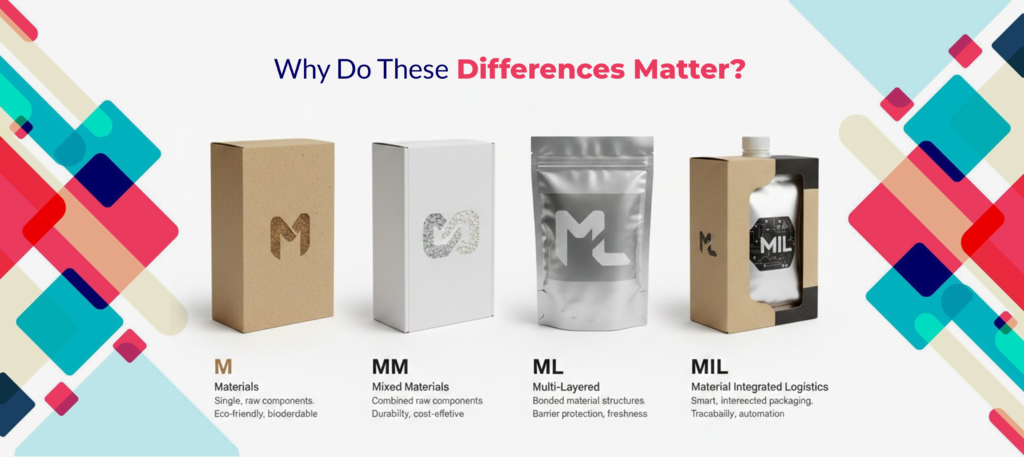
At first glance, these units are nothing but just an alphabet soup. But once you understand what each one measures can make a difference and how they help for a snug fit. Here’s why knowing the difference matters:
1. Precision Saves Money
Mistaking mm for mil can lead to ordering the wrong packaging. That adds cost, time, and frustration.
2. Global Communication
If you’re working with international suppliers and global customers, standardized units help cross borders without confusion. Ml on a bottle means the same whether you’re in Europe or Asia.
3. Better Decision-Making
Clear measurement understanding leads to smarter decisions in production planning, design reviews, supply chain logistics, and quality control.
At Custom Boxes Deals, we know measurement mastery isn’t optional. With us, you can not only educate yourself but also find exceptional packaging solutions at affordable rates!
Bringing It All Together
As we have explored, understanding the difference between M, mm, ml, and mil empowers smarter decisions across design, packaging, manufacturing, and everyday use. With Custom Boxes Deals, you can get ideal packaging solutions, designed as per your product's unique needs. We always focus on every essential detail to ensure 100% perfection. For any packaging needs, you can count on us. Partner with us right now to bring your brand to the spotlight and lead your business toward success!