
Request Your Custom Quote
Tell us what you need. Our team normally replies within one business day.
How Thick Is Cardboard? Paperboard vs Corrugated Sizes
 By
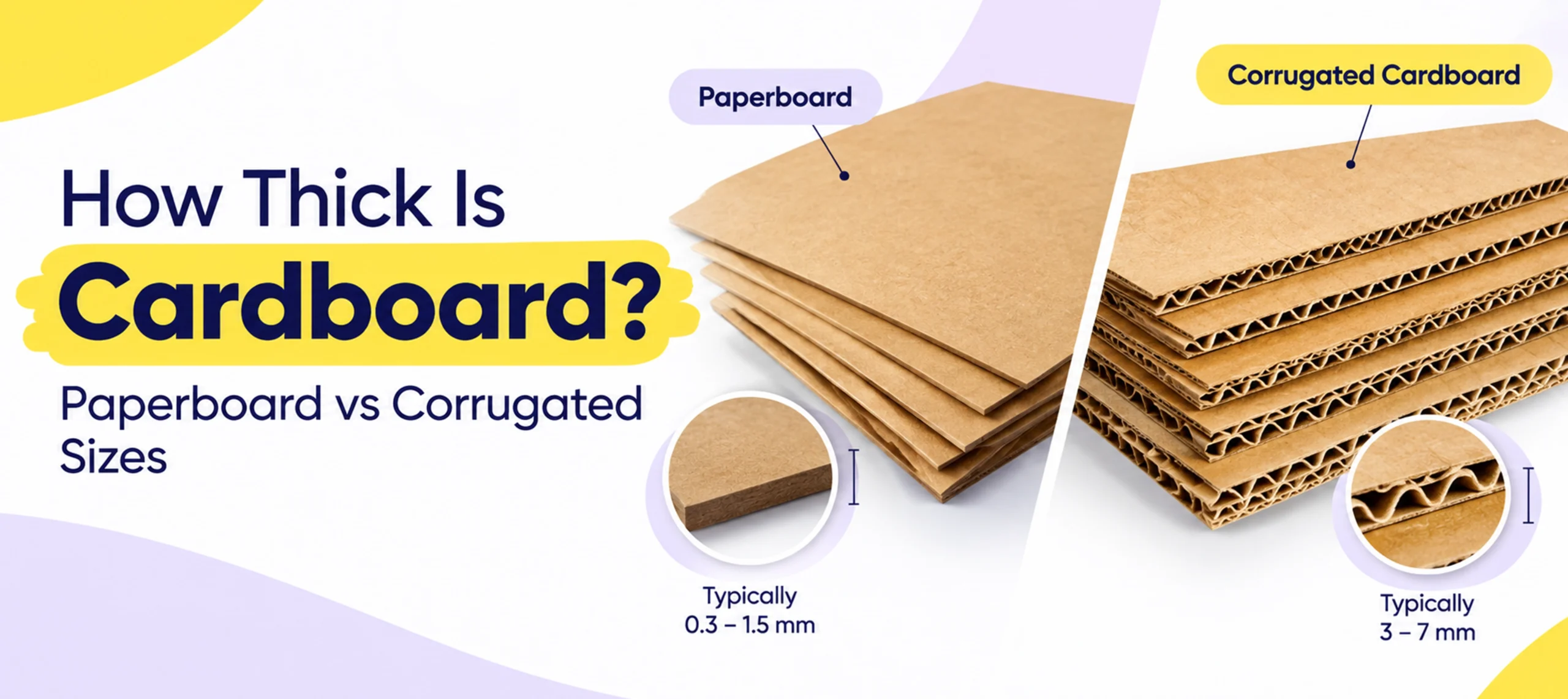
By How thick is cardboard? There is no single answer, because cardboard is not one material. A cereal box is cardboard. So is the rigid board under a jewelry box lid, and so is the corrugated shipping box it arrived in. Those three run from about 0.3 millimeters to over 25 millimeters. This guide sorts out which one you actually mean, then gives you the real numbers for each.
What Do People Actually Mean by “Cardboard”?
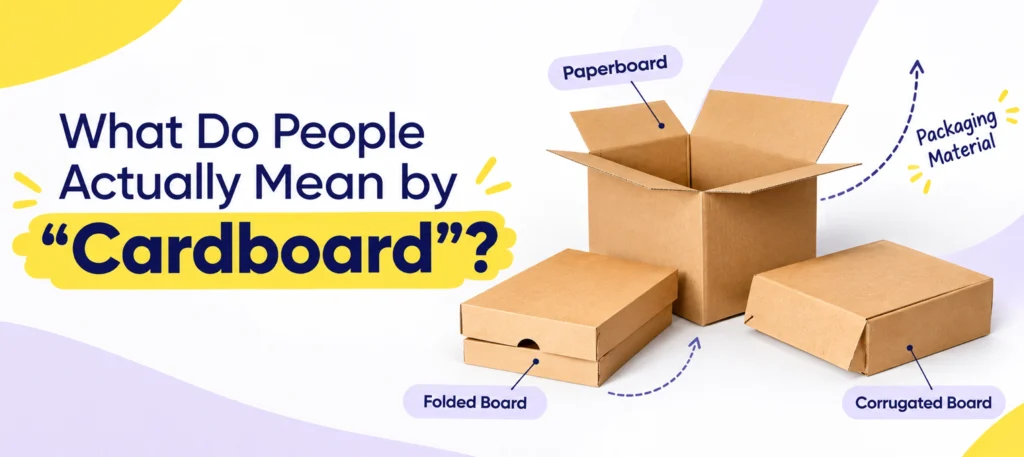
The word covers three different materials, and they are not close in thickness.
Paperboard is a single flat sheet, no fluting inside it. Cereal boxes, gift boxes and most folding cartons are paperboard. Wikipedia’s paperboard entry puts it plainly: paperboard is “generally thicker, usually over 0.30 mm, 0.012 inches, or 12 points, than paper.” Most paperboard used in packaging runs from about 0.3 to 0.8 millimeters.
Cardstock is a thinner, print focused cousin of paperboard. Business cards, postcards and tags are cardstock. It usually tops out around 12 to 16 points, roughly 0.012 to 0.016 inches.
Corrugated fiberboard is the thick, fluted material behind shipping boxes. A wavy inner layer sits glued between two flat liners. This is what most people picture when they hear “thick cardboard,” and it is measured completely differently, covered next.
A simple rule of thumb. If it sits on a retail shelf, it is probably paperboard. If it shipped the product there, it is probably corrugated. If it is a printed tag or insert, it is probably cardstock.
How Thick Is Corrugated Cardboard?
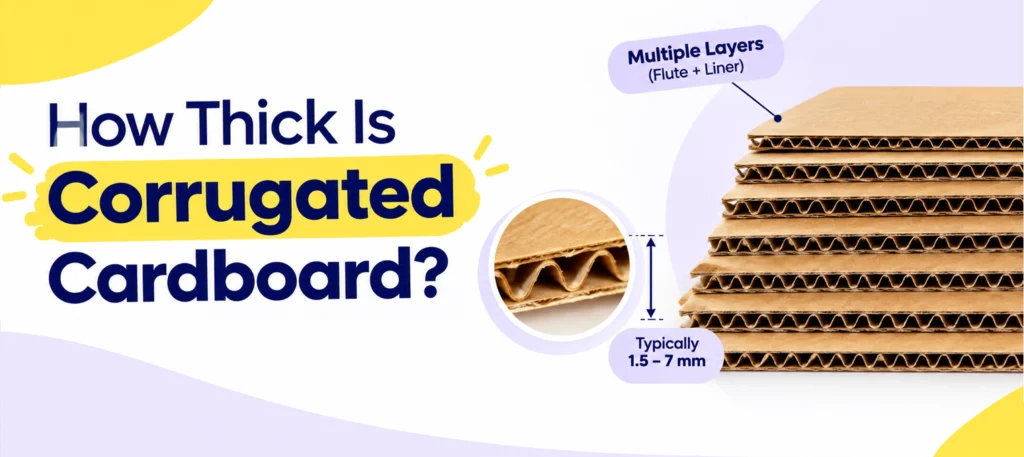
Corrugated board comes in three common constructions, and thickness scales with how many fluted layers are inside.
- Single wall, one fluted layer, typically 3 to 5 mm, about 1/8 inch. This is the material behind most shipping boxes.
- Double wall, two fluted layers, typically 6 to 10 mm, about 1/4 to 3/8 inch. Steps up for heavier products or a longer trip.
- Triple wall, three fluted layers, typically 12 to 19 mm, about 1/2 to 3/4 inch. Reserved for industrial and heavy freight use, rarely seen in retail.
What Are the Corrugated Flute Types, and How Thick Is Each One?
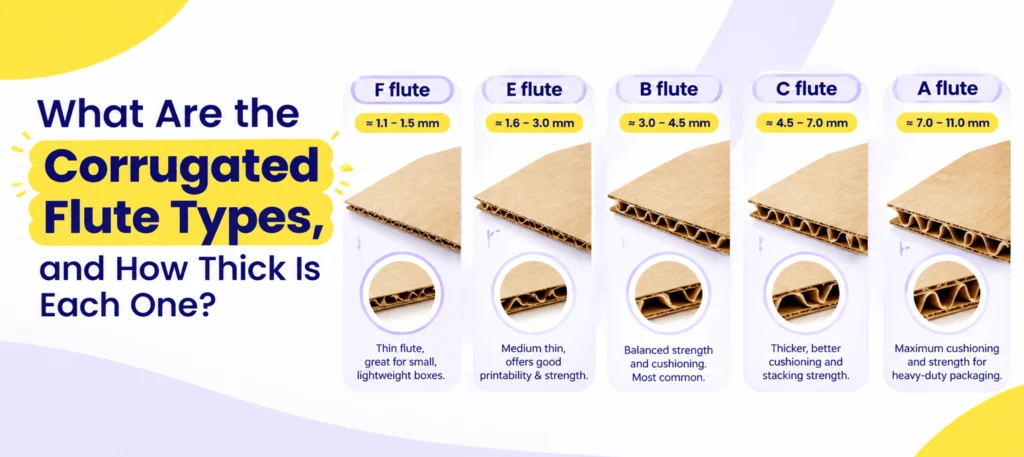
The flute is the wavy layer itself, and its size decides both the thickness and the job it is suited for.
Five letters cover almost everything on the market: A, B, C, E and F. The Fibre Box Association, the trade association for the corrugated industry, states each flute’s density directly, in flutes per foot rather than a fixed height. Height in millimeters is the number most sites quote instead, but sources vary slightly on the exact figure, so both are listed here.
- A flute, about 33 per foot, 4.5 to 5 mm. Best for cushioning and fragile items.
- B flute, about 47 per foot, about 3 mm. A flat surface under print.
- C flute, about 38 per foot, 3.5 to 4 mm. General purpose, the most common choice.
- E flute, about 90 per foot, 1 to 1.8 mm. Fine printing, retail boxes.
- F flute, about 125 per foot, 0.8 to 1.2 mm. Small folding cartons.
More flutes per foot means a shorter, denser wave, which is why F flute is both the thinnest and the smoothest to print on.
How Do You Actually Measure Cardboard Thickness?
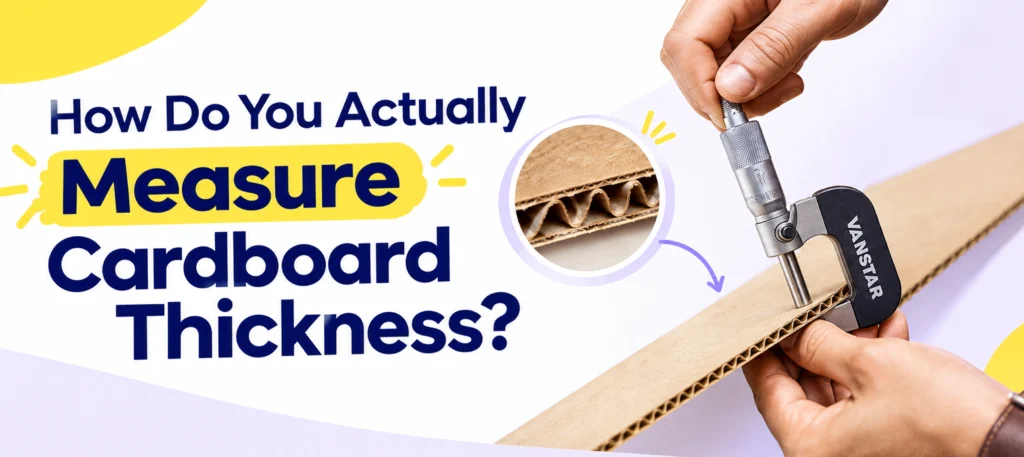
Four real methods exist for actually taking the measurement, not just naming the units.
A caliper or micrometer gives the most direct reading. Close the jaws on the board and read the gap in millimeters or thousandths of an inch.
A point gauge is standard in the printing trade for paperboard and cardstock, calibrated directly in points, where one point equals 0.001 inches.
Stacking sheets is a low cost workaround. Stack a known number of identical sheets, say 100, measure the total height, then divide by the count.
A drop test estimates board grade rather than exact thickness, common on the factory floor rather than at a desk. It checks how a box performs under an impact, not a caliper reading.
What Units Are Used to Measure Cardboard Thickness?
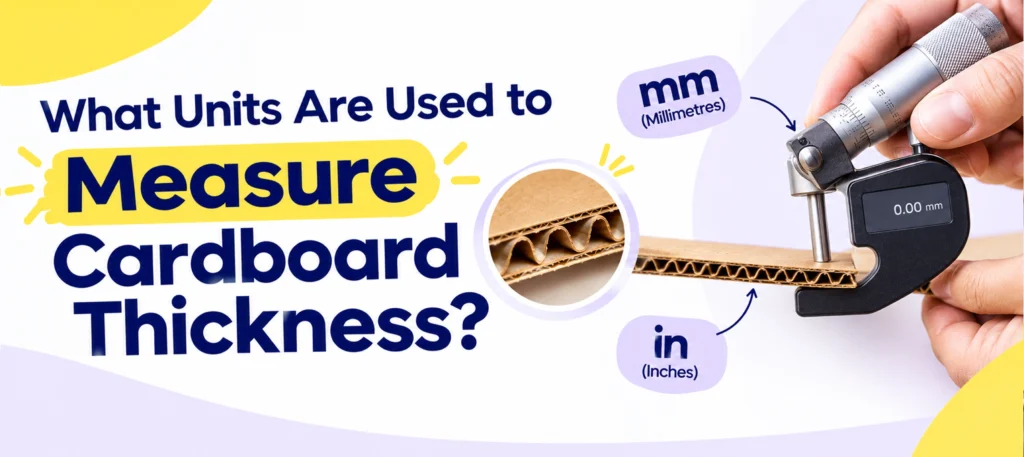
Four units show up across specs, and one of them is not really a thickness measurement at all.
Points measure caliper directly. One point equals 0.001 inches, so 15 points equals 0.015 inches, or about 0.38 millimeters. Common on paperboard and cardstock specs.
Millimeters and inches are the two direct physical measurements, and the ones used throughout this guide.
GSM, grams per square meter, measures weight, not thickness. Two boards with the same GSM can differ in caliper if their fiber density differs. Useful for comparing paper stock, misleading if you treat it as a thickness figure on its own.
How Thick Should Your Packaging Be?

The right thickness depends on what the box has to survive, not on picking the biggest number available.
A lightweight retail item, jewelry, cosmetics or a small gift, usually needs paperboard or a single wall corrugated box, not more. A custom cereal box or a custom bakery box is a good example of paperboard doing the job well without adding shipping weight.
A heavier or fragile item needs double wall corrugated or a genuinely rigid material. Custom rigid boxes use a thick chipboard core specifically because the product inside cannot flex.
A product meant to be seen before it is bought, on a counter or a shelf, has different needs again. Custom display boxes are usually built from a lighter board that holds its shape standing up, not the heaviest option on the list.
At Custom Boxes Deals we manufacture directly, not through third parties. Materials include kraft, corrugated, rigid board, SBS and cardstock, so the thickness and material match the product rather than a default. Design support is free, with no design fees, and a free 3D mockup comes before production approval. Our minimum order is 100 units per design.
If you already know the outer dimensions you need and just want the right box style to build from, that guide covers the shape side of the decision.
Frequently Asked Questions

How thick is cardboard, on average?
There is no single average, because cardboard covers different materials. Paperboard runs about 0.3 to 0.8 millimeters. Single wall corrugated runs about 3 to 5 millimeters.
Is corrugated cardboard the same as regular cardboard?
No. Corrugated has a fluted layer glued between two flat liners and is much thicker. Regular cardboard, more accurately called paperboard, is one flat sheet with no fluting.
How many millimeters thick is a shipping box?
Most shipping boxes use single wall corrugated, about 3 to 5 millimeters. Heavier or longer distance shipments may use double wall, about 6 to 10 millimeters.
What is the thickest flute type?
A flute, at roughly 4.5 to 5 millimeters. It has the fewest flutes per foot of the common types, about 33, which gives it the most cushioning.
Does a higher GSM mean thicker cardboard?
Not necessarily. GSM measures weight per square meter, not thickness. Two boards with the same GSM can have different calipers if their fiber density is different.
How do I measure cardboard thickness without a caliper?
Stack a known number of identical sheets, measure the total height with a ruler, then divide by the sheet count. It is less precise than a caliper but works for a rough check.

Anthony Kim
Hello, I'm Anthony Kim, a seasoned packaging consultant and designer. With a professional journey spanning over four years, I've evolved from a budding designer to a recognized expert in the field. Currently holding the position of Packaging Consultant, I've honed my skills in creating not just visually stunning packaging but also solutions that align with strategic business goals.
View all articles →