Request Your Custom Quote
Tell us what you need. Our team normally replies within one business day.
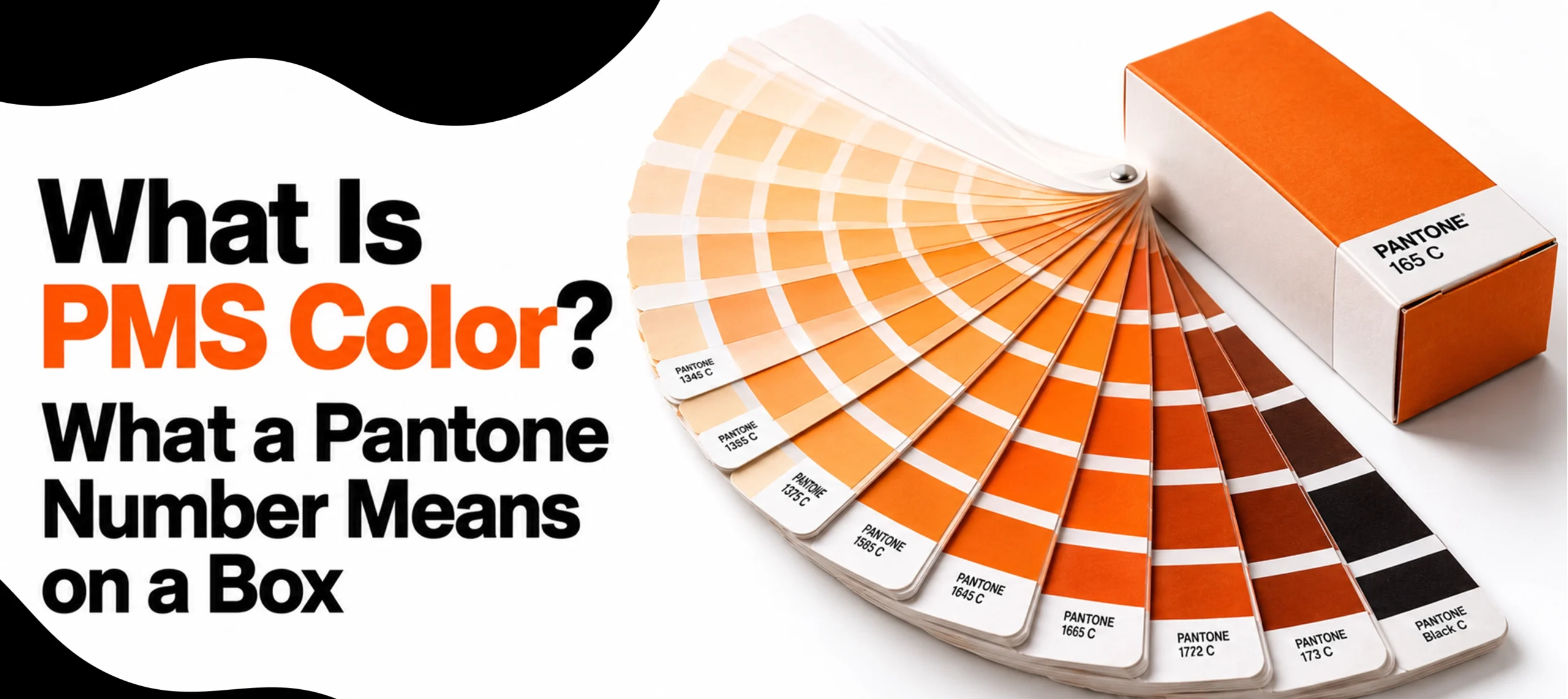
What Is PMS Color? What a Pantone Number Means on a Box
 By
By What is PMS color? PMS stands for the Pantone Matching System, a numbered library of premixed spot ink colors. Instead of building a shade from four process inks, the printer mixes one ink to Pantone’s formula for that number. The letter after the number, C or U, tells you whether the swatch was printed on coated or uncoated paper. That letter matters on a box, because the same ink looks different on different stock, so a brand color on cosmetic boxes should be specified with the paper in mind.
How a Pantone Number Is Written
A Pantone color is written as a number plus a letter, such as PMS 186 C or PMS 186 U. The number points to one ink formula. The letter points to the paper the swatch in the guide was printed on.
As of September 2026, Pantone says its Graphics guides contain 2,614 solid colors, after adding 224 new colors. Older figures you may see, like Wikipedia’s 2,161 colors “as of 2019,” describe earlier editions. Metallic colors and pastels and neons come in separate Pantone guides of their own, according to Pantone’s Formula Guide FAQ.
What C and U Mean for Your Box
Pantone’s support page on coated and uncoated is direct. Coated paper has a coating the ink sits on, with little absorption. Uncoated paper has no coating and absorbs more ink. “The same Pantone color printed on coated and uncoated paper will have quite a different visual appearance,” and Pantone puts most of that difference down to how the ink reacts with the paper.
For a box, that means picking the letter that matches the stock:
- A coated board is closer to the C swatch.
- An uncoated white board is closer to the U swatch.
Because kraft has its own base color, a U swatch on white uncoated paper is not a direct prediction of the final appearance on kraft. Use a printed sample on the actual board.
Why a Printed Box Can Differ From the Chip
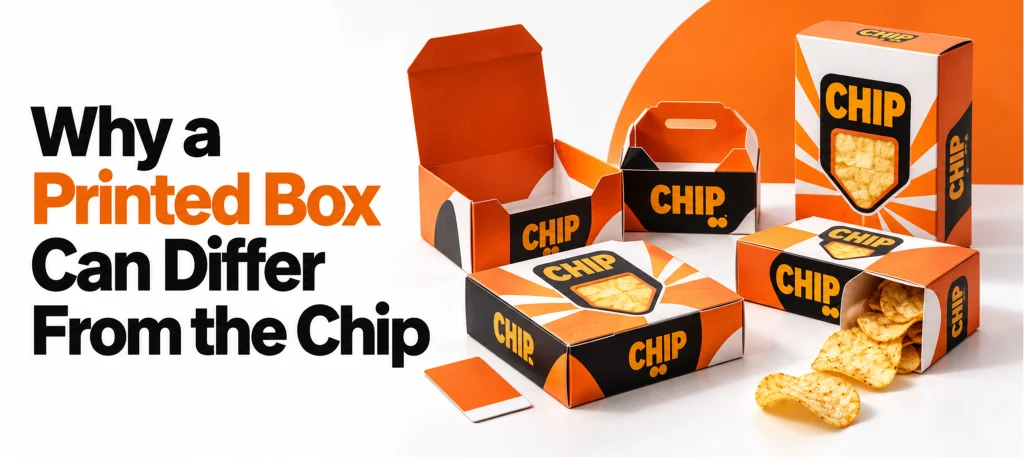
A Pantone number is a shared reference, not a guarantee, and Pantone’s own support pages explain why, starting with its own guides. Two guides from different print runs can look different because of paper composition and absorption, the inks (pigment source, viscosity and drying), ink metering, production speed and the environment. Those are the same kinds of variables any press run has.
The guide itself ages too. Pantone recommends replacing its Graphics guides every 12 to 18 months, because the pigments fade with handling and light, and the paper yellows as its brighteners fade. An old fan deck on a sunny desk can be the reason a box “does not match.”
Converting a Pantone Color to CMYK
Not every Pantone color can be built from the four process inks. Wikipedia, citing the 2000 edition, put it at about 30 percent of the 1,114 spot colors then in the system. The gap runs the other way too. Pantone’s own CMYK Guide holds 2,868 CMYK colors and marks which ones have a close PMS equivalent; the ones without that mark have no close spot color match. Treat any software conversion as a starting point and check it on a proof.
Whether a design should run in CMYK, Pantone or both is covered in our guide “What Is CMYK Printing?”
Where the Pantone System Came From
Lawrence Herbert joined Pantone in 1956 as a color matcher, bought the company in 1962 and introduced the Pantone Matching System in 1963, according to Hofstra University, where he studied. The system gave designers and printers one numbered language for ink color.
What to Specify on a Box Order
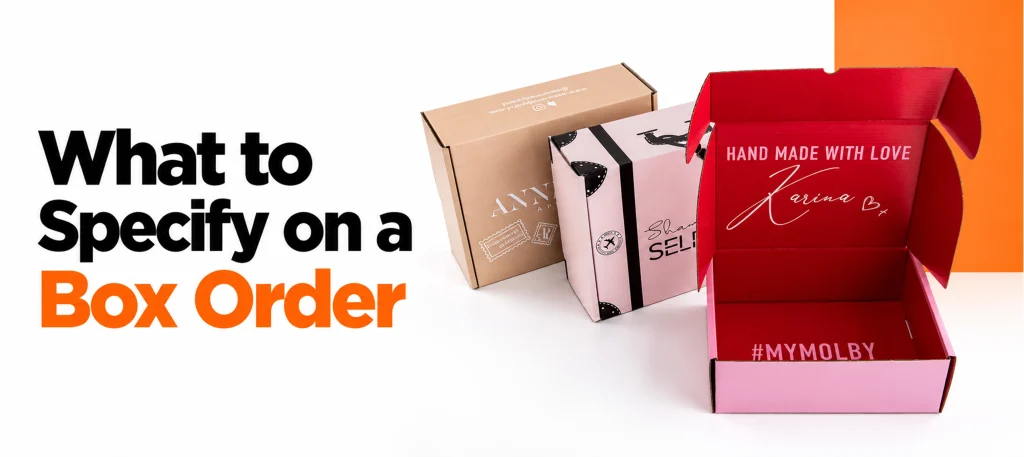
- Give the full number with its letter, such as PMS 186 C, not just “186” or “our red.”
- Match the letter to the stock. C for coated board, U for uncoated white board, and a printed sample for kraft.
- Check your guide’s age. Pantone’s own advice is 12 to 18 months.
- Judge critical color on a physical proof or production sample on the intended stock and finish, where available.
- Plan finishes with the color. A lamination or spot UV layer can change how the surface reads, so look at the proof with the finish if you can.
Printing is CMYK, Pantone or PMS, or unprinted at Custom Boxes Deals, on stocks from kraft to the wrapped board used for rigid boxes. Send your artwork and we will tell you how it will reproduce on the stock you have picked.
Frequently Asked Questions
Is PMS the same as Pantone?
Yes. PMS is short for the Pantone Matching System, the numbered spot color system Pantone publishes.
What is the difference between PMS 186 C and PMS 186 U?
The same ink formula, shown on different paper. C is coated, U is uncoated, and Pantone says the two look quite different.
Does a Pantone number guarantee an exact match?
No. It gives everyone the same reference. Paper, ink, press and the age of the guide all still affect what you see.
How often should a Pantone guide be replaced?
Every 12 to 18 months, according to Pantone.

Anthony Kim
Hello, I'm Anthony Kim, a seasoned packaging consultant and designer. With a professional journey spanning over four years, I've evolved from a budding designer to a recognized expert in the field. Currently holding the position of Packaging Consultant, I've honed my skills in creating not just visually stunning packaging but also solutions that align with strategic business goals.
View all articles →