Request Your Custom Quote
Tell us what you need. Our team normally replies within one business day.
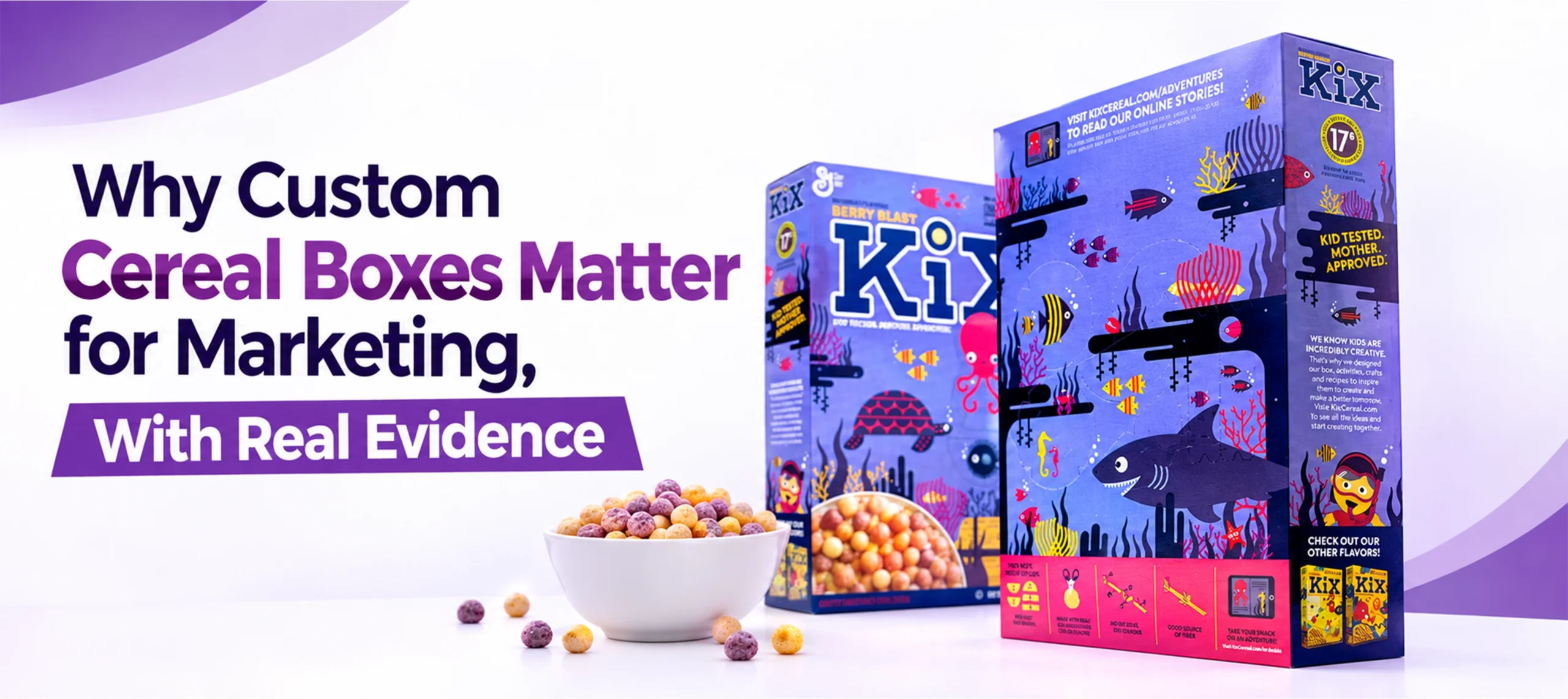
Why Custom Cereal Boxes Matter for Marketing, With Real Evidence
 By
By Custom cereal box design is not just a container choice. It is a real, measured factor in how customers decide what to buy. That claim circulates widely with no proof attached to it anywhere. Here is the actual evidence, plus a correction to a history claim repeated elsewhere in this space.
The Real Evidence, Not Just the Claim
A 2018 survey is the source behind this, and it deserves to be named. Ipsos surveyed 2,002 US adults on behalf of the Paper and Packaging Board. The findings are specific. 72 percent of respondents agreed that packaging design influences their purchase decisions. 67 percent said the material used to package a product influences their choice. 71 percent said they are more likely to buy a product packaged in paper or cardboard than something else.
This is the most current version of that specific survey. It is honest to say so, rather than presenting a 2018 figure as brand new. The real number still matters. It is just older than it looks once it gets repeated with no date attached.
A Statistic Worth Skipping, Not Repeating
A “4.3 seconds to notice a new product” figure shows up in some packaging content, often tied to cereal shelf research. It does not hold up. Checked directly, that number comes from a market research company’s own blog post. It is explicitly introduced there as a hypothetical example, not a real study. Repeating it here would mean inventing evidence. That is the exact mistake this post is trying to avoid. It is left out for that reason.
Where Custom Packaging Actually Comes From
A vague claim, repeated across the search results for this topic, places cereal packaging’s origin in the “late 19th century” with “wax paper lined boxes.” That is imprecise. Checking it directly turns up a more specific, more interesting timeline. Kellogg’s first cereal cartons date to 1906. The wax paper liner, trade named Waxtite, arrived later, in 1914, introduced by Will Keith Kellogg. It was not originally inside the box at all. It wrapped around the outside. Kellogg’s son, John L. Kellogg, later moved that liner inside the box. That is the same basic structure still used today.
What Actually Makes a Custom Cereal Box Work as Marketing
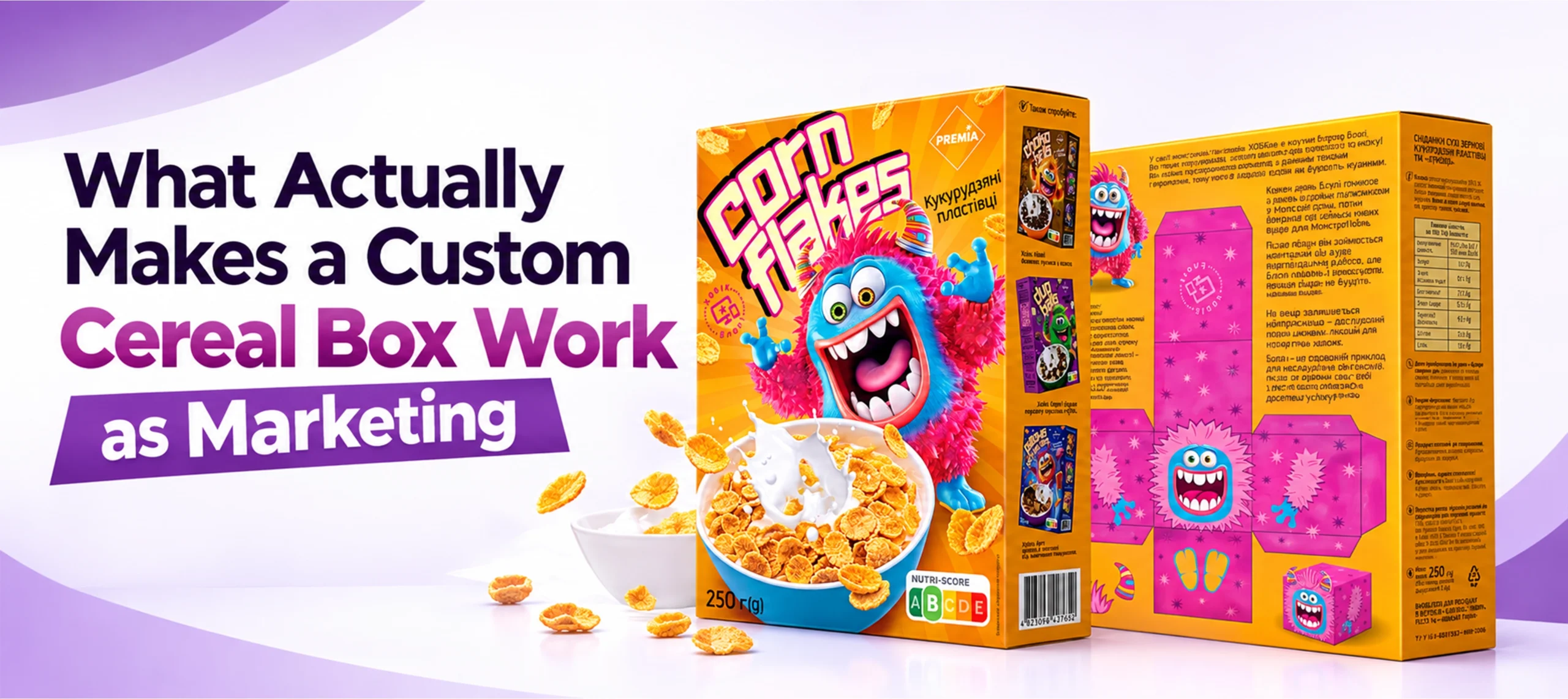
This is the real, practical answer to why custom cereal boxes matter for marketing, beyond the survey numbers alone. Shelf visibility comes first. Color, shape and contrast are what a shopper’s eye catches before anything else registers. A box built to differ from the products beside it earns a longer look. That longer look is the opening move of a purchase decision.
Brand image comes next. What a box looks like says something about a company before a single word is read. Bright, busy graphics read differently than a clean, minimal label. The material itself carries a message too. Buyers strongly associate paper and cardboard with quality over other packaging materials.
Recognition compounds over time. A consistent logo, color palette and design language across a product line makes a familiar box easy to spot on a crowded shelf. That is the shorthand a returning customer relies on without thinking about it.
Cereal Box Branding, Beyond the Container
Custom packaging design has a long history of doing more than holding cereal. The world of cereal mascots covers how character branding became such a core part of that history. Once a design direction is set, what actually goes on every panel is the next practical question. Marketing and required information have to share the same box.
What Drives Cost
Material choice, design complexity, order quantity, and non standard sizes or shapes all move cost. Every competitor page in this space names the same factors. None of them gives a real dollar figure, and this post does not invent one either. What is verifiable is the direction. Recycled or textured stock, elaborate finishes, small runs and custom die cuts all push cost up. Standard sizes and simpler print runs bring it down.
Custom Cereal Boxes on Custom Boxes Deals Packaging
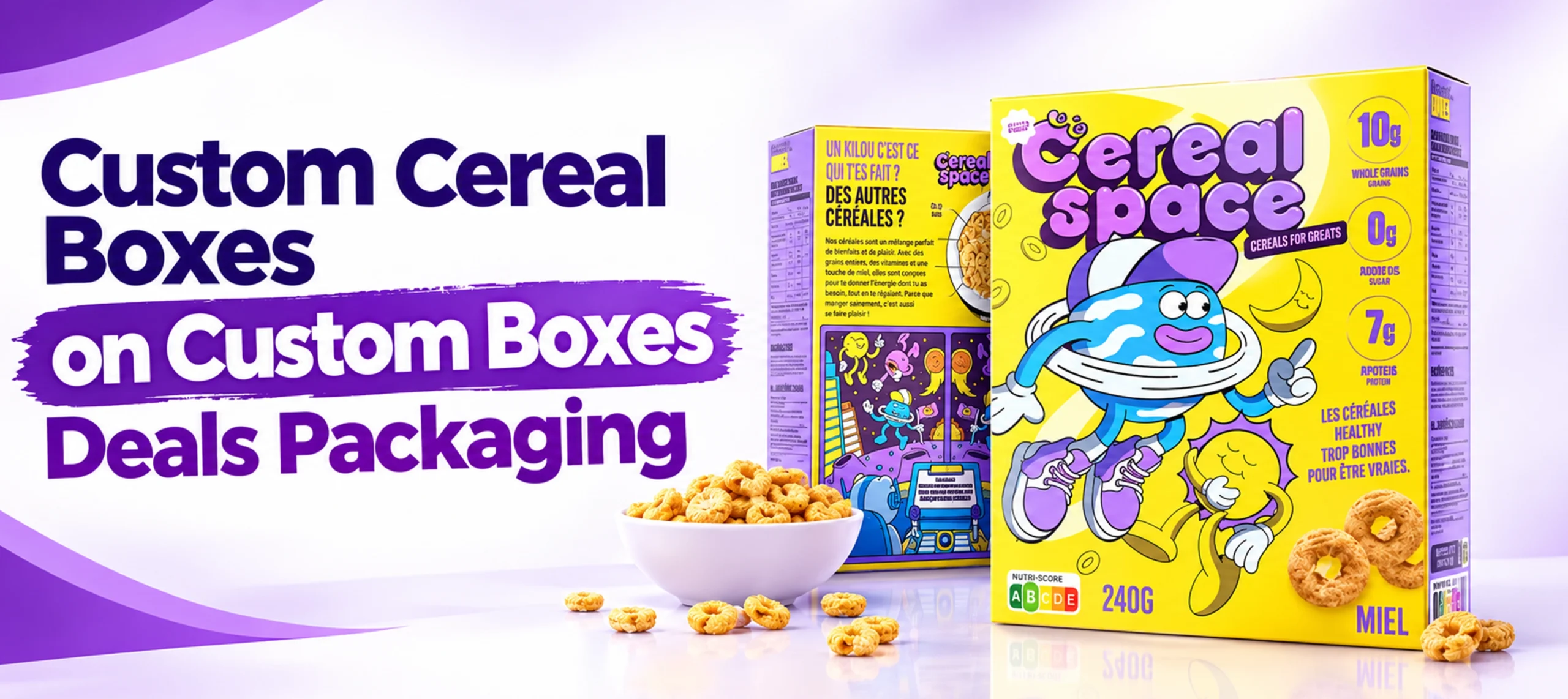
Cereal packaging built around a specific brand, shelf position and target audience is what custom cereal boxes actually covers, not a generic default box. The right size, material and finish depend on the specific product and audience. That gets confirmed for the project, not assumed from a general list.
Frequently Asked Questions
Does custom cereal box design actually affect purchasing decisions?
Yes. A 2018 Ipsos survey for the Paper and Packaging Board found 72 percent of US adults agree packaging design influences their purchase decisions, and 71 percent say they are more likely to buy a product packaged in paper or cardboard.
Is it true packaging catches shoppers’ attention in a specific number of seconds?
A widely circulated “4.3 seconds” figure traces to a hypothetical example in a market research blog post, not a real conducted study. It should not be treated as a verified fact.
When did custom cereal box packaging actually begin?
Kellogg’s first cereal cartons date to 1906. The wax paper liner, called Waxtite, followed in 1914, originally wrapped around the outside of the box before later being moved inside.
What actually makes a cereal box work as a marketing tool?
Shelf visibility, a clear brand image, and consistent design across a product line are the three factors that do the most work, in that order.
What drives the cost of a custom cereal box?
Material choice, design complexity, order quantity, and non standard sizes or shapes all move cost, though the exact figure depends on the specific project.
Do CBD’s cereal boxes come in a standard design?
No. Size, material and finish are confirmed for the specific brand and product rather than assumed from a general list.

Anthony Kim
Hello, I'm Anthony Kim, a seasoned packaging consultant and designer. With a professional journey spanning over four years, I've evolved from a budding designer to a recognized expert in the field. Currently holding the position of Packaging Consultant, I've honed my skills in creating not just visually stunning packaging but also solutions that align with strategic business goals.
View all articles →