Request Your Custom Quote
Tell us what you need. Our team normally replies within one business day.
What Is Corrugated Packaging? How the Board and the Box Are Made
 By
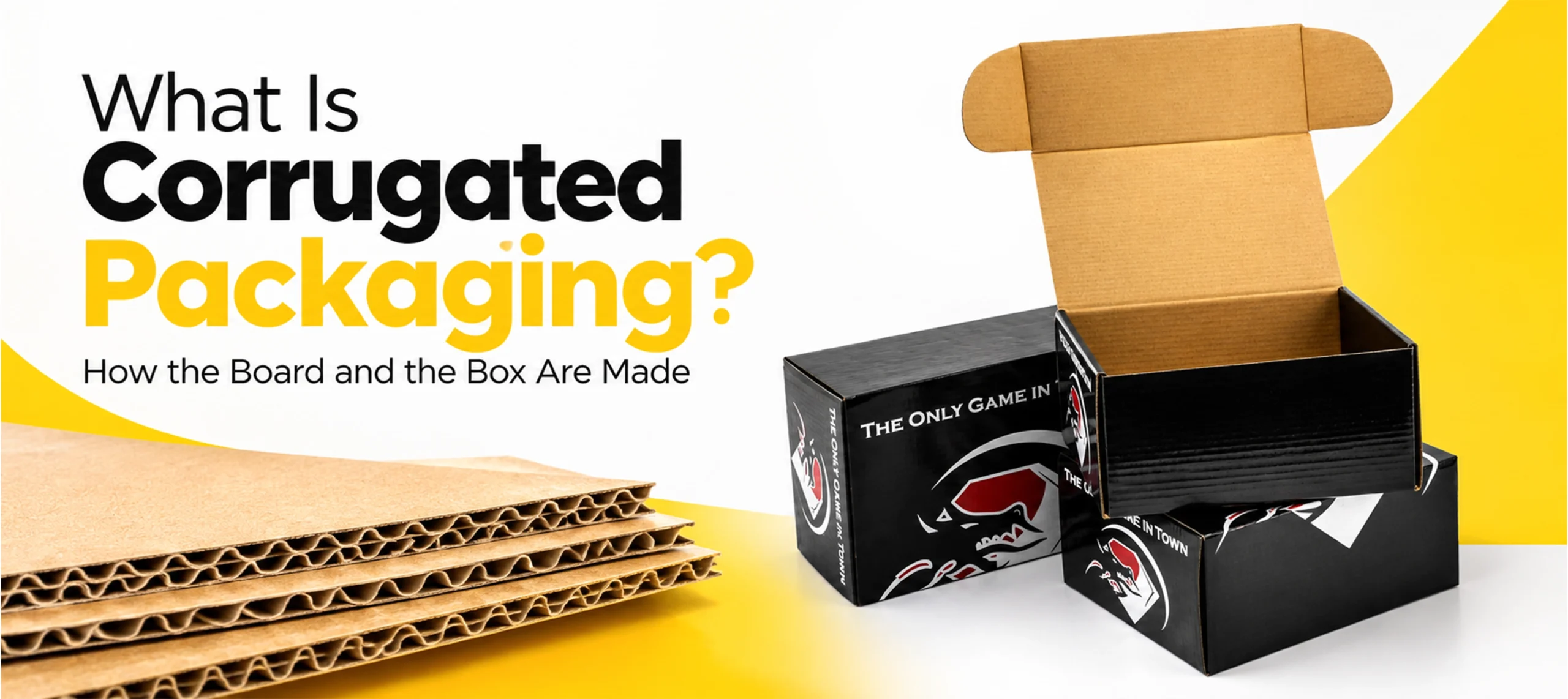
By Corrugated packaging is packaging made from corrugated board: flat paper sheets called liners glued to a wavy paper layer called the medium. The Fibre Box Association says both are a heavy paper called containerboard. The waves, called flutes, act like a row of arches. They resist bending, stand up as columns when the board is on its end, and cushion what is inside. The same association calls corrugated boxes the number one preferred form of transport packaging, and the board also goes into mailers and displays in dozens of box styles.
The Four Ways Liners and Flutes Are Combined
The Fibre Box Association names four constructions:
| Construction | What it is |
|---|---|
| Single face | One fluted medium glued to one liner. Two sheets, one side wavy |
| Single wall | One medium between two liners. The most common construction, per FEFCO |
| Double wall | Three liners with two mediums between them |
| Triple wall | Four liners with three mediums between them |
So corrugated board can be as few as two sheets, not the “three or more” some definitions give.
Flute sizes, from A to F, and how thick each wall count is are covered in our guide “How Thick Is Cardboard.” The two common strength tests, Edge Crush and Mullen, are covered in “Corrugated Box Basics.” They are not repeated here.
How a Corrugator Makes the Board
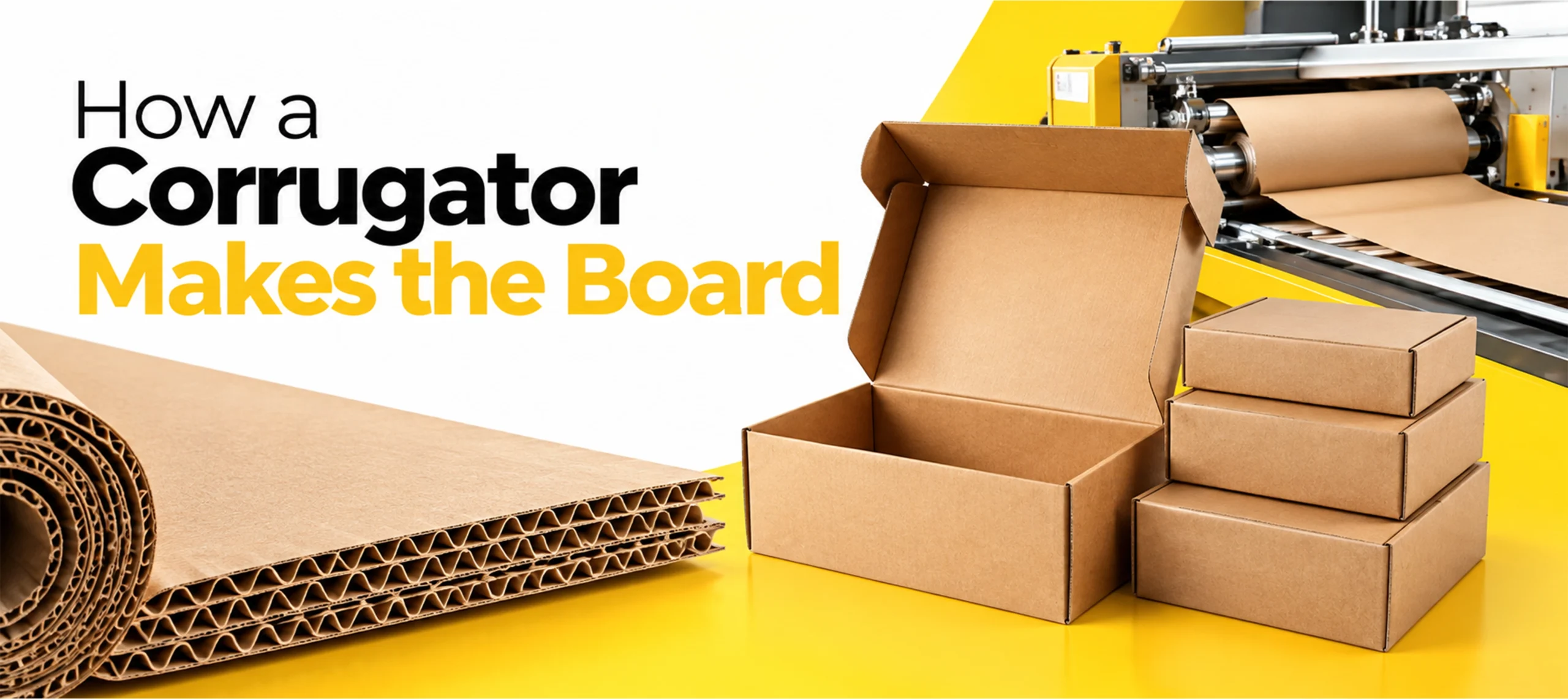
The machine is called a corrugator. FEFCO, the European corrugated board trade body, describes the process like this:
- Shape the flutes. Reels of medium are conditioned with heat and steam and run between large corrugating rolls.
- Glue one side. Starch glue goes on the flute tips, and the first liner is pressed on. This is single face web.
- Close the other side. At the double backer, the second liner is glued on, making single wall board. Extra single face layers are added for double and triple wall.
- Cut to size. The board is slit to width and cut into sheets.
The wavy layer takes more paper than it looks. FEFCO gives a typical figure for C flute of 1.43: it takes 1.43 square meters of flat medium to make one square meter of board, because the paper runs up and down each flute.
How a Sheet Becomes a Box
The flat sheets then go to converting. FEFCO describes two main routes:
- Regular slotted boxes run through one inline machine that prints, slots, folds and glues in a single pass.
- Die cut boxes, for shapes that need precise cuts, are cut and creased on a rotary or flatbed die cutter.
Boxes are typically delivered to the user flat, to be folded up on site. Standard designs have a numbered code, the International Fibreboard Case Code, developed by FEFCO with the European Solid Board Organisation. In that code, the Regular Slotted Container is style 0201, according to the Fibre Box Association.
Flute size matters for printing too. The Fibre Box Association says smaller flute profiles “provide enhanced graphics capabilities,” and that small flutes such as E and F suit retail packaging, the kind of printed work found on display boxes.
Where Corrugated Came From
In the US, Albert L. Jones of New York patented corrugated packing paper on December 19, 1871. US Patent 122,023 covers paper “corrugated, crimped, or bossed” to protect vials and bottles. One of its drawings already shows a packing box made of the corrugated material. An earlier English patent from 1856, for pleated paper used to line hats, is commonly reported as the first use of corrugated paper.
Wikipedia’s history credits Oliver Long’s 1874 patent with adding liners to both sides of corrugated board. The patent it cites, US 150,588, describes something else. It covers two sheets of strong paper with shavings or finely cut paper strips glued between them, and no fluted layer at all.
Where Corrugated Is Weak
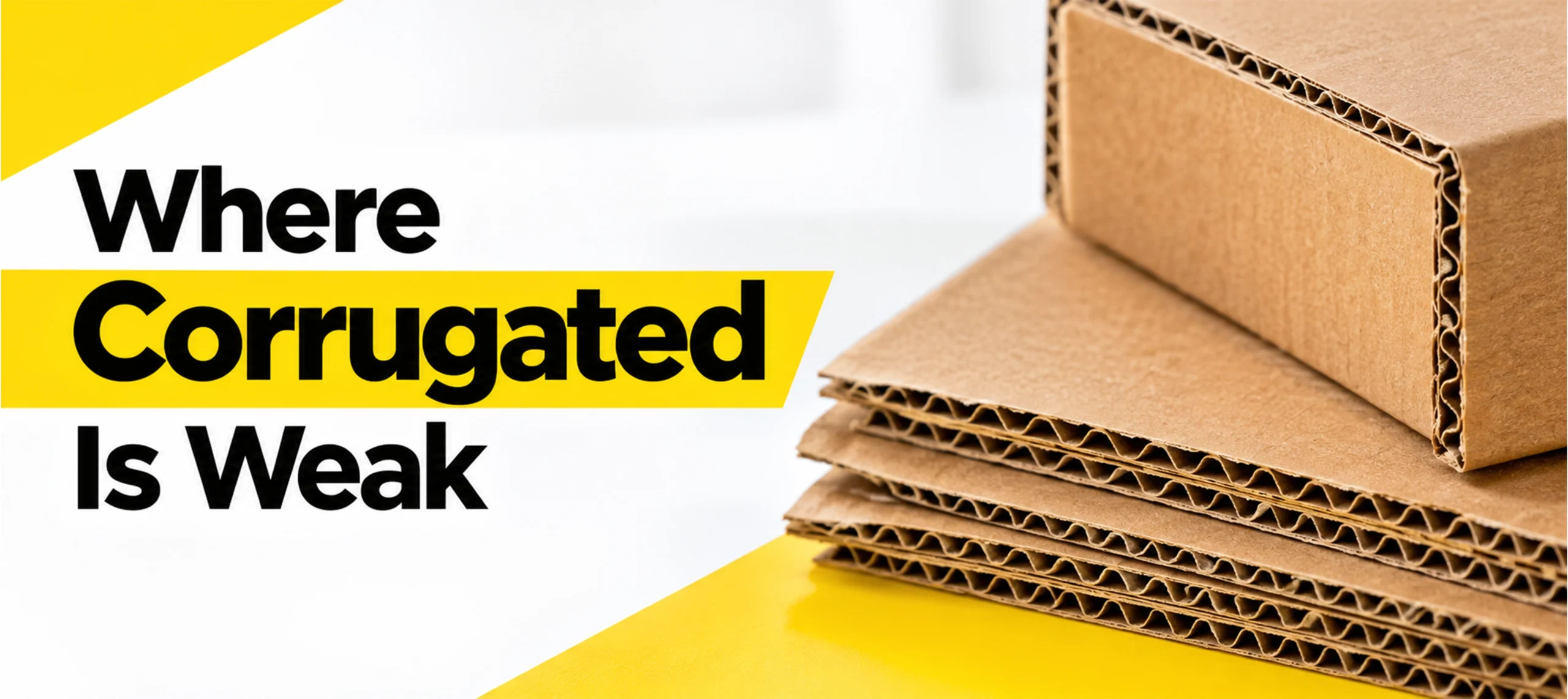
Corrugated is paper, and humidity affects paper. The US Forest Products Laboratory’s packaging research summary lists decades of studies on humidity and container board strength. For wet goods, the industry uses coated or treated board. AF&PA and the Fibre Box Association keep a voluntary standard, updated in September 2025, for testing whether such board can still be repulped and recycled. Their page names produce, meat and seafood as typical uses.
Temperature is a different story. The Fibre Box Association says the flutes also serve as an insulator, “providing some product protection from sudden temperature changes.”
How Recyclable Is It?
Three figures circulate, and they do not match because they count different things:
- EPA: 96.5 percent of US corrugated boxes were recycled in 2018, the EPA’s product data says. That is 32.1 million tons, measured against boxes in the municipal waste stream.
- AF&PA: 70 to 75 percent of cardboard available for recovery was recycled in the US in 2025, more than 33 million tons, per AF&PA’s release of August 28, 2026.
- Fibre Box Association: “roughly 90 percent is recovered and recycled,” on its About Corrugated page, with no year given.
Different years and different bases. When a page quotes a recycling rate for corrugated, check which of these it is.
Frequently Asked Questions
Is corrugated the same as cardboard?
People use “cardboard” for several materials. Corrugated is the fluted kind. Flat folding carton board is paperboard. “How Thick Is Cardboard” covers the difference.
What is corrugated packaging made of?
Containerboard: flat liners and a fluted medium, usually glued with starch.
Who invented the corrugated box?
In the US, Albert L. Jones patented corrugated packing paper on December 19, 1871, and his patent drawings include a box. An 1856 English patent for pleated hat liners is commonly reported as earlier.
Is corrugated packaging waterproof?
Plain board is paper. For produce, meat, seafood and other wet goods, the industry uses coated or treated board, tested under the AF&PA and Fibre Box Association standard.

Anthony Kim
Hello, I'm Anthony Kim, a seasoned packaging consultant and designer. With a professional journey spanning over four years, I've evolved from a budding designer to a recognized expert in the field. Currently holding the position of Packaging Consultant, I've honed my skills in creating not just visually stunning packaging but also solutions that align with strategic business goals.
View all articles →