
Request Your Custom Quote
Tell us what you need. Our team normally replies within one business day.
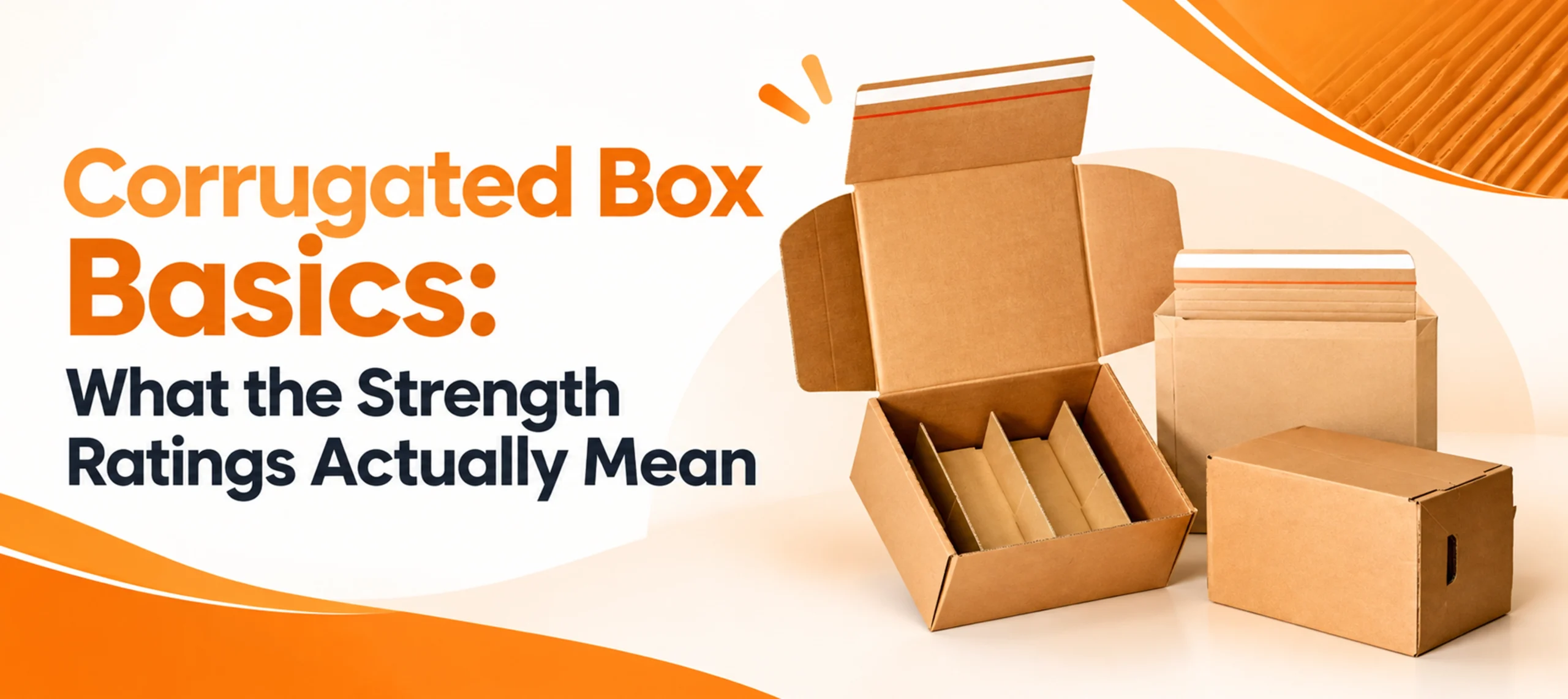
Corrugated Box Basics: What the Strength Ratings Actually Mean
 By
By A corrugated box is not just “cardboard.” It is a specific construction. Two flat liner sheets get glued around a fluted middle layer. More than 95 percent of goods shipped in North America travel in one, according to the Fibre Box Association, the trade group that tracks the industry. What actually separates a good corrugated box from a weak one is not always explained clearly. Here is what the liner material and the strength ratings really tell you.
Kraft Liner Versus Testliner: A Real Distinction, Not a Range
The outer and inner sheets of a corrugated box are called liners. They are not all the same material. Kraft liner, by its real industry definition, contains no less than 80 percent virgin fiber. It is made through the chemical sulfate process. A common blended version runs closer to 70 percent virgin to 30 percent recycled fiber. Testliner is a different product entirely. It is made mostly or entirely from recycled fiber, typically 70 to 100 percent. A vague “70 to 80 percent virgin” figure sits right at the edge between these two real categories. It does not say which one a box actually uses. Knowing which liner is in a box tells you more about its strength and its sustainability story than a single blended percentage does.
What the Flute Does Inside a Corrugated Box
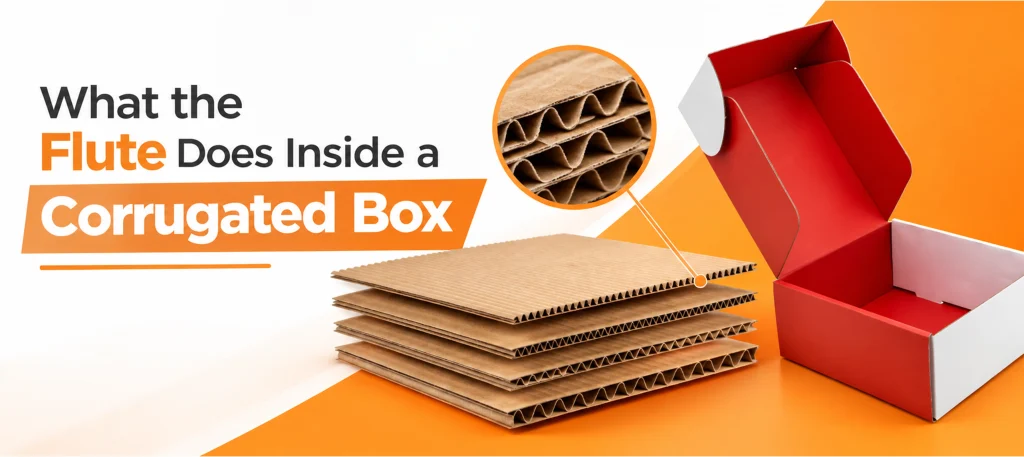
The fluted middle layer is what gives a corrugated box its cushioning and its stacking strength. Flute sizes are named with letters, A through F, and each size trades off cushioning against print quality. Exact height figures and a full comparison table are covered in our separate guide, “How Thick Is Cardboard,” so they are not repeated here.
Edge Crush Test Versus Mullen Burst Test
Two tests get named constantly and explained rarely. The Edge Crush Test, ECT, measures how much compression the board can take on its edge before crushing. That is directly tied to how high a stack of boxes can go without the bottom one collapsing. It does not require a minimum paper weight. So an ECT rated box can use lighter material for the same real performance. The Mullen Burst Test measures how much force it takes to puncture or burst the flat face of the board. That matters more for a box handling sharp or irregular items than for one sitting still in a stack. If your product ships palletized and stacked, ECT is the number to check. If it ships loose and gets handled roughly, Mullen matters more.
Why “Almost 300 Pounds” Is Not a Real Number to Plan Around

Triple wall boxes get marketed with a weight capacity figure that varies wildly depending on where you look. It can run anywhere from under 200 pounds to over 800 pounds for what sounds like the same box class. That spread exists because real capacity depends on the box’s Edge Crush Test rating and its exact construction, not a single number tied to “triple wall” as a category. One source repeating a specific weight standard for this actually mixed up two different measurements. It blended a carrier’s shipping weight limit with the box’s own structural stacking capacity, in the same explanation. Rather than repeat an unverified number, the honest answer is simpler: ask for the ECT rating on the specific box you are ordering, not a rounded figure from a general guide.
A Real Reason to Care About Flute Grade
Corrugated tray boxes are a good example of where this actually matters in an order. Flute grade and wall height are real choices you make on that product, not settings buried in a spec sheet, and getting them right depends on exactly the tradeoffs covered above: cushioning against print quality, and edge strength against burst resistance.
Frequently Asked Questions
What is the real difference between kraft liner and testliner?
Kraft liner contains at least 80 percent virgin fiber made through the chemical sulfate process. Testliner is mostly or entirely recycled fiber, typically 70 to 100 percent. They are two distinct products, not two points on the same range.
What does the Edge Crush Test actually measure?
How much compression a piece of board can take on its edge before crushing. It is directly tied to stacking strength, how high boxes can be stacked without the bottom one failing.
What does the Mullen Burst Test actually measure?
How much force it takes to puncture or burst the flat face of the board. It matters more for handling sharp or irregular items than for boxes sitting still in a stack.
How much weight can a triple wall box actually hold?
There is no single reliable figure. Real capacity depends on the box’s Edge Crush Test rating and construction, not its wall count alone. Ask for the ECT rating on the specific box, not a general figure.
Is 95 percent of shipping really done in corrugated boxes?
Yes, according to the Fibre Box Association, the industry’s own trade group, which tracks this figure directly.

Anthony Kim
Hello, I'm Anthony Kim, a seasoned packaging consultant and designer. With a professional journey spanning over four years, I've evolved from a budding designer to a recognized expert in the field. Currently holding the position of Packaging Consultant, I've honed my skills in creating not just visually stunning packaging but also solutions that align with strategic business goals.
View all articles →