
Request Your Custom Quote
Tell us what you need. Our team normally replies within one business day.
How to Ship a Cake: What Can Travel and How to Pack It
 By
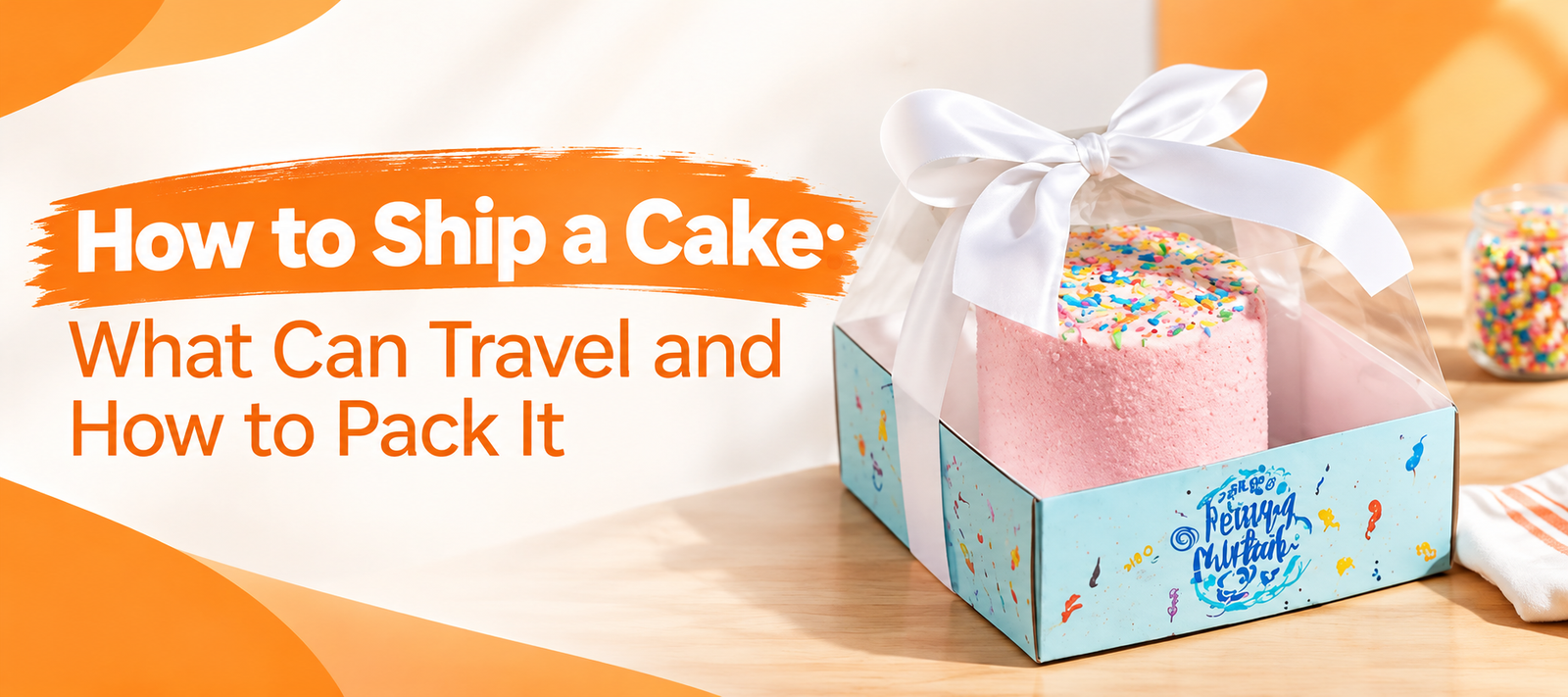
How to ship a cake comes down to two questions. Can this cake handle hours without refrigeration, and will the box keep it still and upright? Freeze a sturdy cake whose filling and frosting USDA lists as safe after hours above 40 °F, wrap it airtight, and set it in a cake box. Pack that inside an insulated container and a new corrugated box. Mark it perishable, put the label on top, and ship overnight early in the week.
Which Cakes Can Make the Trip
A parcel is not refrigerated, so without coolant a cake can spend hours above 40 °F. USDA’s Food Safety and Inspection Service (FSIS) publishes a chart written for power outages, and it answers the same question: which foods are still safe when “held above 40 °F for over 2 hours.” As of September 2026, here is what it says about the US cake shelf:
| Ship it | Keep it local, or keep it cold the whole way |
|---|---|
| Plain cakes, muffins and quick breads | Cheesecake |
| Fruit pies | Cream filled pastries |
| Butter, as an ingredient | Custard, cheese filled or chiffon pies |
| Milk, cream and sour cream | |
| Soft cheeses, including cream cheese | |
| Custards and puddings |
The reason is the “Danger Zone.” FSIS’s page on refrigeration says bacteria grow most rapidly between 40 and 140 °F, and that “foods held at temperatures above 40 °F for more than 2 hours should not be consumed.” A cake from the right hand column only ships if it stays at 40 °F or below for the whole trip.
Choosing a Frosting That Can Travel
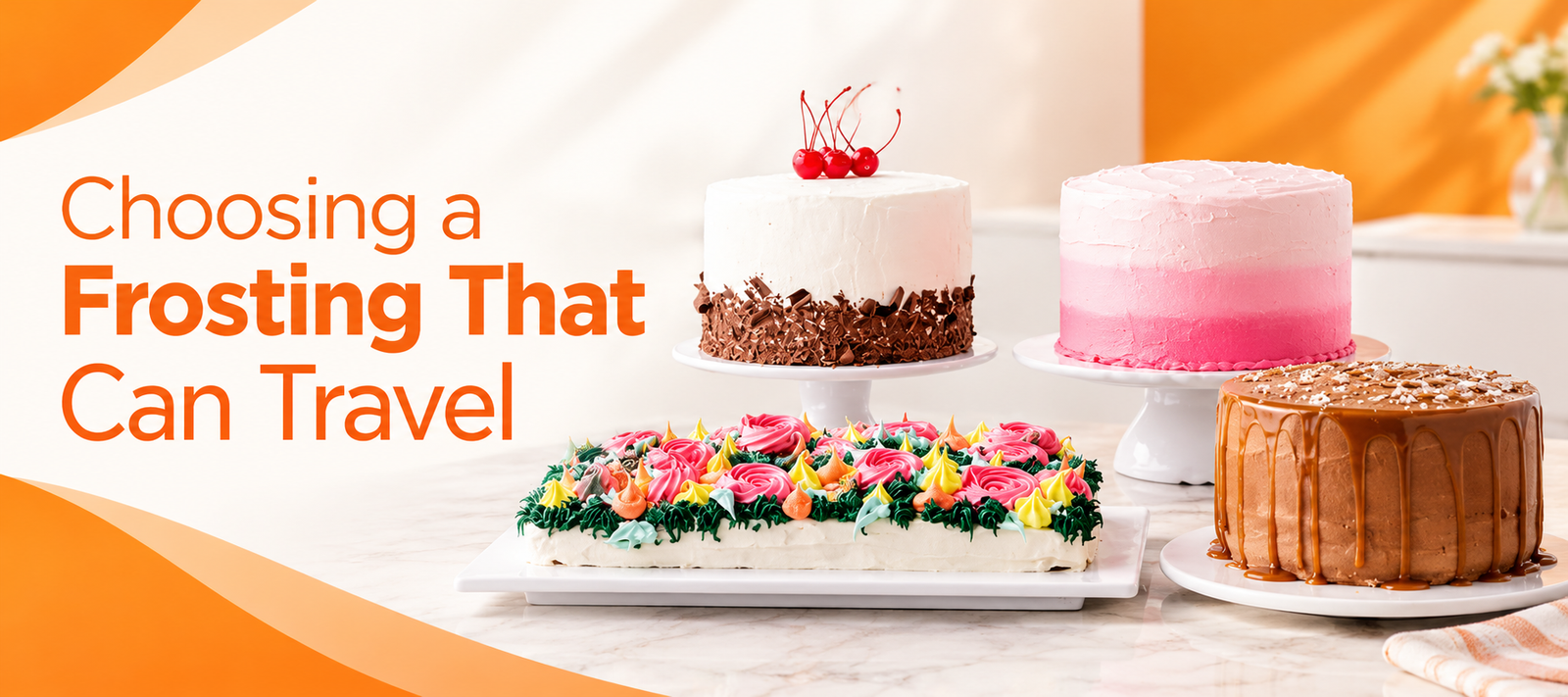
FSIS gives a direct answer on frosted baked goods: “frosting and icings that do not contain milk or eggs are safe at room temperature.”
- Cream cheese frosting is made with cream cheese, a soft cheese on the chart, so it needs cold the whole way.
- Whipped cream is cream, the same.
- Buttercream depends on the recipe. Butter is on the safe list, but a buttercream made with milk or cream is not covered by that answer. Check what went into it.
Prep the Cake
UPS’s guide to shipping food starts with the wrap:
- Seal it airtight with plastic wrap. UPS suggests shrink wrap for sturdy cakes like a Bundt cake, and wrapping delicate cakes by hand.
- Freeze it. UPS says freezing intricate iced cakes can help them hold up in transit.
Pack It in Layers
Each layer answers a carrier’s own instruction:
- The wrapped cake in its box. An insert holds the product in one position rather than letting it shift in transit. Cake boxes with inserts do that job.
- An insulated foam container. UPS calls these “ideal for” frozen cakes. FedEx’s page on shipping perishables asks for walls at least 1.5 inches thick.
- Coolant, if the cake needs it. Our guide “How to Ship Frozen Food” covers dry ice and gel packs.
- Padding. UPS asks for “at least 2 to 3 inches of protection” around the food.
- A new, sturdy corrugated box around the foam container. UPS says to seal all seams top and bottom. FedEx asks for the H taping method, with at least three strips of tape at least 2 inches wide on the top and bottom.
Keep It Upright and Marked
FedEx is honest about arrows: “Marking your box with ‘This End Up’ doesn’t guarantee that it will remain that way while in transit.” Its advice is to put the shipping label on top of the box, which increases the chances it travels the right way up.
Then mark it. The USPS Domestic Mail Manual requires a “Perishable” marking on any package holding items that “can degrade or decompose rapidly,” and says perishable matter goes at the mailer’s own risk. FedEx asks for the same marking, plus a 24 hour phone number for both shipper and recipient on the label.
Timing, Weekends and Summer
- UPS: plan for a maximum transit time of 30 hours, use Next Day Air where you can, and ship early enough in the week that the box does not sit over a weekend.
- FedEx: if you do not choose next day delivery, pack so the cake and its coolant hold for at least 24 hours past the delivery commitment. Ship Monday to Wednesday.
- Summer: FedEx suggests Hold at Location or Signature Required from May to September, so the box is not left outside.
- The recipient: tell them the delivery day. A cake from the keep cold column goes straight into the fridge, since FSIS’s 2 hour limit starts counting once it is above 40 °F.
These are the US carriers’ own pages as read in September 2026.
One Warning About Dry Ice
One guide we read tells you to wrap dry ice before packing it. UPS says the opposite: “Never wrap your dry ice,” because the carbon dioxide it releases “can explode if it isn’t able to expand.” UPS also says never to let dry ice touch the food.
Shipping Cupcakes Instead
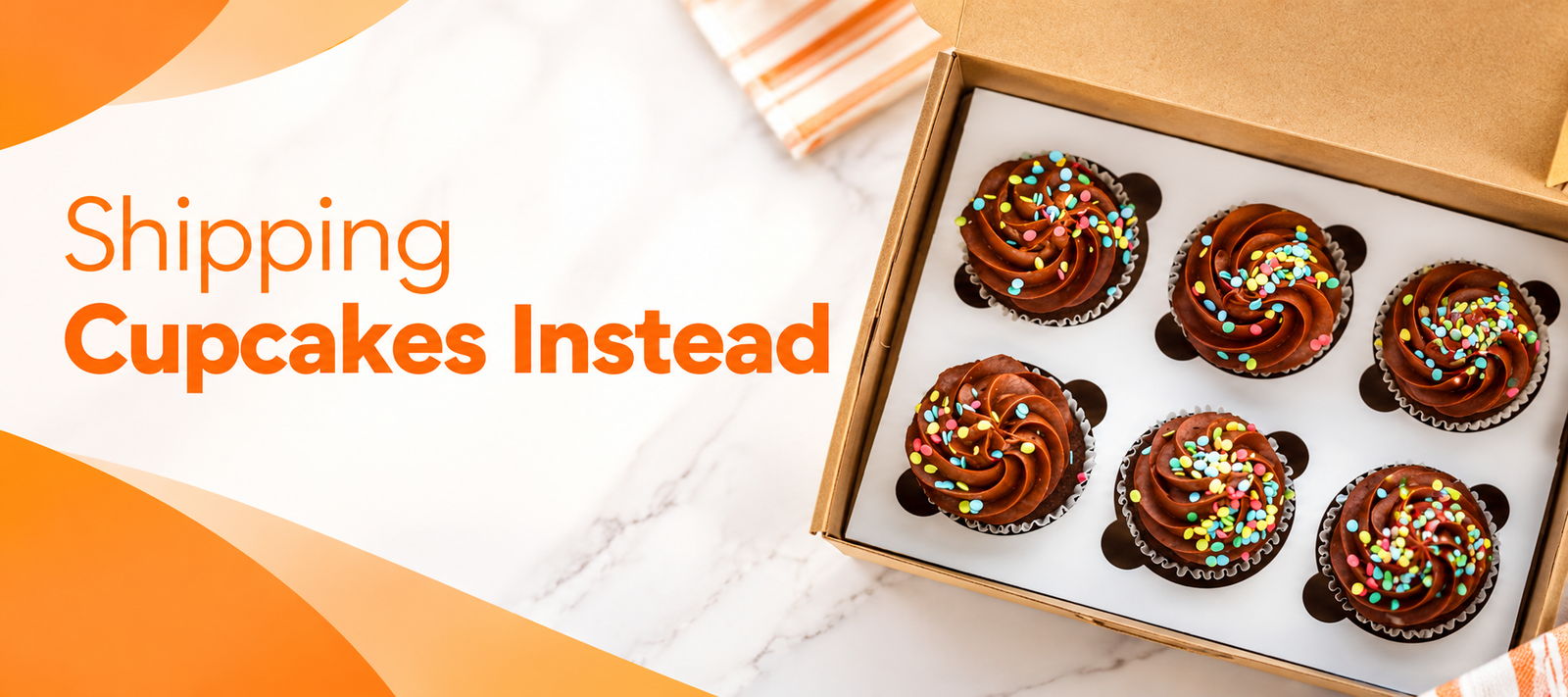
UPS suggests a holder with individual spaces, a candy stick pressed into each cupcake so the lid cannot hit the frosting, and plastic around the whole holder to keep it airtight. Cupcake boxes with inserts give each one its own space.
Custom Boxes Deals makes bakery boxes made to your product’s dimensions, with inserts or a window where the style suits, in stocks that include food grade and grease resistant board. Tell us the cake’s size and how far it travels, and we will suggest a box.
Frequently Asked Questions
Can you ship a cake with cream cheese frosting?
Only if it stays at 40 °F or below the whole way. FSIS lists cream cheese among the foods to discard after 2 hours above 40 °F.
Can you mail a cake through USPS?
Yes, at your own risk under USPS rules, packed so it can arrive before it spoils and marked “Perishable.”
How long can a cake be in transit?
UPS says to plan for no more than 30 hours. FedEx says to pack for at least 24 hours beyond the delivery commitment if you are not using next day delivery.
Should I freeze a cake before shipping it?
UPS says freezing intricate iced cakes can help them hold up in transit, and a frozen cake starts the trip cold.

Anthony Kim
Hello, I'm Anthony Kim, a seasoned packaging consultant and designer. With a professional journey spanning over four years, I've evolved from a budding designer to a recognized expert in the field. Currently holding the position of Packaging Consultant, I've honed my skills in creating not just visually stunning packaging but also solutions that align with strategic business goals.
View all articles →