Request Your Custom Quote
Tell us what you need. Our team normally replies within one business day.
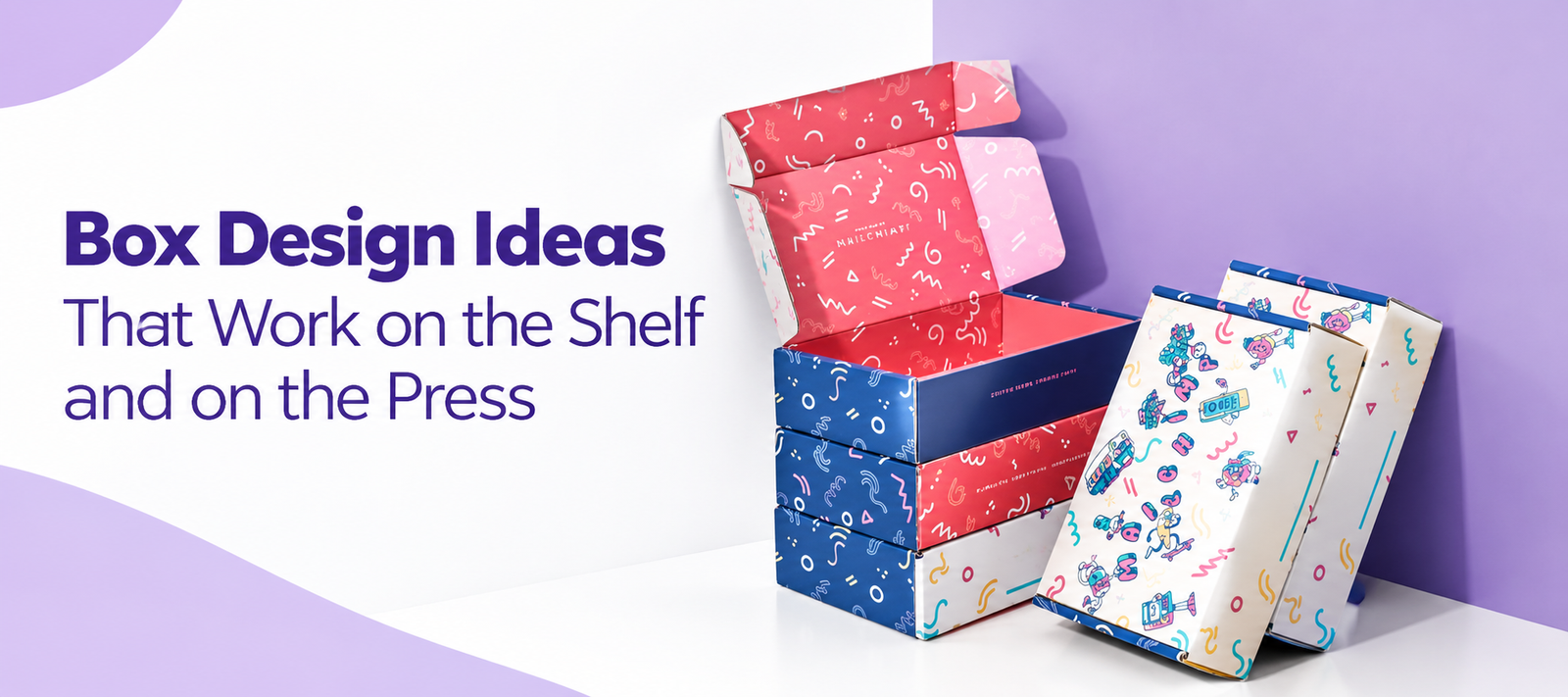
Box Design Ideas That Work on the Shelf and on the Press
 By
The best box design ideas start from the job the box has to do. A shipper has to survive the trip, a gift box has to feel special when it opens, and a retail box has to sell from a shelf. A retail box also has space already spoken for. In the US, the FTC’s packaging rules require household products that get used up to show what the product is, who makes or sells it, and how much is inside. So plan the ideas below around those parts, and pick the ones your box style and board can carry.
The Front Panel Rules Every Box Design Starts With
The FTC’s rules under the Fair Packaging and Labeling Act, at 16 CFR Part 500, cover consumer commodities sold in the US: household products that are usually used up in use. As of September 2026 they say:
- The front panel is the principal display panel, the part of the label “most likely to be displayed, presented, shown, or examined” on a store shelf.
- The identity of the product is a principal feature of that panel, easy to read and parallel to the base.
- The net quantity goes in the bottom 30 percent of the panel, in lines parallel to the base. Panels of 5 square inches or less are exempt from the 30 percent placement.
- The net quantity must stand out, “in distinct contrast” to everything else on the package.
- The label also names the maker, packer or distributor and where it is based.
Food, drugs, medical devices and cosmetics are outside Part 500 and follow FDA rules instead, which this post does not cover.
For design, that means keep the bottom band of the front panel calm enough for the net quantity to stand out, and give the product name real prominence before any pattern or photo competes with it.
Box Design Ideas for the Outside
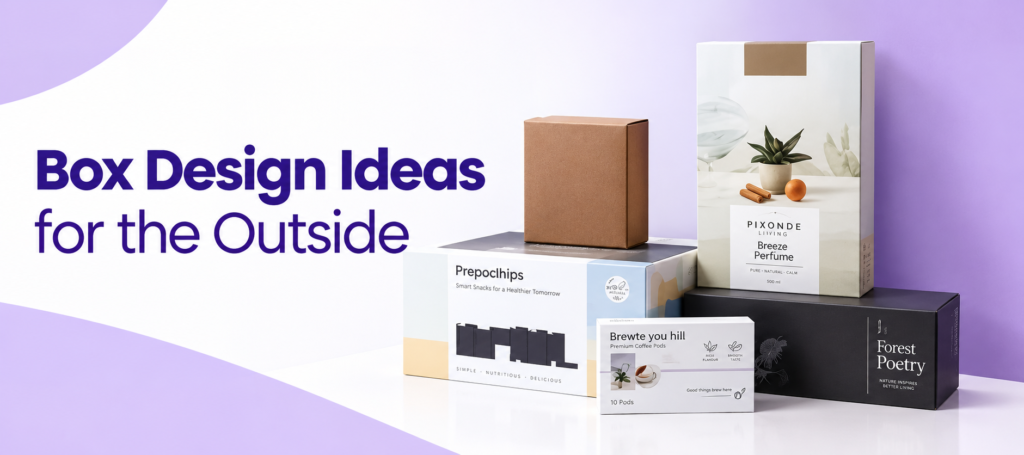
- One bold color, or a tight palette. One color, used across every box, becomes part of the brand’s look. For a brand color that has to stay close across print runs, specify a Pantone number, as set out in “What Is PMS Color?”
- A pattern or full surface print. Covering every panel and flap turns the whole box into the brand. The artwork has to follow the box’s flat shape, which our guide to what a dieline is explains.
- Typography first. A strong typeface can carry the whole design, as long as the required statements stay easy to read.
- Product photography. A clear photo shows what is inside. Leave the bottom band of the front panel clear for the net quantity.
- Natural and minimal. Kraft board with a one color logo, or left unprinted, suits a plain brand story. Custom Boxes Deals prints in CMYK or Pantone, or leaves the board unprinted.
Color meaning and typeface choice are covered in more depth in our guide “The Psychology of Retail Packaging.”
Structure Ideas
- A window. Shows the product without opening the box. A window needs a film patch or a die cut aperture, and that choice affects both cost and recycling.
- A sleeve. A printed sleeve over a plain box lets you change the design for a season or a flavor without changing the box.
- Inside printing. A message or pattern on the inside shows up only when the box opens.
- An insert. It keeps the product in place on the way to the customer, and frames it when the lid comes off.
For more ways small brands use formats like bags and labels, see our guide to creative small business packaging ideas.
Finish Ideas
- Spot UV puts a gloss on chosen areas only; our guide to spot UV printing shows how.
- Foil adds a metallic logo or line; see our guide “What Is Foil Stamping?”
- Embossing raises a logo so it can be felt; see “Embossing vs Debossing.”
- Matte or gloss lamination changes how the whole surface looks and feels.
Finish availability depends on the board and the box style you choose, so check each finish against your material before you design around it.
QR Codes: Use the Barcode Standard
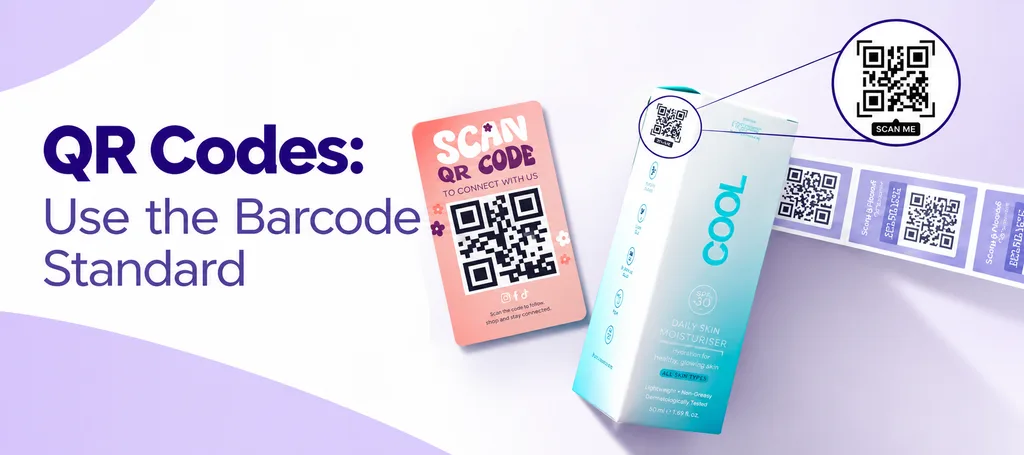
A QR code can link a box to a video, a refill page or a warranty form. If the box sells in stores, build it to the standard retail is moving to. GS1 US describes its Sunrise 2027 plan as “a global transition from 1D UPC barcodes to 2D barcodes, like QR codes.” Its advice to brands is to “ensure any existing QR codes are updated with GS1 Digital Link standards and include your Global Trade Item Number.” Built that way, one code can serve both the shopper’s phone and, as stores add 2D scanners, the register.
Eco Messages: The 60 Percent Test
A “recyclable” line on the box is a claim, and the FTC’s Green Guides set the test. As of September 2026, the Guides say a US marketer can make an unqualified recyclable claim only when recycling facilities are available to “at least 60 percent” of consumers or communities where the item is sold. Below that, the Guides say to qualify the claim, such as “This package may not be recyclable in your area.” And “if any component significantly limits the ability to recycle the item, any recyclable claim would be deceptive.”
A window film, a bonded barrier or a film laminate can change what happens to the box after use, and local recycling rules differ. Check those parts before you print a recycling message.
Brief It and Check It
- Start from the dieline, so every panel and flap is placed before artwork begins.
- Mark the front panel’s required parts first, then add ideas around them.
- Name brand colors by Pantone number where they matter.
- Review a mockup before production.
Design support is free at Custom Boxes Deals, and a free 3D mockup comes before production approval. If you only need to brand plain boxes, custom stickers are another route.
Frequently Asked Questions
What has to be on the front of a product box?
For consumer commodities under the FTC’s rules, the product’s identity and the net quantity, with the net quantity in the bottom 30 percent of the front panel unless the panel is 5 square inches or smaller. The maker, packer or distributor’s name and place of business also has to be on the label.
Can I put a QR code on my box?
Yes. For boxes sold in stores, GS1 US advises building it to GS1 Digital Link with your product’s GTIN.
Can I print “recyclable” on my box?
The FTC’s Green Guides say an unqualified claim needs recycling available to at least 60 percent of consumers or communities where it is sold, and no component that significantly limits recycling. Otherwise, qualify it.
Which box design ideas are easiest to change later?
A kraft or unprinted box with a sticker, or a sleeve over a plain box. Both let you change the look without reprinting the box itself.

Anthony Kim
Hello, I'm Anthony Kim, a seasoned packaging consultant and designer. With a professional journey spanning over four years, I've evolved from a budding designer to a recognized expert in the field. Currently holding the position of Packaging Consultant, I've honed my skills in creating not just visually stunning packaging but also solutions that align with strategic business goals.
View all articles →