Request Your Custom Quote
Tell us what you need. Our team normally replies within one business day.
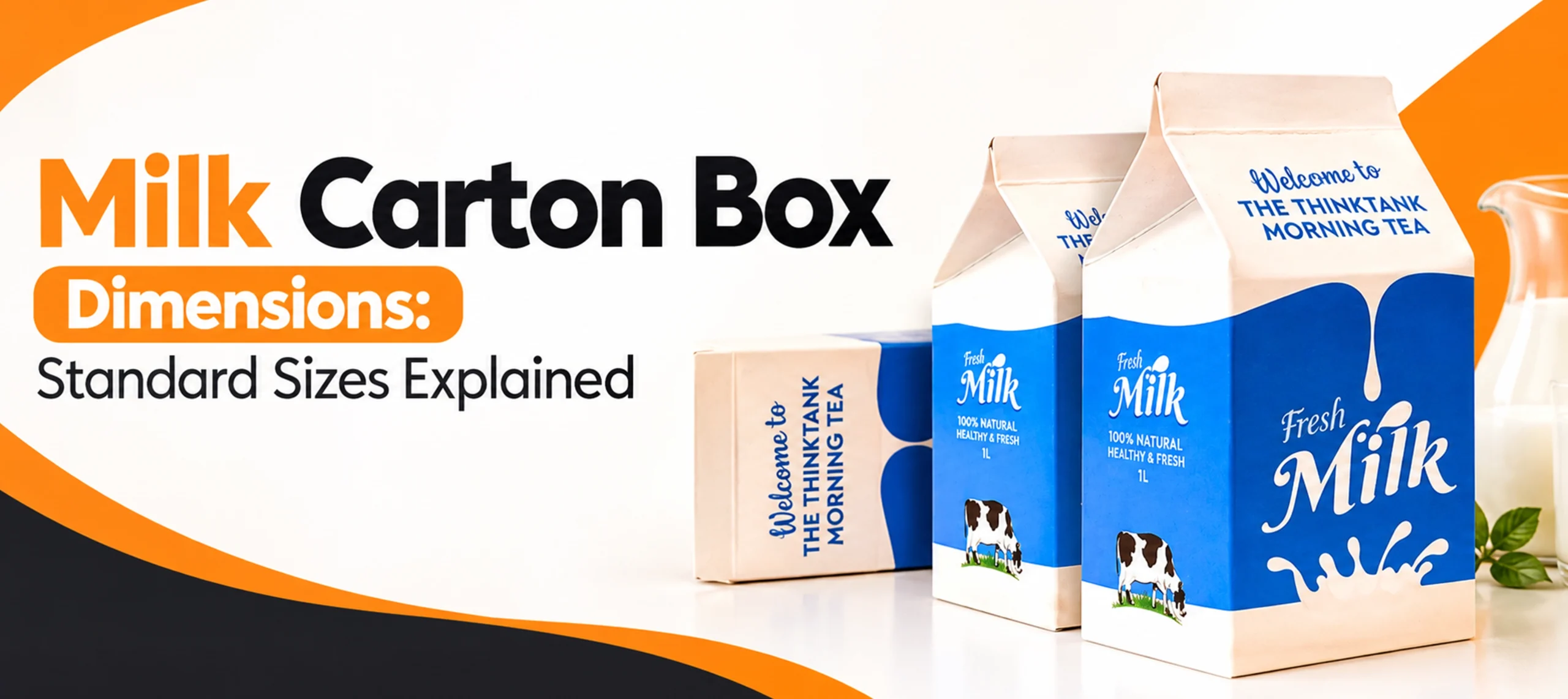
Milk Carton Box Dimensions: Standard Sizes Explained
 By
By Milk carton box dimensions vary more than most sites let on. Capacity is standardized. Half pint, pint, quart, half gallon and gallon are fixed volumes, 8, 16, 32, 64 and 128 fluid ounces. The physical box dimensions that hold those volumes are not standardized the same way, and five different packaging sites will give you five different numbers for the same size. That is not a typo on someone’s part. It is how the format actually works, and this guide explains why before it gives you the ranges. If you need an exact size for a real order, a custom gable box is built to your product’s own dimensions rather than a number pulled from a chart.
What Are the Standard Milk Carton Capacities?
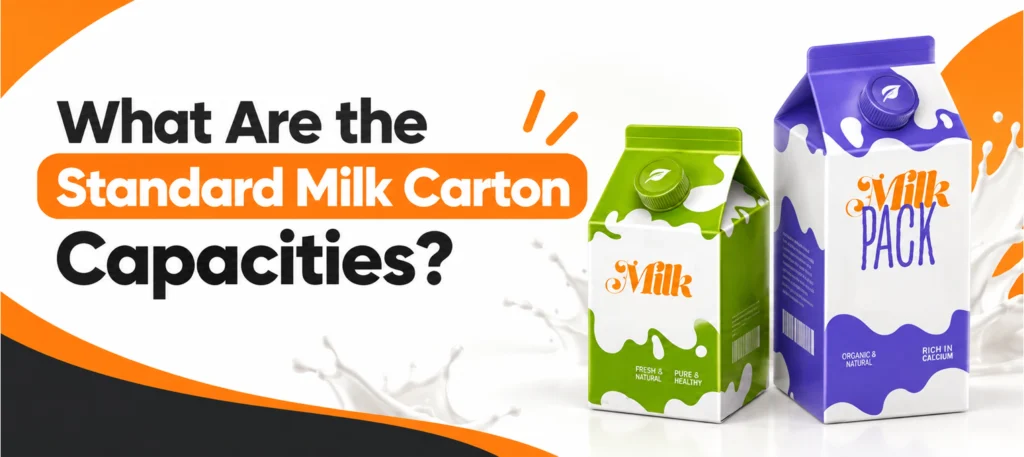
Capacity is the one number that genuinely is fixed across the industry.
Half pint holds 8 fluid ounces. Pint holds 16. Quart holds 32. Half gallon holds 64. Gallon holds 128. These volumes are the actual standard, tied to US customary liquid measure, and every dairy carton on the market is built around one of them.
Why Do Milk Carton Dimensions Disagree From One Source to the Next?
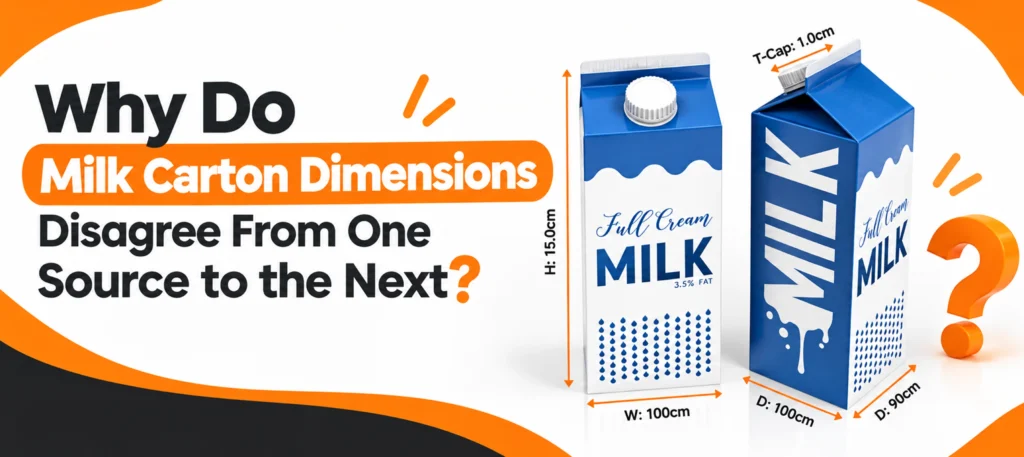
Here is the actual answer to the question a lot of people are really asking.
Four different packaging sites, checked directly for this guide, give four different measurements for a half pint carton. One states 2.8 by 2.8 by 4 inches. Another states 3.75 by 1.875 by 1.875 inches. A third states 2.25 by 2.25 by 3.75 inches. A fourth states 2.25 by 2.25 by 2.75 inches. All four are describing an 8 ounce carton. None of them agree, and not one of the four sites says so.
The reason is that carton filling equipment is built around a fixed base footprint, not a fixed overall shape. A machine built for one base size cannot run a different base size without retooling, so manufacturers standardize the base a filling line uses. What happens above that base, the overall height, the shoulder taper into the gable top, and even whether the footprint is closer to square or more rectangular, varies by manufacturer and by fold pattern. Two cartons can hold the same 8 ounces, use compatible filling equipment, and still measure differently on a tape measure.
Milk cartons also are not new. The folded, gable topped paper carton traces back to a real patent, US1160677A, granted to John Van Wormer on 16 November 1915 for a paper bottle “for milk or other liquids, of improved and highly efficient form and construction.” The gable top shape in that patent is recognizably the same shape on shelves today, over a century later, which is part of why the format is so widely copied with so little agreement on exact numbers.
What Do Typical Milk Carton Dimensions Look Like by Size?
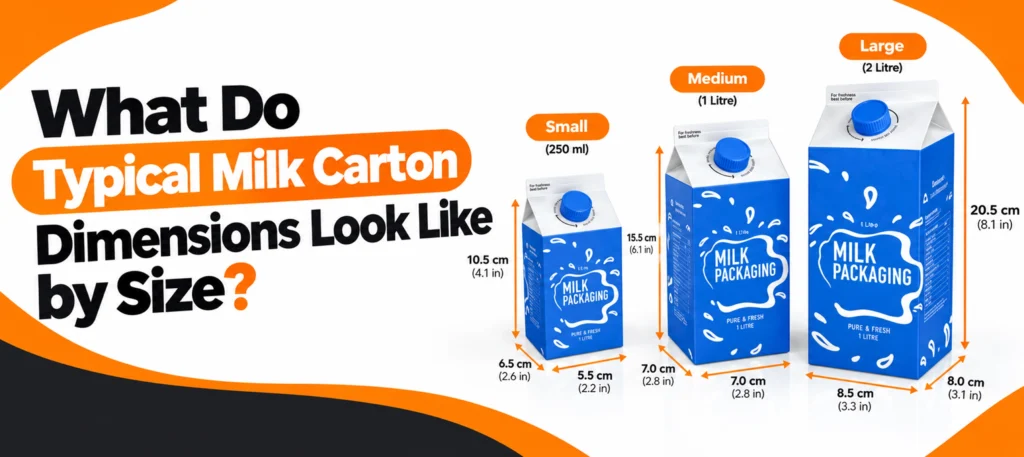
These typical milk carton box dimensions are ranges seen across real manufacturers, not a single fixed answer, for the reason explained above.
Half pint, 8 ounces. Base roughly 1.875 to 2.8 inches square, height roughly 2.75 to 4 inches, depending on the manufacturer’s fold.
Quart, 32 ounces. Base roughly 3.5 to 3.6 inches square, height roughly 7 to 8.3 inches. This size shows the most agreement across sources of any capacity checked.
Half gallon, 64 ounces. Base ranges more widely, from about 3.875 inches square up to a 5 to 6 inch rectangular footprint, height roughly 9.5 to 13 inches.
Gallon, 128 ounces. Base roughly 4.5 to 8 inches, height roughly 10 to 12.8 inches, the widest spread of the five capacities, largely because gallon cartons split between a tall single carton shape and a shorter, wider jug shaped format.
If a project depends on an exact figure rather than a workable range, that number needs to come from the actual manufacturer’s or filler’s specification, not from a chart on any packaging site, including this one. And if the gable shape itself is not what your product needs, it helps to step back and look at box style more broadly before locking in a size.
What Is the Difference Between a Gable Top and a Flat Top Carton?
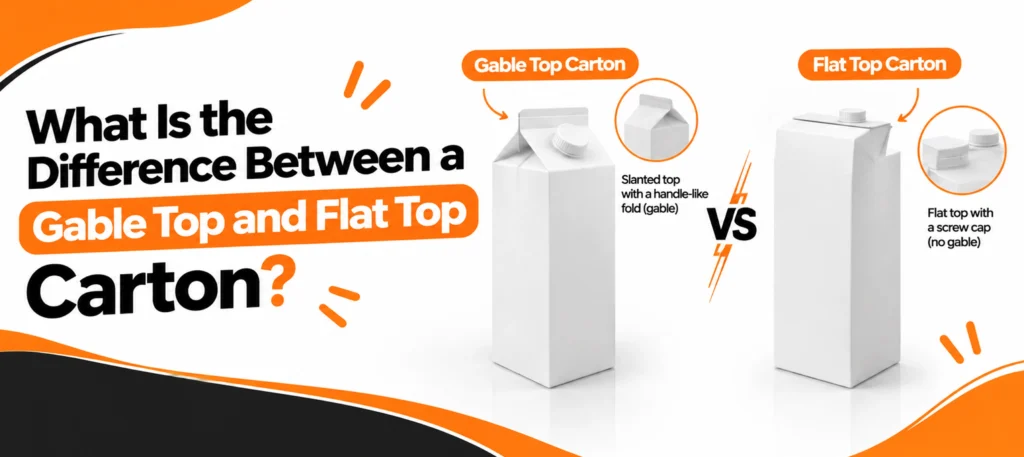
The gable top is the shape most people picture, a peaked roof line above the pour spout, formed by folding and sealing the top edge into a ridge. It is the shape in the original 1915 patent and the dominant retail dairy format in the United States today.
A flat top carton seals with a straight, flat closure instead of a peaked one, more common on aseptic, shelf stable cartons that do not need refrigeration until opened. The flat seal suits the different filling and sealing process those cartons go through. Both are folded from a single blank, and the choice between them comes down to the filling line and the shelf life the product needs, not the size of the carton.
What Is a Milk Carton Made From?
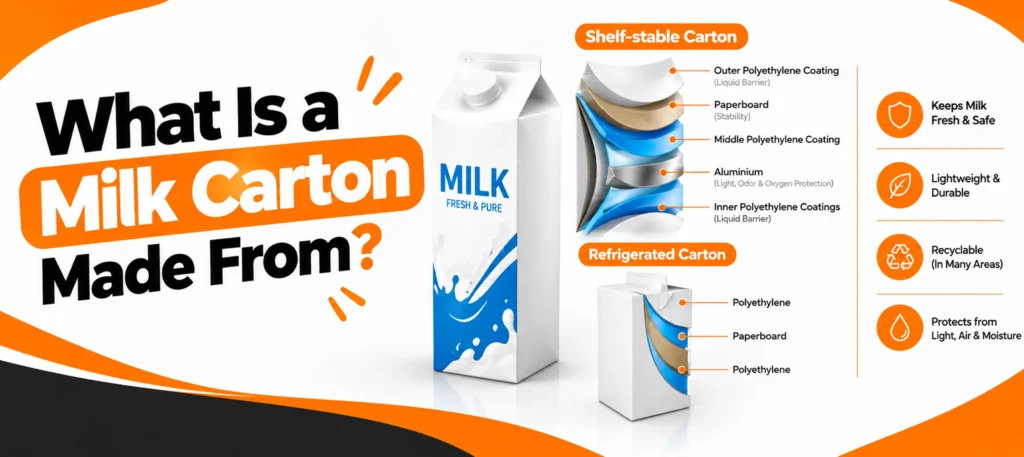
A milk carton is paperboard with a thin polyethylene coating on both sides, general practice across the liquid packaging industry. The paperboard gives the carton its structure and printability. The polyethylene coating is what actually holds the liquid, since uncoated paperboard alone would soak through.
Materials and finishing for a specific order, board weight, coating and print method, are confirmed against the actual specification rather than assumed from the carton style, since availability depends on what is being packaged and how it will be filled.
How Do You Get the Right Dimensions for a Custom Carton?
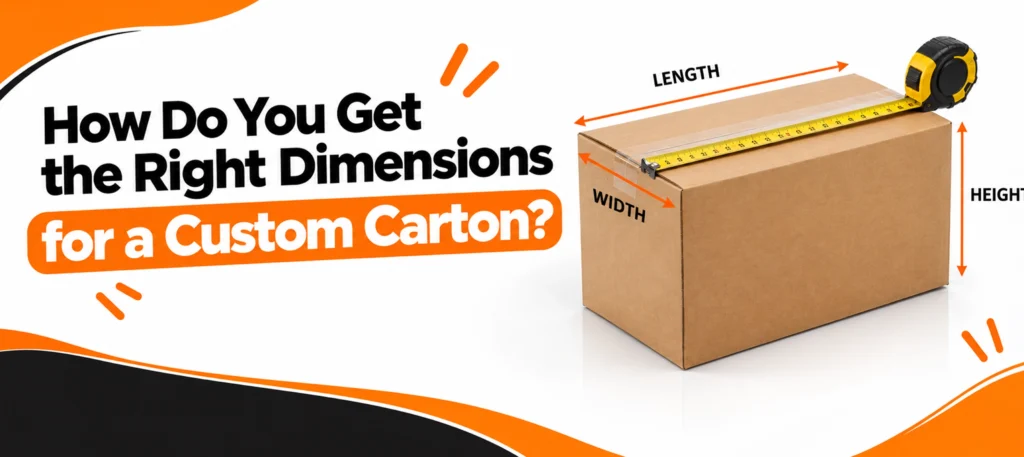
Given how much variation exists even at the same nominal capacity, the only reliable dimension is the one built for your actual product and fill volume.
At Custom Boxes Deals, a custom gable style box is built to your product’s dimensions directly, rather than adjusted from a generic chart size. We manufacture directly, not through third parties. Design support is free, with no design fees, and a free 3D mockup comes before production approval. Materials include kraft, corrugated, rigid board, SBS and cardstock. Our minimum order is 100 units per design.
If the carton is going straight onto a shelf rather than into cold storage first, custom display boxes are worth a look too, built for counter or shelf presentation rather than closed transport.
If a gable top shape suits your product but milk is not what is going inside it, our custom gable boxes category covers the wider range of what that structure is used for, from food service to retail gifting.
Frequently Asked Questions
What are the standard milk carton sizes?
By capacity: half pint, 8 ounces, pint, 16 ounces, quart, 32 ounces, half gallon, 64 ounces, and gallon, 128 ounces. These volumes are standardized. The physical box dimensions for each are not, and vary by manufacturer.
Why do different sites give different milk carton dimensions?
Filling equipment is built around a fixed carton base size, so manufacturers standardize the base their line uses. The height, shoulder shape and overall footprint above that base vary by manufacturer and fold pattern, which is why sources disagree even for the same nominal capacity.
What is the difference between a gable top and a flat top milk carton?
A gable top has a peaked, ridge shaped closure above the pour spout. A flat top seals with a straight closure instead, more common on aseptic, shelf stable cartons. Both fold from a single blank.
What is a milk carton made of?
Paperboard with a thin polyethylene coating on both sides. The paperboard provides structure, and the coating holds the liquid.
When was the paper milk carton invented?
1915. John Van Wormer’s patent, US1160677A, described a folded paper bottle for milk with a gable top shape that is still recognizable in cartons on shelves today.
Can I get a custom size milk carton box?
Yes. A carton or gable style box built to your product’s actual dimensions and fill volume is more reliable than adjusting a generic chart size, since exact dimensions vary this much between manufacturers even at the same nominal capacity.

Anthony Kim
Hello, I'm Anthony Kim, a seasoned packaging consultant and designer. With a professional journey spanning over four years, I've evolved from a budding designer to a recognized expert in the field. Currently holding the position of Packaging Consultant, I've honed my skills in creating not just visually stunning packaging but also solutions that align with strategic business goals.
View all articles →