Request Your Custom Quote
Tell us what you need. Our team normally replies within one business day.
Mylar vs Rigid Packaging: Different Jobs, Often One Package
 By
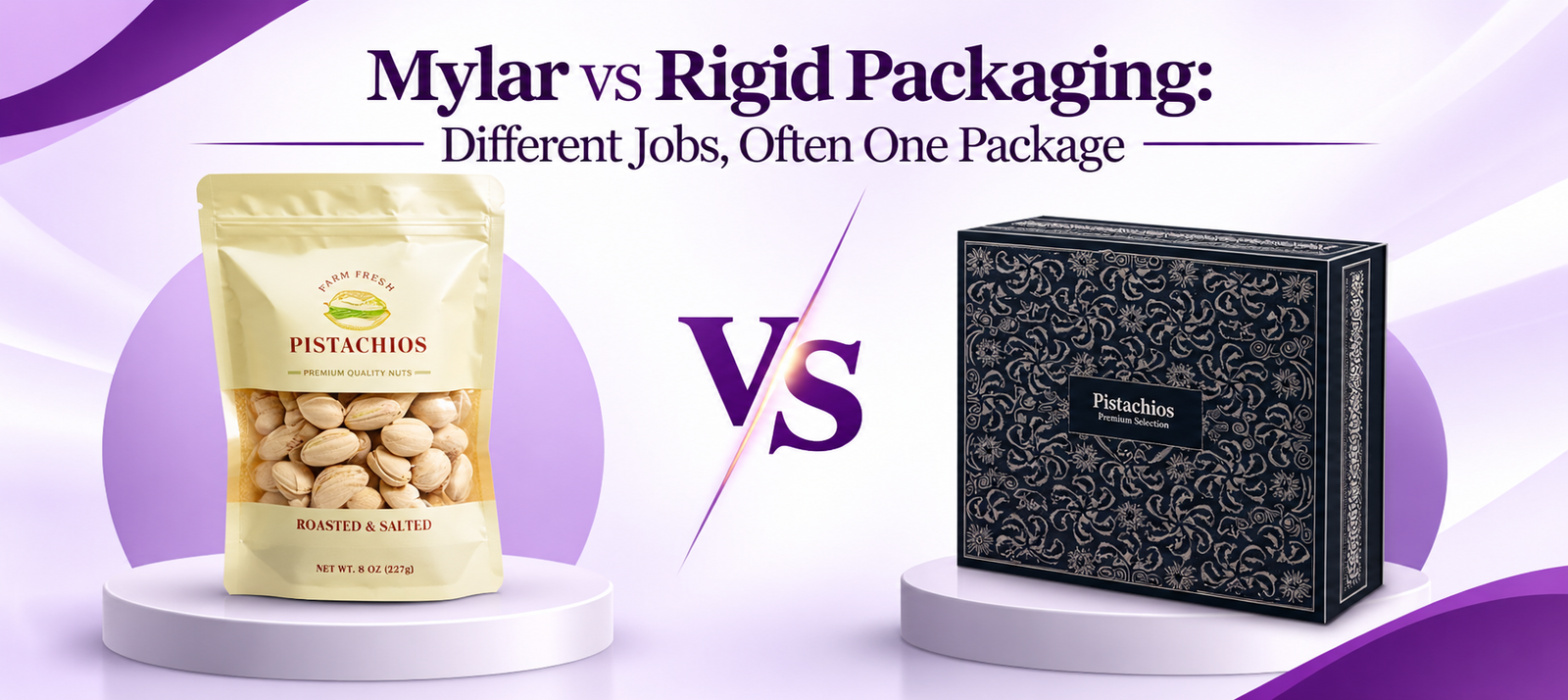
Mylar vs rigid packaging is less of a contest than it looks. A mylar bag built with a foil or metallized layer is a barrier: it blocks light and slows moisture and air. A rigid box is a structure: stiff board that holds its shape and presents the product. They solve different problems, so a product that needs both jobs can have both: a bag inside a box.
What “Mylar” Actually Is
Mylar is a brand name. The USPTO’s trademark record registers MYLAR for “polyester film”, owned today by DuPont Teijin Films US. The application was filed on July 13, 1951, the mark was first used on June 21, 1951, and it was registered on June 10, 1952. Three of the four supplier pages benchmarked for this post date its first use to 1952; the record says 1951.
The film itself is BoPET, biaxially oriented polyethylene terephthalate: polyester stretched in two directions. It is not polyethylene, although the source page for this post calls mylar both.
What a Mylar Bag Is Made Of
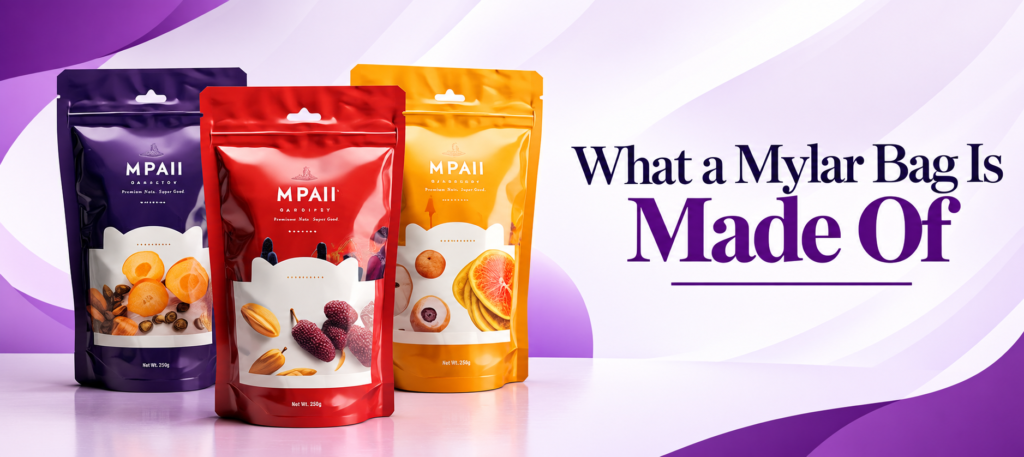
A bag sold as “mylar” can be a laminate, several layers bonded into one sheet. Wikipedia’s Mylar entry describes metallized film: polyester with a thin coat of aluminum deposited on it, which makes it “much less permeable to gases.” It says laminates built on that film protect food against oxidation and aroma loss, and gives coffee “foil” packs and pouches for convenience foods as examples.
The Flexible Packaging Association’s definition puts these bags in a wider family: flexible packaging made from “paper, plastic, film, aluminum foil, or any combination of those materials.” A foil layer blocks light and slows moisture transfer far more than a plain paper wall. How a finished bag performs depends on its layers, so ask for the construction rather than assuming every mylar bag is the same.
Mylar bags can be closed with a heat seal; our guide to sealing mylar bags covers doing it by hand.
Rigid Boxes, Defined
Wikipedia’s cardboard box entry describes the set up box, another name for a rigid box, as paperboard of a grade that does not bend, delivered already built. Some of the pages benchmarked here also call glass jars, metal tins and hard plastic tubs “rigid packaging”. This post means the paperboard box.
Paperboard holds its shape. A plain board box has no foil layer and its lid is not sealed, so it is not the part that keeps a product fresh. Lined barrier board exists, but it is a specification you ask for, not the default.
The Job Each One Does
| Mylar bag | Rigid box | |
|---|---|---|
| Main job | Barrier against light, moisture and air | Holding its shape and presenting the product |
| Material | Film or laminated film, with a foil or metallized layer where barrier matters | Non bending paperboard |
| Shape | Takes the shape of what is inside | Holds its own shape |
| Arrives | Empty and open, to be filled and then sealed | Built |
| Barrier on its own | Yes, when sealed and built for it | No foil layer and no seal, unless lined |
Bag, Box or Bag in a Box?
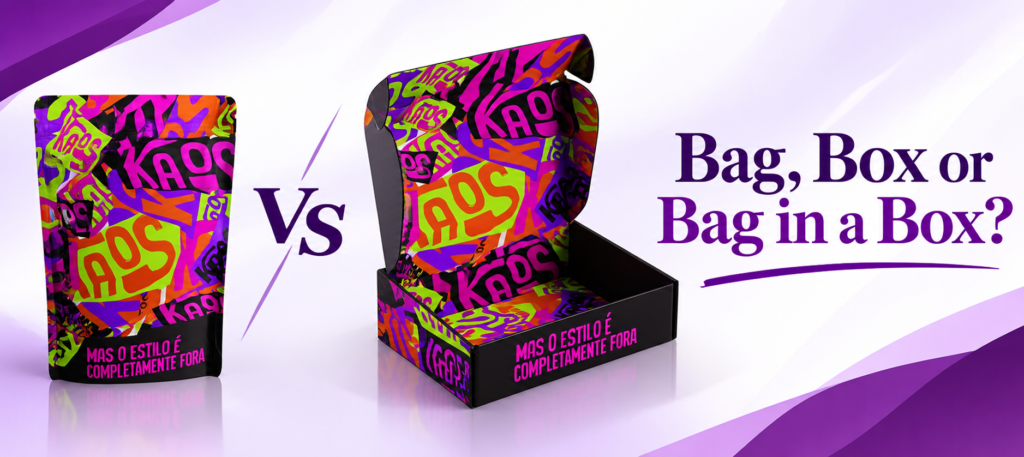
- A dry food, coffee, tea or anything that goes stale or picks up moisture: start with a sealed bag. The barrier is the point.
- A product that needs to look like a gift, hold its shape or sit on display, and does not spoil: a rigid box alone can be enough.
- A product that needs both: put the sealed bag inside the box. The bag does the barrier work and the box presents it. Rigid boxes with inserts can hold the bag in a cut space so it does not slide.
Claims to Keep Off Both
“Biodegradable.” Three of the four supplier pages benchmarked for this post praise paperboard or bags as biodegradable. For US marketers, 16 CFR 260.8 of the FTC’s Green Guides, in its text current in October 2026, says an unqualified “biodegradable” claim needs evidence that the whole item breaks down within a reasonably short time after customary disposal. For packaging that ends up in a landfill, an incinerator or a recycling facility, the FTC says those places “do not present conditions in which complete decomposition will occur within one year.” A claim can still be made with evidence behind it and a clear qualifier on where and how fast the item breaks down.
“Recyclable.” A bonded barrier or a film laminate changes how a pack is handled at end of life, and local recycling rules differ. The guide to the benefits of rigid boxes sets out what the FTC asks before a “recyclable” mark goes on a pack.
Barrier numbers and shelf life. Leave them off unless your bag’s specification states them.
Custom Boxes Deals makes both mylar bags and rigid boxes. Tell us what goes inside and we will confirm which materials suit it at quote.
Frequently Asked Questions
Is Mylar the same as plastic?
Mylar is a trademark for a polyester film, a plastic. A bag sold as “mylar” can also be a laminate that adds a metal layer and other films.
Does a rigid box keep food fresh?
Not on its own. A plain board box has no foil layer and its lid is not sealed. Pack the food in a sealed bag and put the bag in the box.
Which is cheaper, a mylar bag or a rigid box?
It depends on the size, the build and the order. We quote each project after reviewing the brief.
Can I call my packaging biodegradable?
For packaging that ends up in landfill, only with a clear qualifier and evidence behind it. The FTC treats an unqualified biodegradable claim on such packaging as deceptive, because a landfill does not let it fully break down within a year.

Anthony Kim
Hello, I'm Anthony Kim, a seasoned packaging consultant and designer. With a professional journey spanning over four years, I've evolved from a budding designer to a recognized expert in the field. Currently holding the position of Packaging Consultant, I've honed my skills in creating not just visually stunning packaging but also solutions that align with strategic business goals.
View all articles →