
Request Your Custom Quote
Tell us what you need. Our team normally replies within one business day.
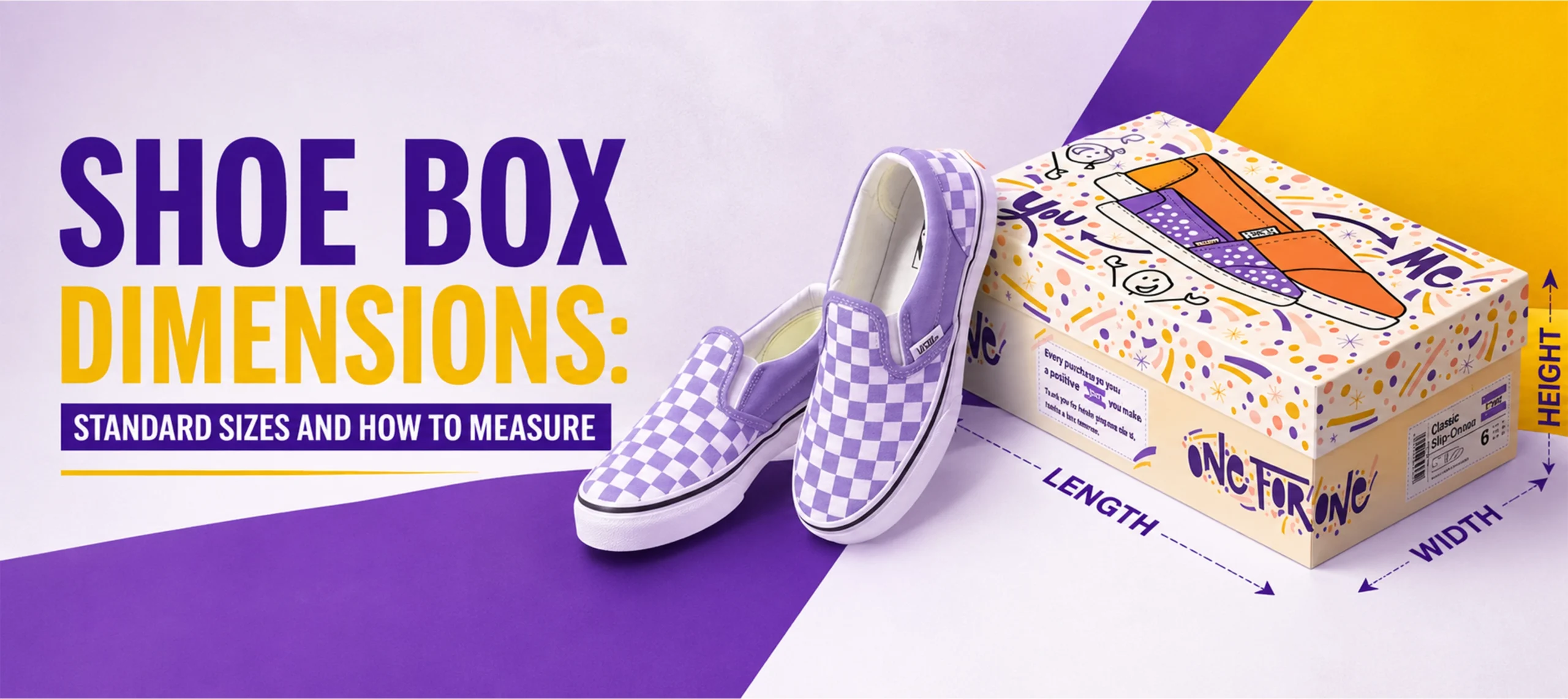
Shoe Box Dimensions: Standard Sizes and How to Measure
 By
By A standard shoe box runs about 13 inches long, 7.5 inches wide and 4.5 inches tall, which is roughly 33 by 19 by 11.5 centimeters. That figure covers most adult sizes, but men’s, women’s and kids’ boxes each have their own standard range, and the right one for your product depends on the shoe going inside it, not just the category. Before you settle on a box style, measure the shoe itself first. That single step, covered next, is what decides whether the finished box actually fits.
Measure the Shoe Before You Measure the Box
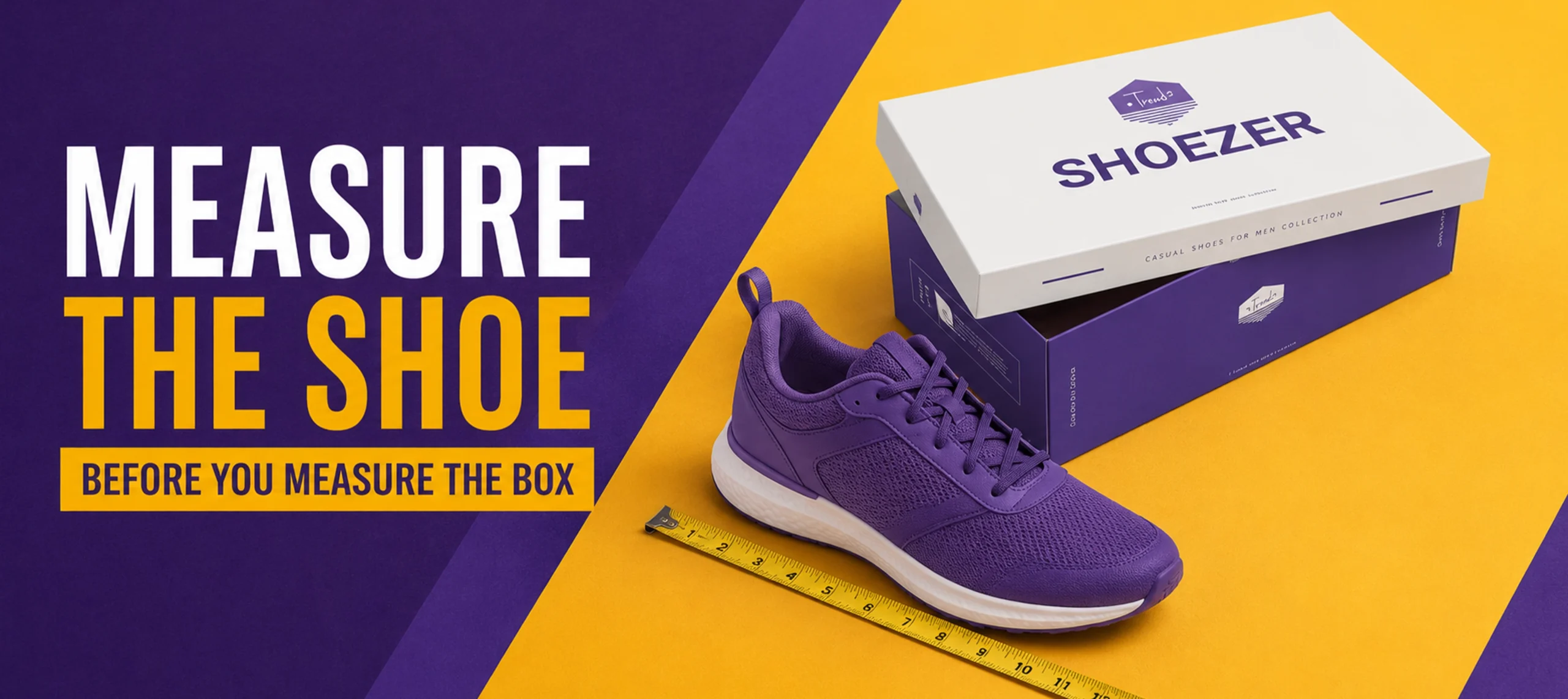
This is the step that actually decides your box size, and it comes before any of the numbers below.
Shoe stores use a metal tool called a Brannock device for this, and its maker publishes the correct method. According to the Brannock Device Company’s own fitting instructions, the person stands with weight evenly distributed on both feet so the foot has spread to its full size, the heel sits in the heel cup, and length is read by pressing the toes flat and looking straight down over the longest toe, which is not always the big toe. Width is read by sliding the width bar to the widest part of the foot.
You will not have a Brannock device on hand, and you do not need one to apply the same principle. Stand the shoe on a flat surface and measure three things directly: the overall length from heel to the front of the toe, the width at the widest point of the sole, and the height including anything that sits proud of the base, such as a raised heel or a tongue standing upright. Add clearance on top of those three numbers, not instead of them. A snug box that barely closes is as much of a problem as one that leaves the shoe sliding around inside.
Skip this step and you are sizing the box to a category average rather than to the product that actually goes inside it. That is the single biggest reason a “standard size” box turns out wrong for a specific shoe.
Standard Shoe Box Dimensions by Category
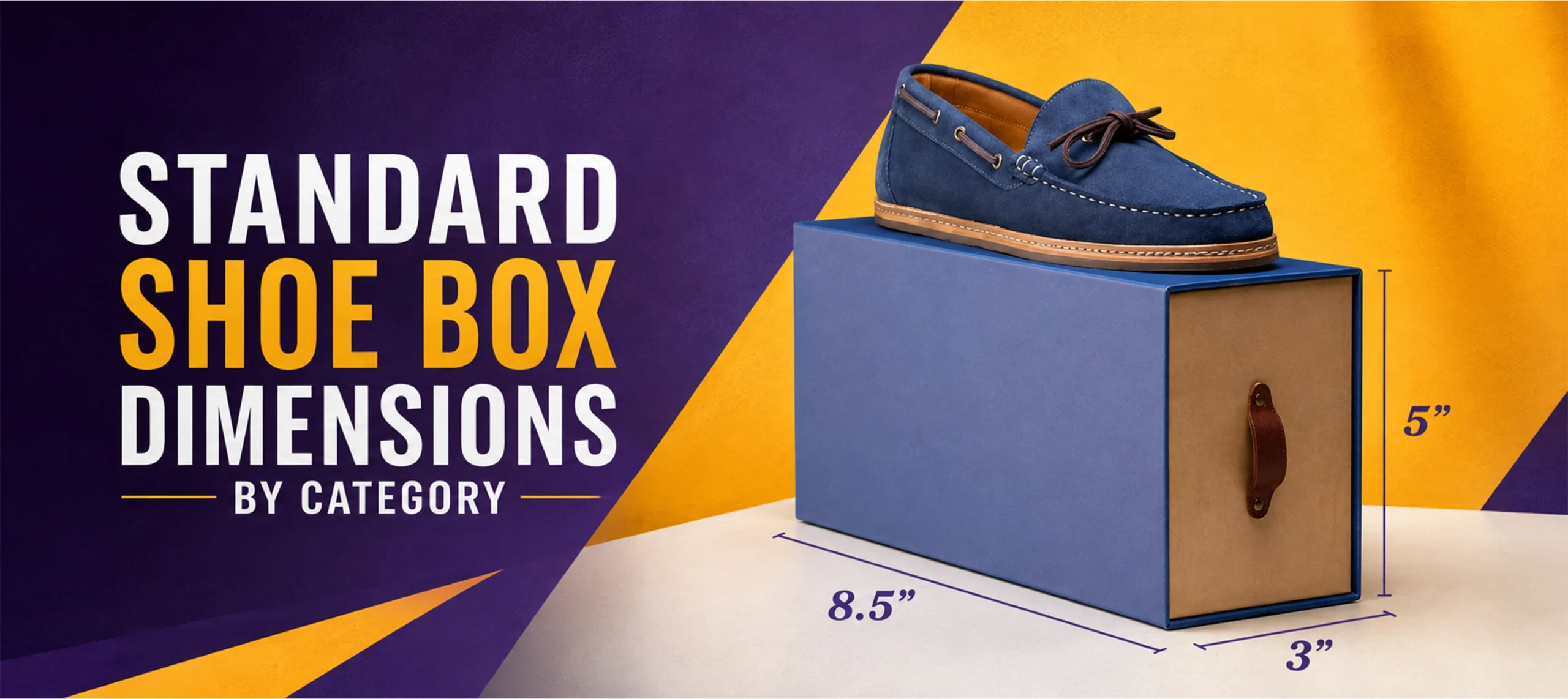
Once you know the shoe’s own measurements, these ranges tell you where it should land.
- Men’s. Roughly 13 to 14 inches long, 7 to 8 inches wide, 4 to 5 inches tall. In centimeters, about 33 to 35.5 by 18 to 20 by 10 to 13.
- Women’s. Roughly 12 to 13 inches long, 7 to 8 inches wide, 4 to 5 inches tall. In centimeters, about 30.5 to 33 by 18 to 20 by 10 to 13.
- Children’s. Roughly 7 to 10 inches long, 5 to 6 inches wide, 2 to 3 inches tall. In centimeters, about 18 to 25.5 by 13 to 15 by 5 to 7.5.
These are starting points for a standard adult or child shoe. Athletic shoes with a raised sole, boots, and anything with structural height beyond a normal upper will need more room than the category average, which is exactly why measuring the shoe itself matters more than picking a size off a chart.
How to Measure an Existing Shoe Box
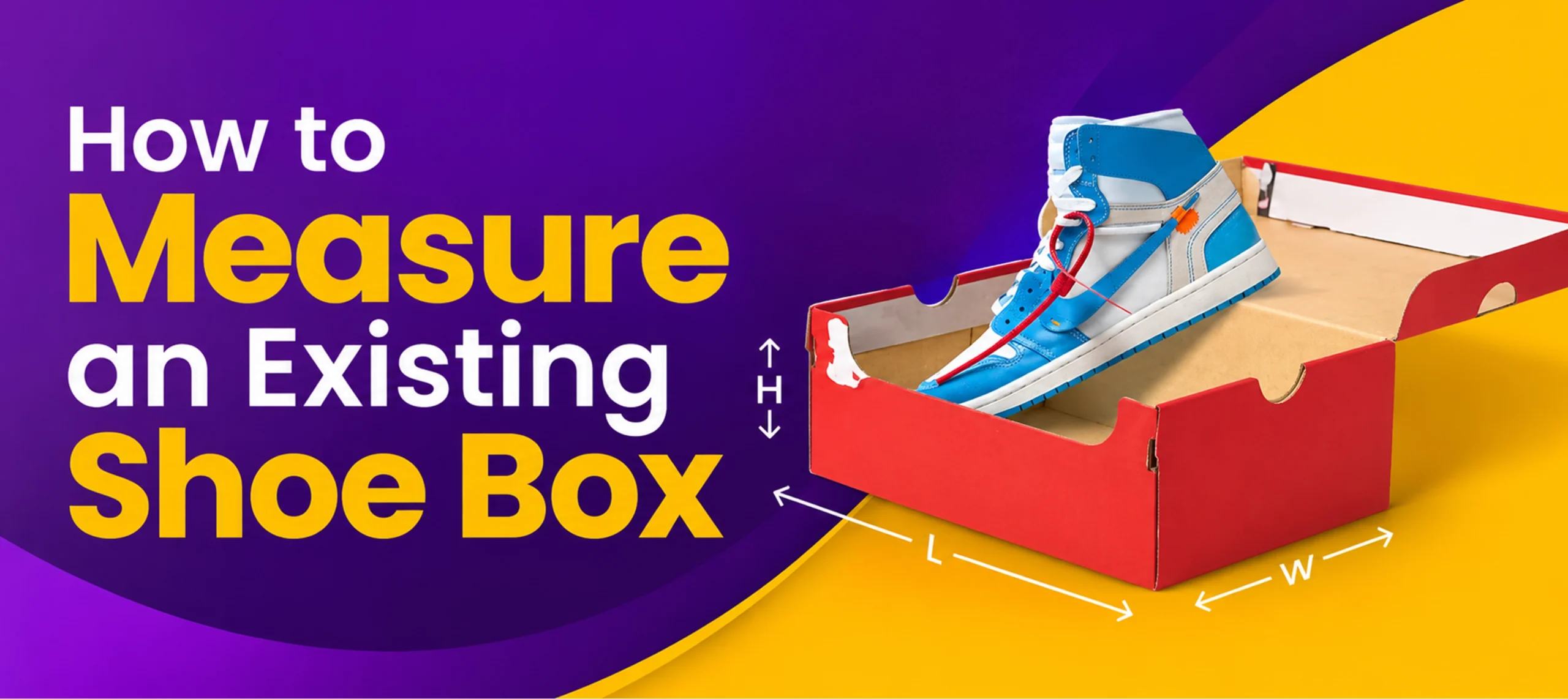
If you already have a box and need its dimensions, rather than a shoe you are sizing one for, the method is simpler.
Place the box on a flat surface. Length is the longest side, measured end to end. Width is the shorter side at the base, measured perpendicular to the length. Height is measured from the bottom to the top edge. Use a tape measure or a steel ruler and keep it flat against the surface for an accurate reading, and note whether you are measuring inside or outside the box, since wall thickness on rigid or double wall board can account for a real difference between the two.
Working Out Volume Correctly
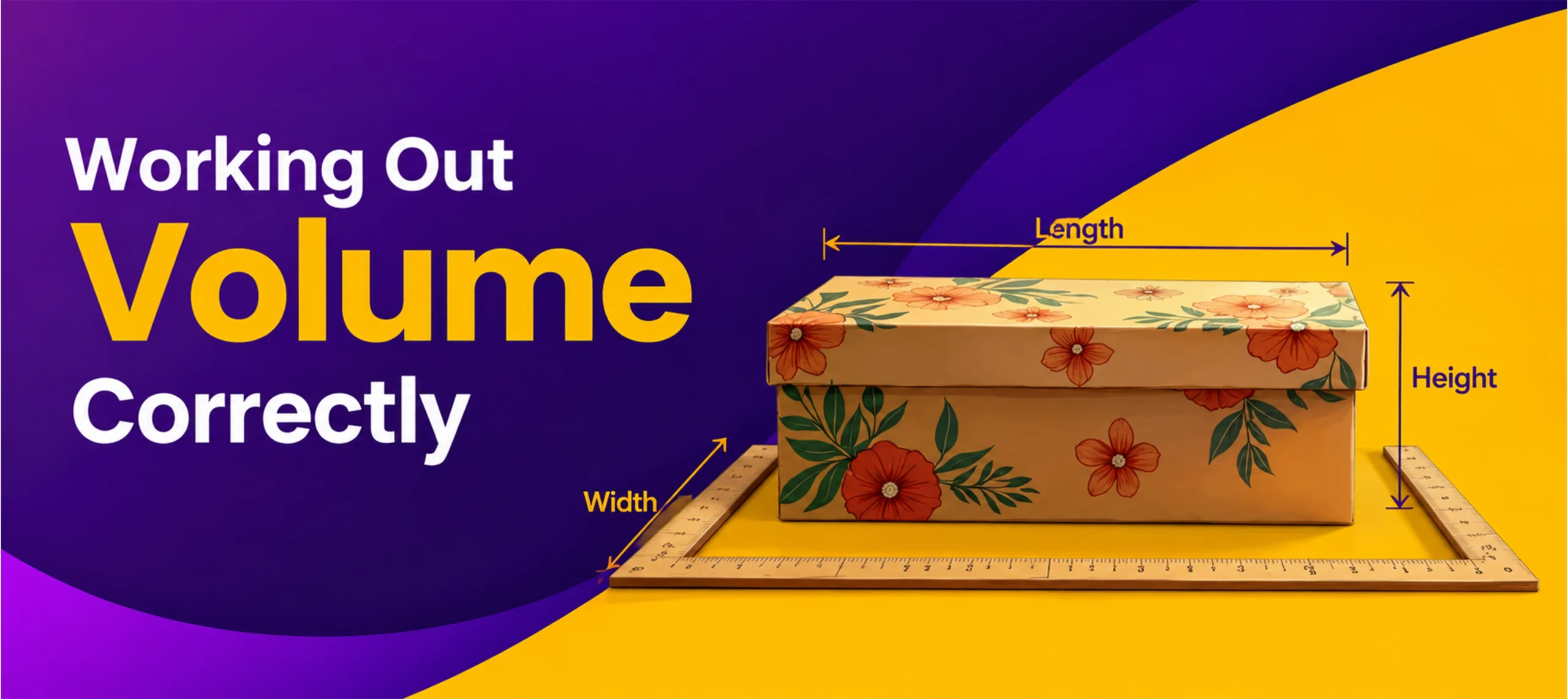
Volume is length multiplied by width multiplied by height, and it is worth checking your own arithmetic on this rather than trusting a figure from memory.
Take a men’s box at 14 by 8 by 5 inches. The volume is 14 times 8 times 5, which is 560 cubic inches. In centimeters, using 35.5 by 20 by 12.5, the volume is 35.5 times 20 times 12.5, which is 8,875 cubic centimeters. Both figures describe the same box. If your own calculation lands somewhere else, recheck it before it goes into a spec sheet, since a volume error changes how much cushioning material actually fits alongside the shoe.
Dimensional Weight and Shipping Cost

Shipping carriers do not always charge by actual weight. For a large, light box like a shoe box, they generally charge by size instead, using a measure called dimensional weight.
The general method is length times width times height, divided by a standard divisor the carrier sets, with the result rounded up to the nearest pound. The exact divisor is set by each carrier and changes from time to time, so it is worth confirming the current figure directly with whichever carrier you are shipping through rather than relying on a number that may be out of date. Whatever the actual and dimensional weights come out to, carriers bill on the higher of the two, so an oversized box can cost more to ship than a snug one even when it weighs almost nothing.
A shoe box typically weighs somewhere between 1.5 and 10 pounds fully packed, depending on the shoe and any protective filler such as bubble wrap or paper. That range, and the dimensional weight rule above, is why a box sized to the shoe rather than to a generic category tends to ship for less.
Choosing the Right Box for Your Shoes
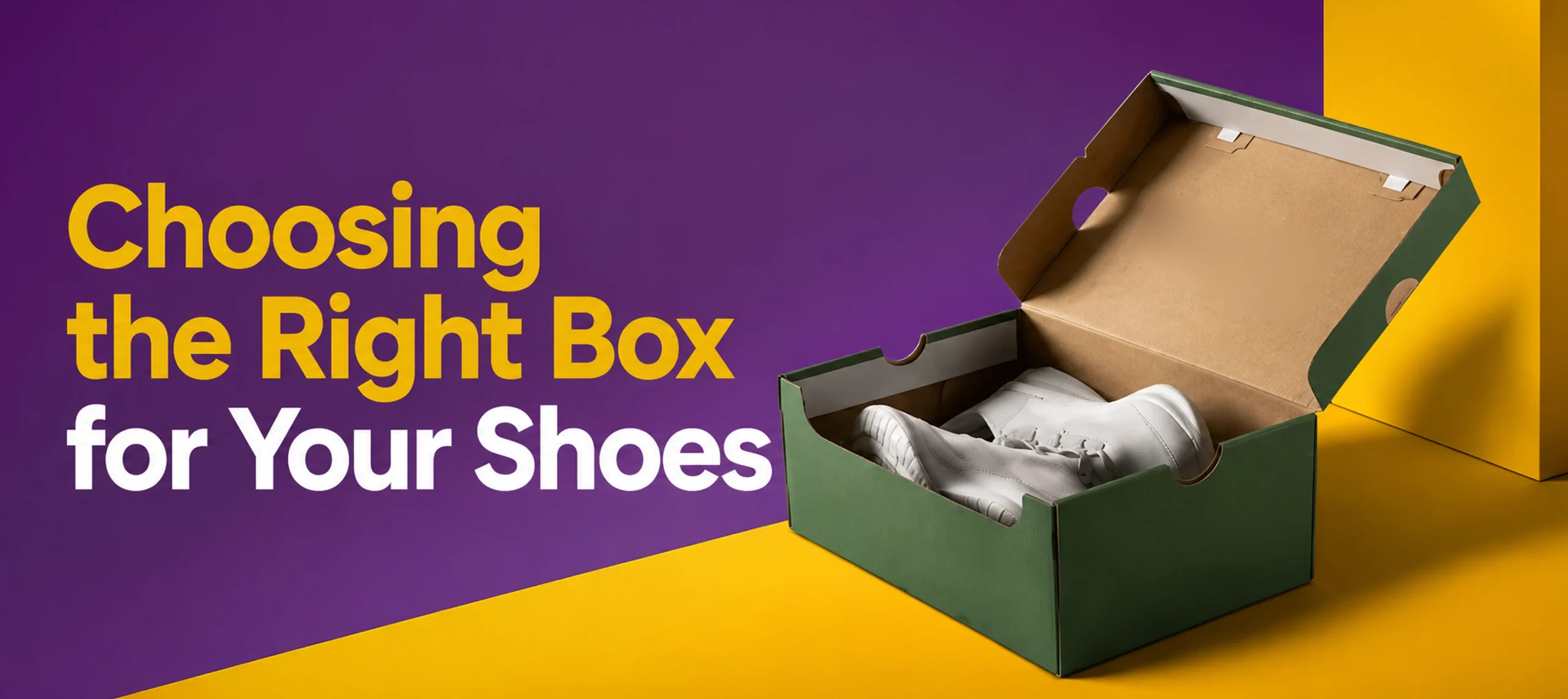
A snug fit matters more than the raw dimensions once the numbers are in front of you.
Leave a small amount of clearance beyond the shoe’s own measurements so the lid closes without pressure, but not so much that the shoe shifts in transit. Custom rigid boxes hold their shape well for a premium retail presentation, since the box does not flex the way a folding carton does. For everyday retail and shipping, a corrugated or folding style is usually the more economical choice, and the right structure depends on whether the box is meant to be handled by a shopper or mostly seen once at unboxing.
Manufacturing carries a small tolerance in every run, typically a couple of millimeters either way, from material expansion, die cutting, or folding. It does not affect fit at normal clearance levels, but it is worth knowing about if you are specifying a very tight fit on purpose.
If you are producing packaging beyond footwear, the same measuring principle applies to custom apparel boxes and custom display boxes: measure the product first, then size the box to it.
At Custom Boxes Deals we manufacture in house rather than through third parties, and design support is free with no design fees. You get a free 3D mockup before production approval and a real product video of the packaging before bulk production begins, so a box built to your actual shoe measurements is confirmed before it goes into full runs. Our minimum order is 100 units per design.
Frequently Asked Questions

What is the standard size of a shoe box?
About 13 inches long, 7.5 inches wide and 4.5 inches tall for a typical adult shoe, roughly 33 by 19 by 11.5 centimeters. Men’s, women’s and children’s boxes each have their own standard range around that figure.
How do I measure a shoe box?
Place it on a flat surface. Length is the longest side end to end, width is the shorter side at the base, and height is bottom to top. Note whether you are measuring the inside or the outside, since wall thickness makes a real difference on rigid board.
How do I know what size box my shoes need?
Measure the shoe itself first: length from heel to toe, width at the widest point of the sole, and height including anything raised above the base, such as the heel or tongue. Add a small clearance to each figure rather than sizing directly to the shoe with no room at all.
How do I calculate the volume of a shoe box?
Multiply length by width by height. A 14 by 8 by 5 inch box is 560 cubic inches. In centimeters, 35.5 by 20 by 12.5 works out to 8,875 cubic cm.
Why does box size affect shipping cost?
Carriers often charge by dimensional weight rather than actual weight for large, light packages, which is length times width times height divided by a divisor the carrier sets. Billing uses whichever is higher, actual or dimensional weight, so an oversized box can cost more to ship even if it is nearly empty.
What is the difference between men’s, women’s and kids’ shoe box sizes?
They scale with typical foot size. Men’s boxes run largest, women’s slightly smaller, and children’s boxes are noticeably shorter and narrower. All three are starting ranges, and the shoe itself should still be measured for anything unusual in shape or height.

Anthony Kim
Hello, I'm Anthony Kim, a seasoned packaging consultant and designer. With a professional journey spanning over four years, I've evolved from a budding designer to a recognized expert in the field. Currently holding the position of Packaging Consultant, I've honed my skills in creating not just visually stunning packaging but also solutions that align with strategic business goals.
View all articles →