
Request Your Custom Quote
Tell us what you need. Our team normally replies within one business day.
Baseball Card Dimensions: Standard Size and Vintage Sizes
 By
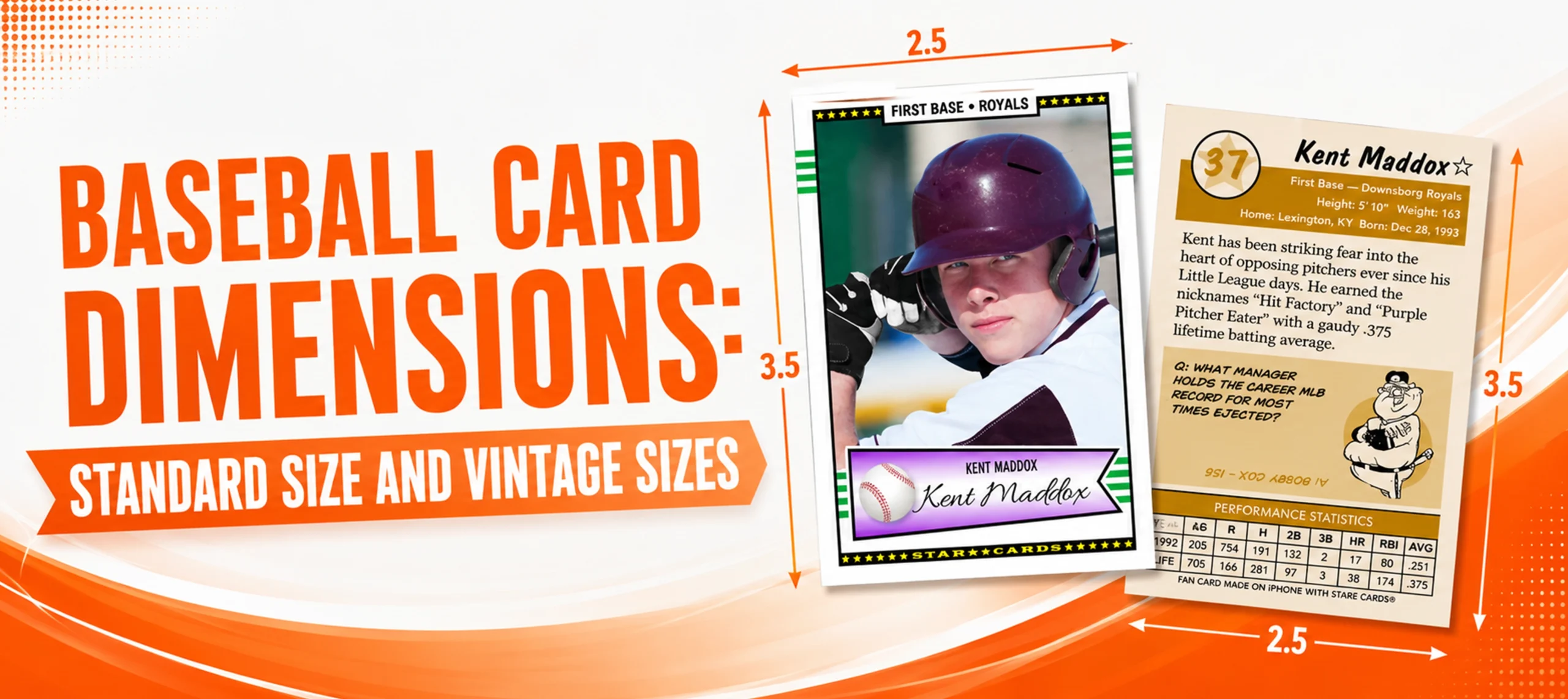
By Baseball card dimensions come down to one number for most people. It is 2.5 inches by 3.5 inches. Every major card company has used that size since 1957. That number answers most searches for this topic, but not all of them. A card from the 1930s is not that size. A graded card in its holder is a different size again. A print file built for a custom playing card box needs a third set of numbers entirely. This guide covers all three. Real figures by era, and the print file math worked out in full.
Baseball Cards Have Not Always Been This Size
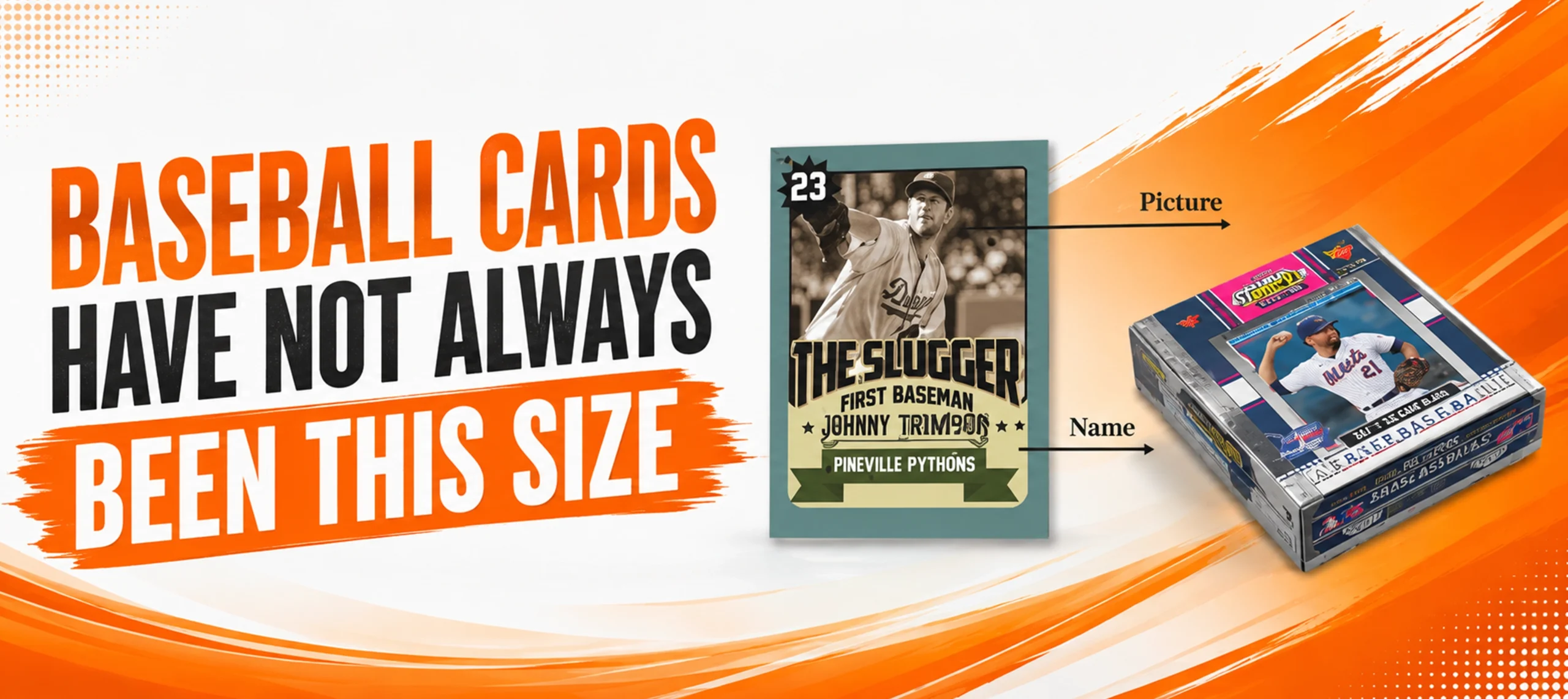
The 2.5 by 3.5 inch standard is a modern one. Topps set it in 1957. Fleer, Donruss, Score, Upper Deck and Panini all matched it afterward. That is why the size has held for nearly seventy years. Before that, card size moved by set and by decade.
The earliest baseball card on record predates the standard by almost a century. Princeton University’s special collections date it to 1869. It was a trade card of the Cincinnati Red Stockings. The sporting goods dealer Peck and Snyder issued it, twenty years before the tobacco card era most people associate with early baseball cards.
The four eras, size by size:
- 1909 to 1911, T206 tobacco cards, 1.44 by 2.625 inches.
- 1933 to 1941, Goudey gum cards, 2.375 by 2.875 inches.
- 1952, Topps, the oversized run, 2.625 by 3.75 inches.
- 1957 to today, Topps and every major brand since, 2.5 by 3.5 inches.
Sourced from T206Cards.com’s card size guide, a reference built specifically around tracking these changes by set. Even within one era, size was not perfectly consistent. T206 cards in particular are known to run slightly short or long. That depends on how the printed sheet was cut. A card measuring a hair off 1.44 by 2.625 inches is not automatically miscut or fake.
Baseball Card Dimensions in Millimeters and Centimeters
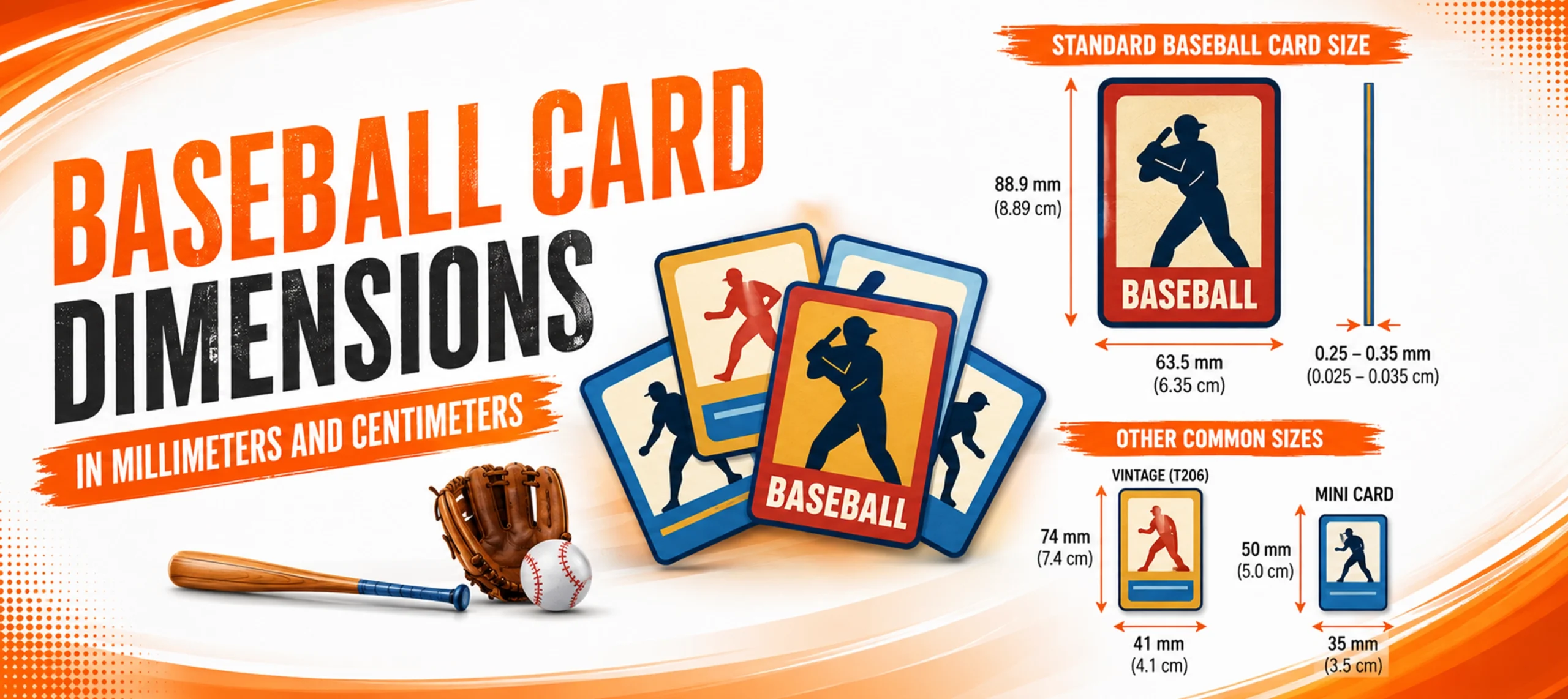
For anyone working from a metric spec sheet, 2.5 by 3.5 inches converts to 6.35 by 8.89 centimeters. In millimeters, that is 63.5 by 88.9. That conversion applies to the modern standard size only. Each vintage size above converts to its own metric figure.
Trim Size Versus Bleed, the Two Pixel Numbers Explained
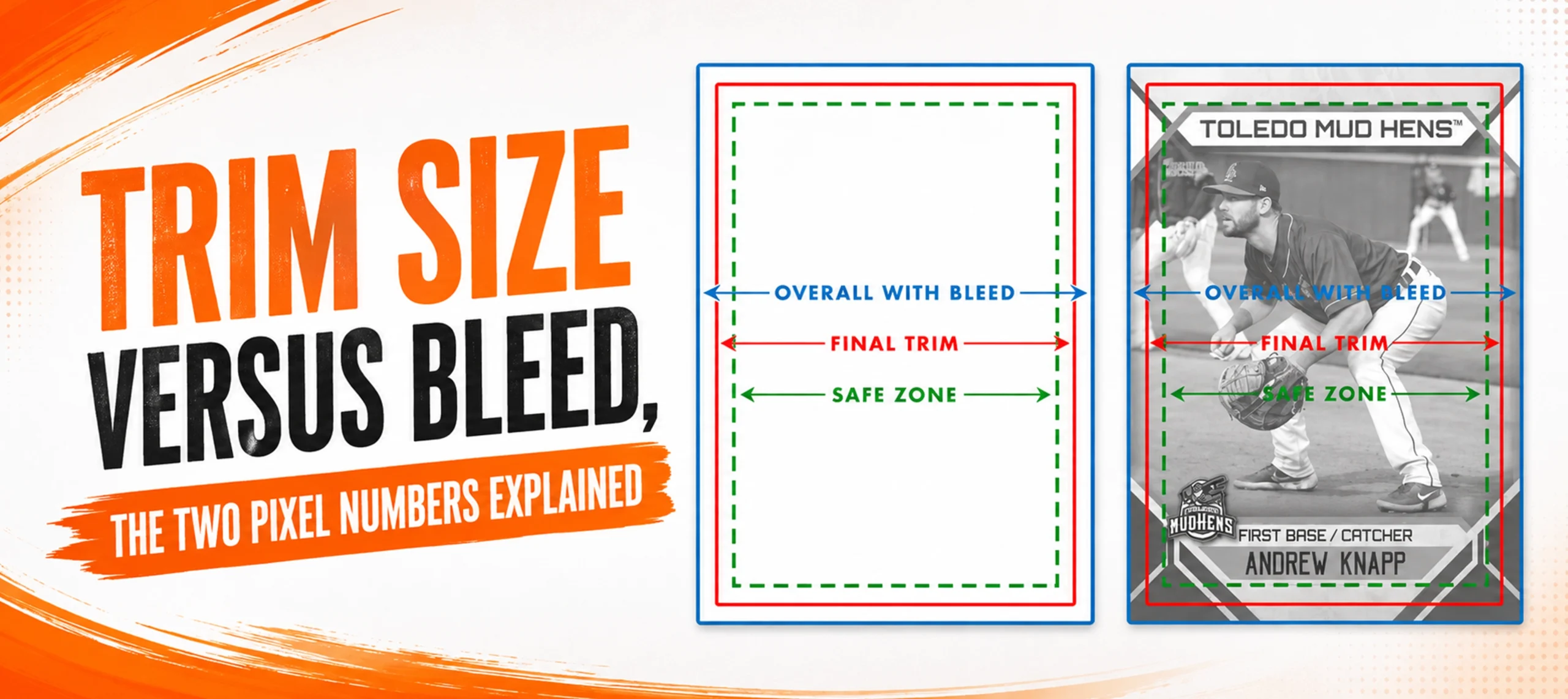
Two different pixel figures show up when people search this topic, 750 by 1050 and roughly 825 by 1125. Both are correct, just for different things.
750 by 1050 pixels, at 300 dpi, is the card’s trim size. That is the actual 2.5 by 3.5 inch card once it is cut. Add a standard eighth inch bleed on every side. That is the small margin printers ask for, so a slight cutting shift does not leave a white edge. With bleed added, the file grows to 2.75 by 3.75 inches, or about 825 by 1125 pixels. That second figure is the one a printer actually wants, not the trim size alone. Before building artwork for custom card boxes or the cards themselves, confirm which of the two your printer needs. Handing over a trim sized file when bleed was expected is a common cause of a reprint.
Graded Card Slab Dimensions
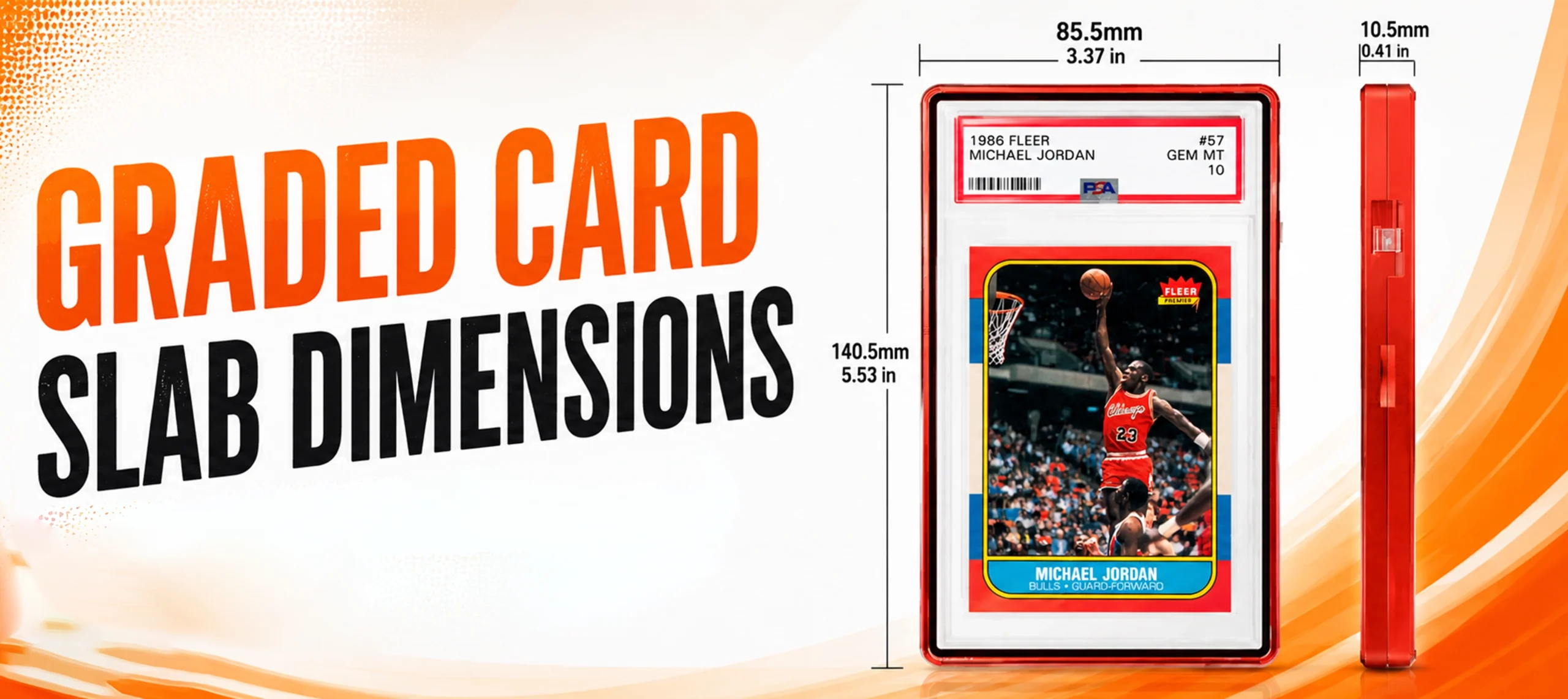
A raw card and a graded card are not the same size once grading is done. PSA is the most widely used grading service. It seals a card inside a hard plastic holder. A standard PSA case measures roughly 3 and a quarter by 5 and three eighths inches. PSA has issued slightly smaller thin holders since 2020. A slab graded in 2019 and one graded this year will not sit flush in an identical storage slot. Measure a current holder before committing to storage sized to fit it exactly. Do not assume every PSA slab on the market is identical.
Card Thickness and Storage Capacity
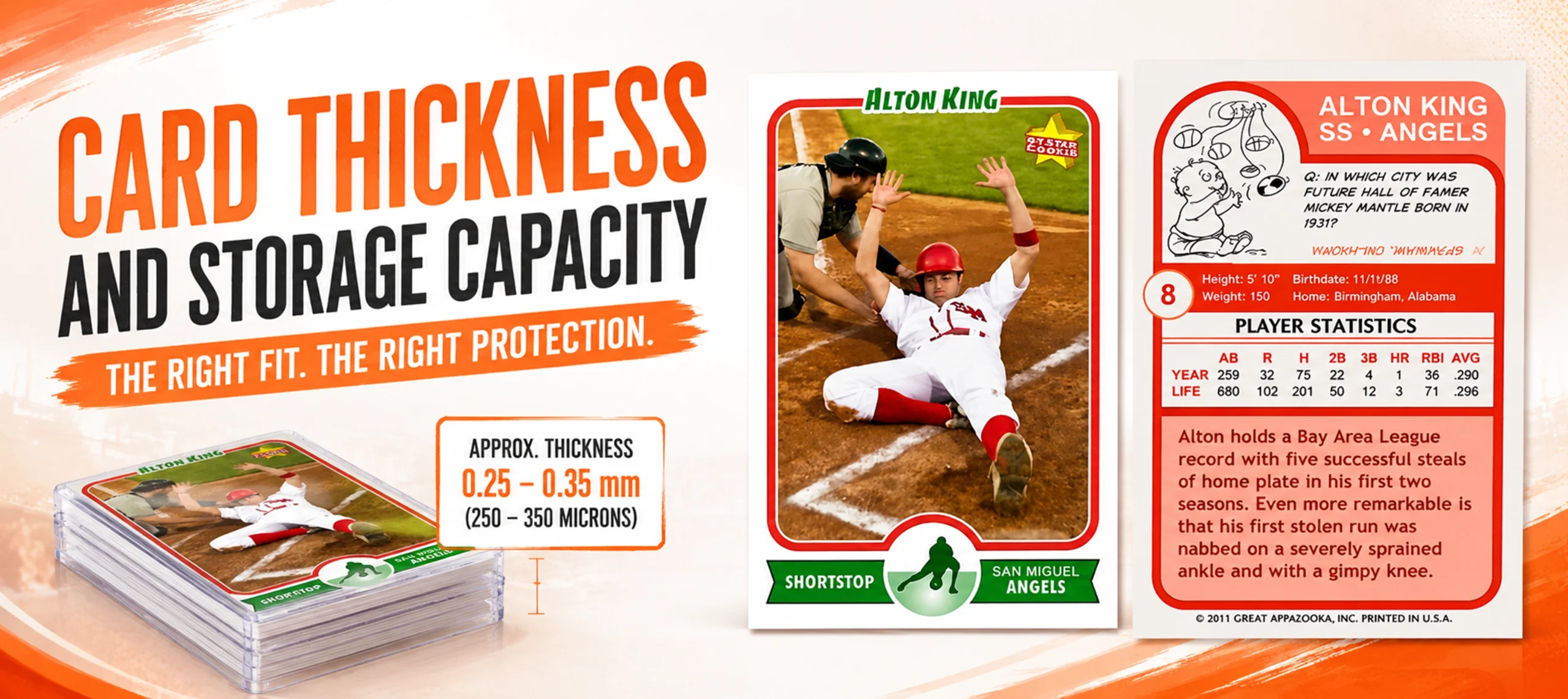
A single modern card runs about 16 to 24 point cardstock. That is roughly 0.016 to 0.024 inches thick, depending on the brand and finish. That thickness is why a storage box’s advertised card capacity assumes raw cards specifically. A box that comfortably holds a full run of raw cards will hold noticeably fewer once part of the collection is graded slabs instead. One slab takes up the depth of many raw cards stacked together.
Choosing Packaging for a Baseball Card Collection
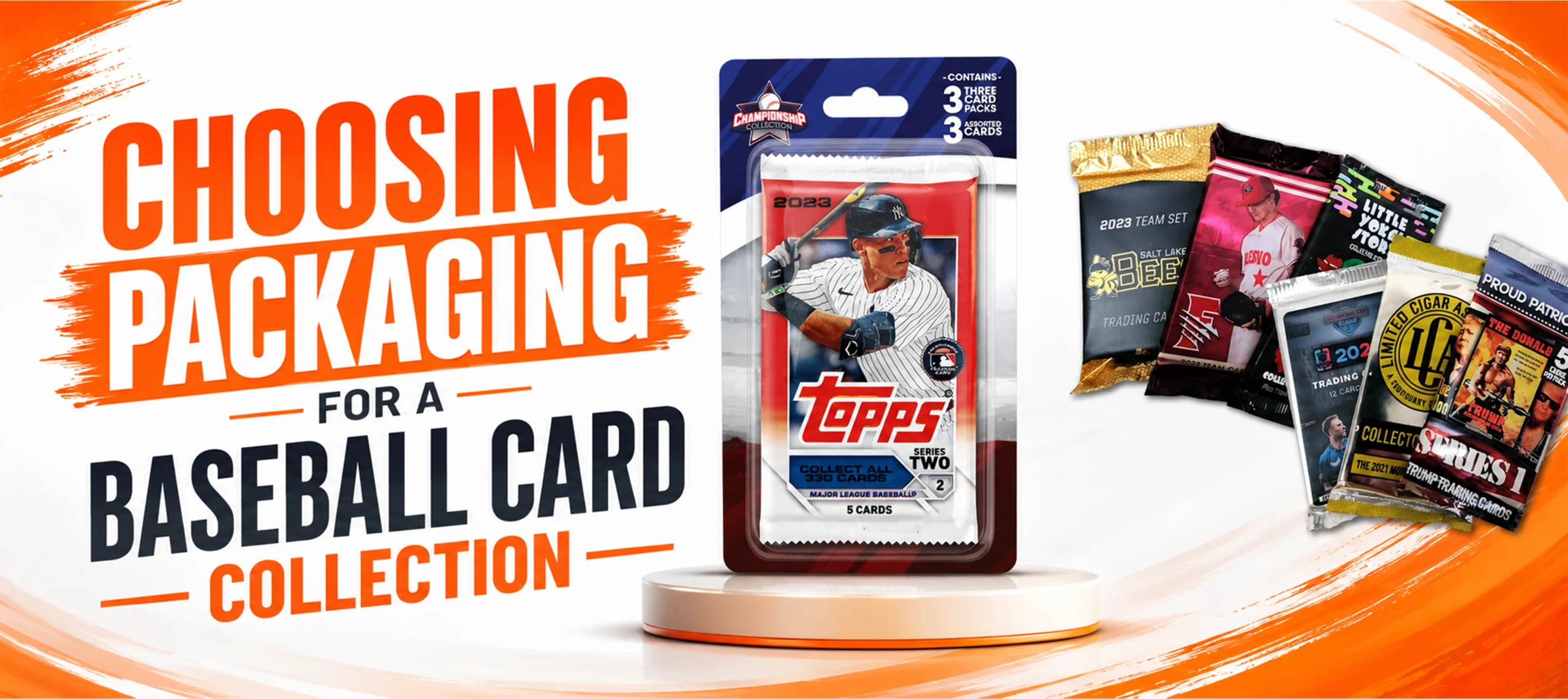
The right box depends on the format the cards are actually in, raw, sleeved or graded, not on the card size alone.
At Custom Boxes Deals we manufacture directly, not through third parties. Design support is free, with no design fees. A free 3D mockup comes before production approval. A real product video of the packaging is sent for approval before bulk production begins. That way you can check fit against an actual card before a full run is made. Materials include kraft, corrugated, rigid board, SBS and cardstock. We print CMYK, Pantone or PMS, or leave stock unprinted. Our minimum order is 100 units per design.
Custom toy boxes cover most tuck box and card box formats. For a collection that mixes raw cards with dividers by team, player or set, custom insert boxes add that structure inside the box. Graded slabs are meant to be seen rather than stored away. For those, custom display boxes are built for a shelf or retail counter presentation, not closed storage.
Sizing cards for a board or card game rather than a baseball set? Our guide to playing card sizes covers poker, MTG and UNO dimensions instead.
Frequently Asked Questions

What are the standard baseball card dimensions?
2.5 inches by 3.5 inches. Every major manufacturer has used this size since Topps set it in 1957.
Are all baseball cards the same size?
No. Only cards made from 1957 onward follow the 2.5 by 3.5 inch standard. Cards from the tobacco era, the 1930s gum card era, and the oversized 1952 Topps run were all different sizes.
What size are vintage baseball cards?
It depends on the era. T206 tobacco cards from 1909 to 1911 measured about 1.44 by 2.625 inches. Goudey cards from the 1930s ran 2.375 by 2.875 inches. The 1952 Topps set was larger still, at 2.625 by 3.75 inches.
What size is a graded baseball card holder?
A standard PSA holder measures roughly 3 and a quarter by 5 and three eighths inches. PSA’s thin holders, released since 2020, run slightly smaller. Measure a current holder before ordering storage sized to fit it exactly.
What is the difference between a baseball card and a trading card?
Baseball card is the specific term for a card showing a baseball player or team. Trading card is the broader category. It also includes basketball, football and non sports cards such as Magic or Pokemon. They can share the same 2.5 by 3.5 inch size without being the same thing.
What resolution should a baseball card print file be?
300 dpi at the card’s actual size. That means 750 by 1050 pixels for the trim size alone. With a standard eighth inch bleed added on every side, it is about 825 by 1125 pixels.

Anthony Kim
Hello, I'm Anthony Kim, a seasoned packaging consultant and designer. With a professional journey spanning over four years, I've evolved from a budding designer to a recognized expert in the field. Currently holding the position of Packaging Consultant, I've honed my skills in creating not just visually stunning packaging but also solutions that align with strategic business goals.
View all articles →