Request Your Custom Quote
Tell us what you need. Our team normally replies within one business day.
What Are Cereal Boxes Made Of? A Complete Materials Guide
 By
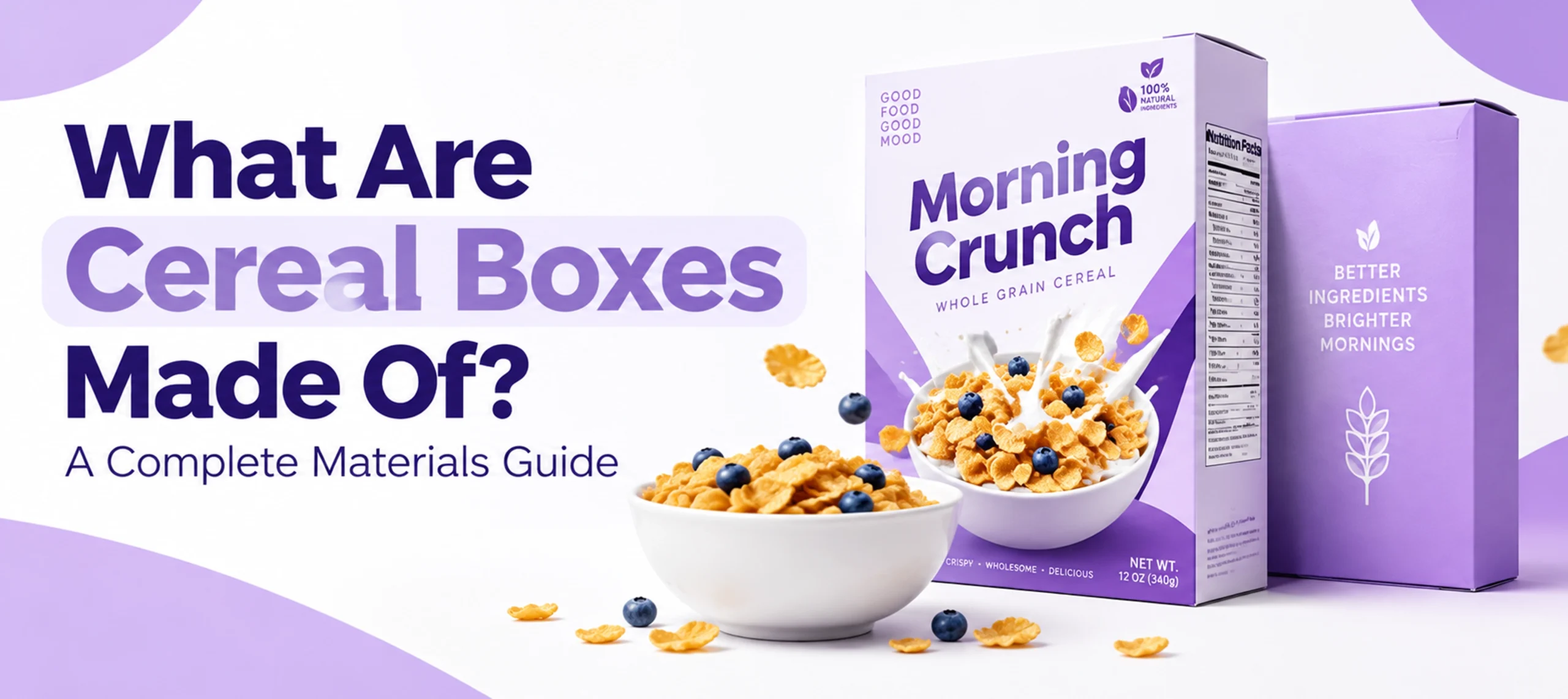
By A cereal box is made of two different materials, not one. The outer carton is almost always CCNB, short for clay coated news back. That is recycled paperboard with a smooth white clay coating on the printed side and a gray or brown surface on the inside. The bag holding the cereal is a separate thing entirely, usually a thin polyethylene liner.
That gray inside surface you see when you flatten a box for recycling is not a defect or a cheap shortcut. It is the recycled fiber the board is made from, and it is the reason a cereal box costs what it does. “Cardboard” is the answer most people give, and it is not so much wrong as too vague to use. The specific grade is what changes your cost and what you can print. If you are specifying custom cereal boxes rather than just satisfying curiosity, the board grade is the first thing you will be asked to decide.
A Cereal Box Is Two Materials
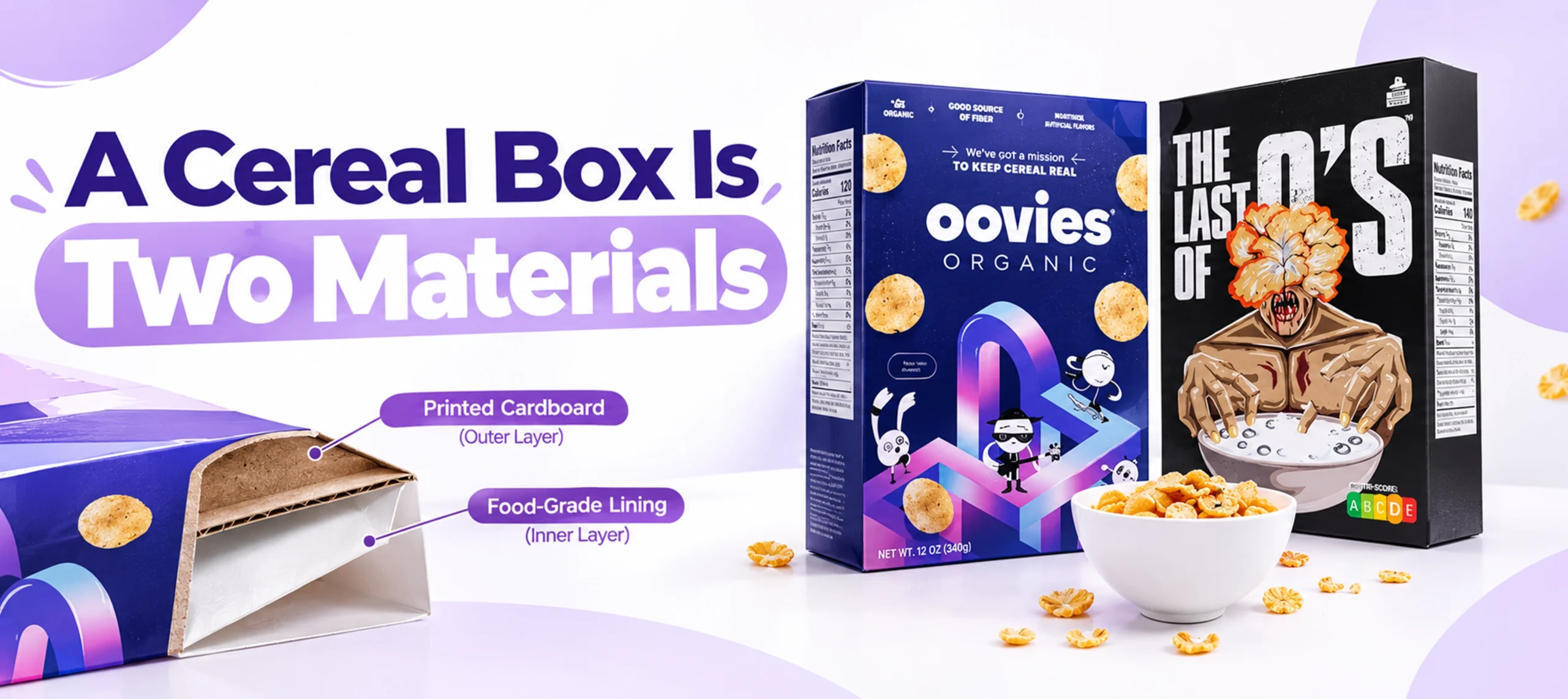
Separate the two parts before anything else, because almost every practical question depends on which one you mean.
The carton is the printed box. It gives the package its shape, carries the branding and the nutrition panel, and stacks on a shelf. It never touches the food.
The liner is the bag inside. It holds the cereal, keeps moisture out and keeps the product crisp. This is the part that actually contacts the food.
Mixing these up is where most confusion starts. When someone says a cereal box is recyclable, they mean the carton. When someone asks whether it is food safe, they are really asking about the liner. When you order a cereal box from a packaging supplier, you are ordering the carton. The liner is a separate decision.
What CCNB Is, and Why the Inside Is Gray
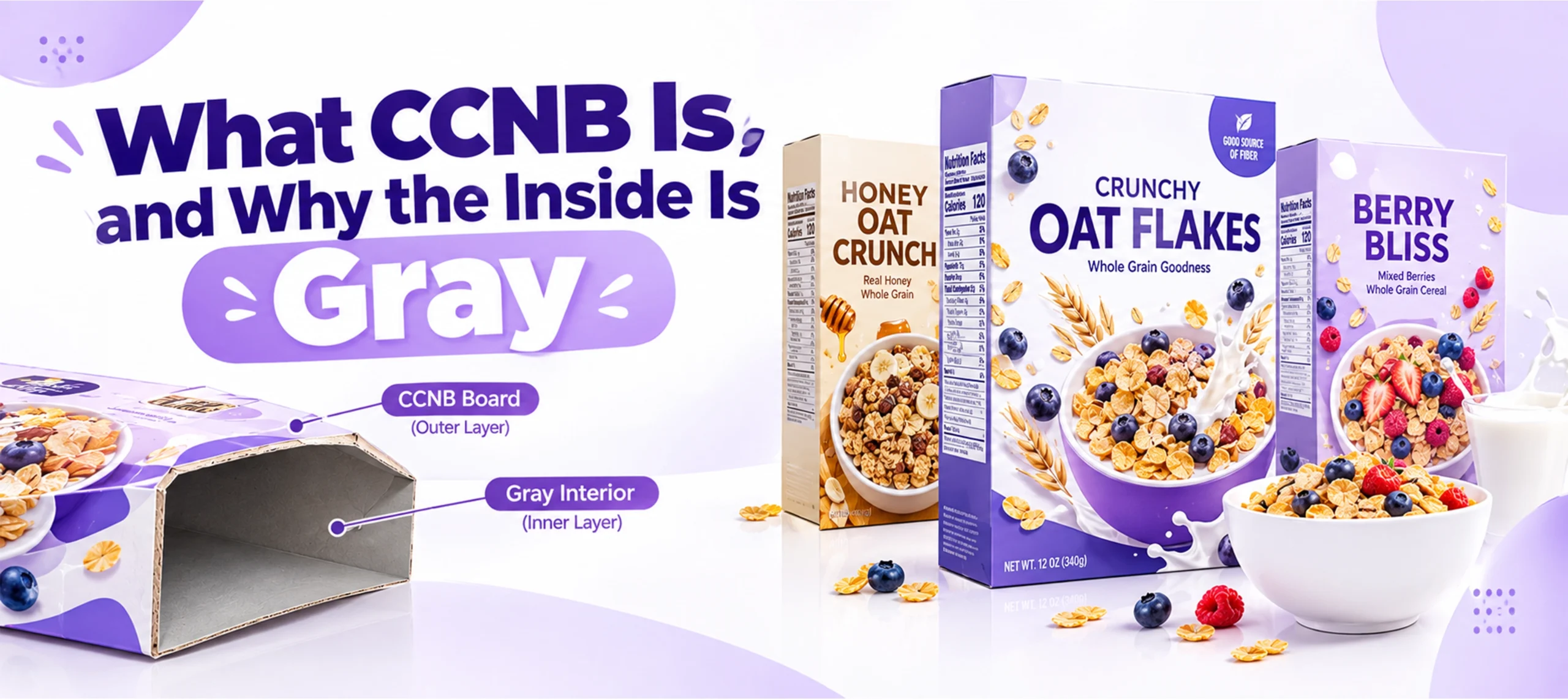
CCNB stands for clay coated news back. It is sometimes called coated recycled board or duplex board.
It is built from recycled paper fiber. That recycled fiber is gray or brown, because it comes from mixed paper that was printed before. You cannot print a sharp photograph onto a surface like that, so the mill applies a thin coating of white kaolin clay to one side only. That coated side takes ink well. The other side is left as it is.
So the box has a white printable outside and a gray inside. The gray is the honest color of the recycled material underneath.
Coating one side rather than two is a deliberate cost decision. The inside of a cereal carton is never seen by a shopper and never touches the food, so paying to bleach and coat it would be spending money on a surface nobody looks at.
CCNB or SBS: Which Board Does Your Box Need?
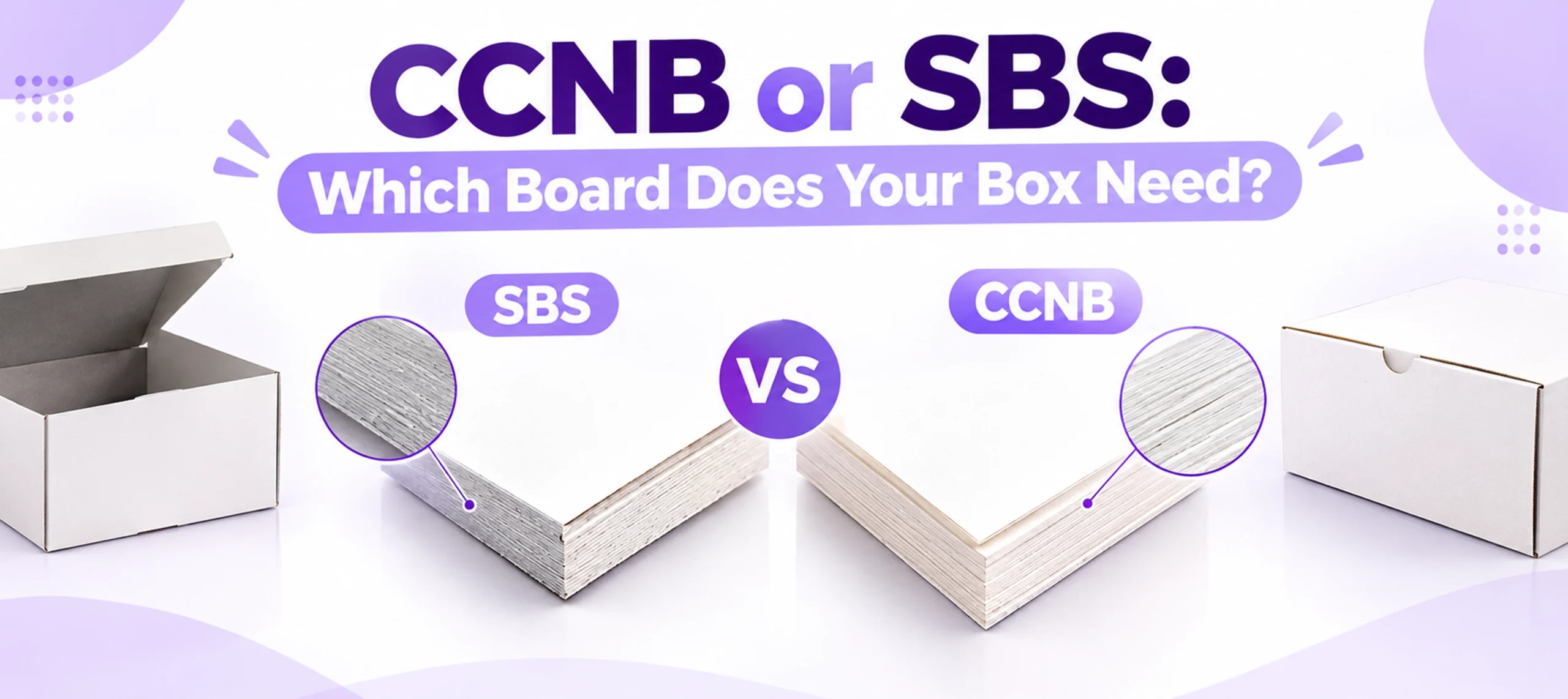
The main alternative is SBS, solid bleached sulfate. SBS is made from virgin wood pulp that has been bleached, so it is white all the way through and white on both sides. It takes fine detail and color better than CCNB, and it costs more.
Neither is better in the abstract. They answer different questions.
Choose CCNB when the box is a standard retail carton with a printed front and nothing unusual on the inside. It is the normal choice for supermarket cereal for a reason: it prints well enough for full color graphics, it uses recycled content, and it is cheaper. If your box will sit on a shelf and be thrown away, this is the sensible board.
Choose SBS when the inside of the box will be seen or when print quality has to be excellent. Boxes that open into a display, boxes with a window, premium or gift positioning, or anything where a gray interior would look unfinished. Also worth it when your brand color has to hold up precisely, since a whiter base gives you truer color.
A quick way to decide: pick up a box and ask whether anyone will ever look inside it. If the answer is no, CCNB does the job.
How Thick Is the Board?
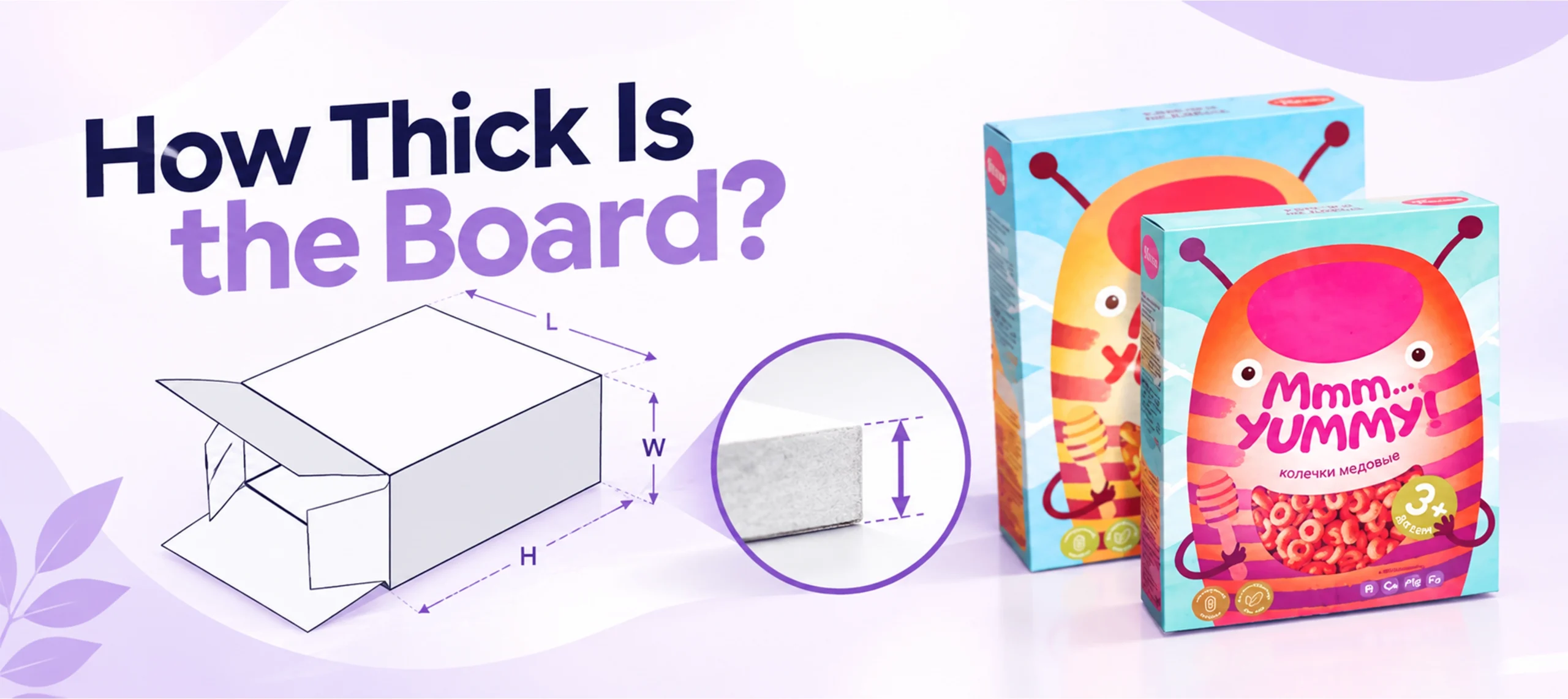
Paperboard thickness is measured in points. One point is one thousandth of an inch, so 18 pt board is 0.018 inches thick.
Cereal cartons generally sit somewhere between about 16 and 24 pt, and the right number tracks the size and weight of the box rather than any house rule:
Small and single serve boxes can run thinner, in the mid teens, because they hold very little and are not stacked hard.
A standard family size carton usually lands in the high teens to low twenties. This is the bulk of what you see in a supermarket.
Large and value size boxes go thicker, into the mid twenties, because a full box is heavy and the panels have to resist bowing on a shelf.
Published figures vary between suppliers, so treat any single number as a starting point rather than a specification. The real answer comes from the finished size and the fill weight. If you already know your dimensions, our guide to cereal box dimensions covers the sizing side in detail.
The Liner: The Part That Touches the Food
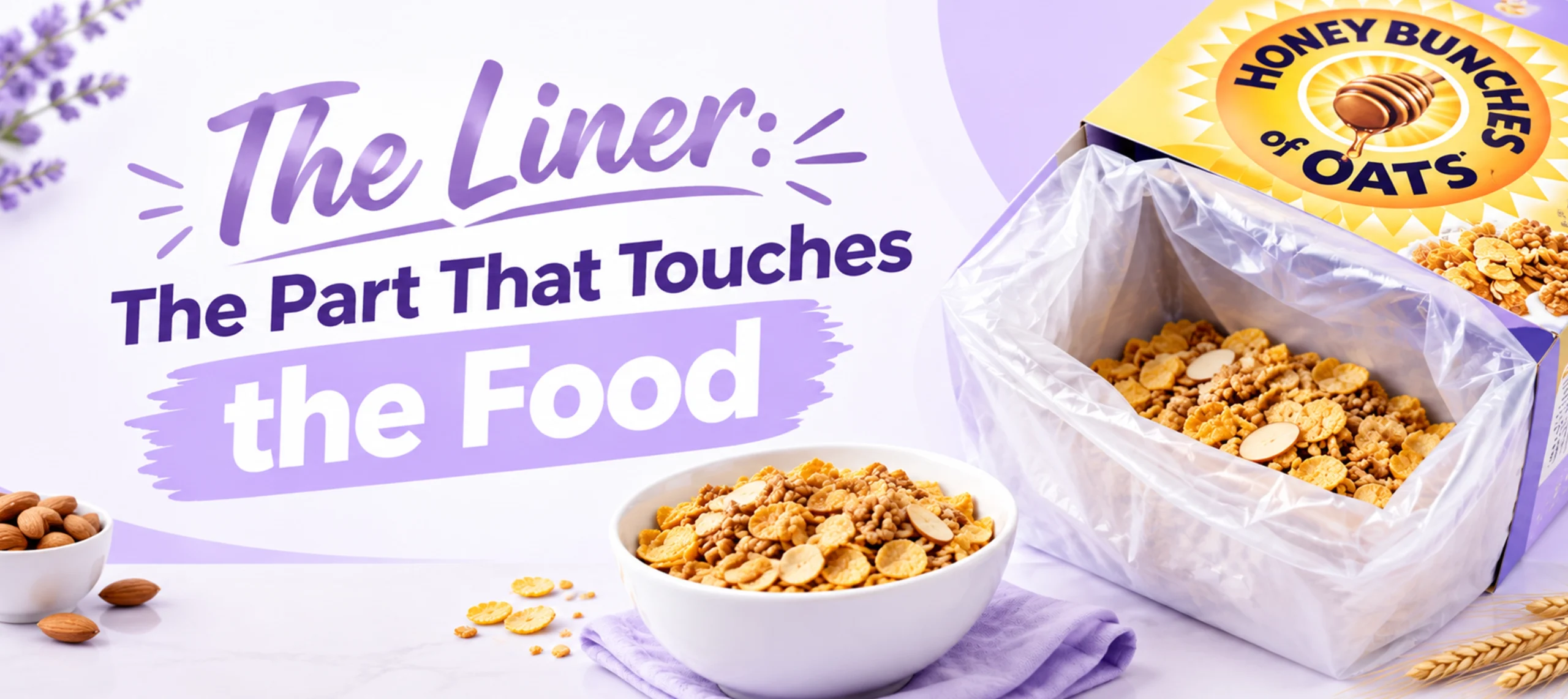
The bag inside is usually polyethylene, either low density or high density. It is there to do what paperboard cannot: block moisture and slow down air, so the cereal stays crisp rather than going soft.
Paperboard is porous. Left on its own it would let humidity through within days. The liner is what actually gives a box its shelf life.
This is also the food safety part of the package. The US Food and Drug Administration treats materials that reach food through packaging as food contact substances, and its standard is that there must be a reasonable certainty of no harm when the material is used as intended. That requirement lands on the liner, because the liner is what the cereal sits against.
Liners come two ways. A loose bag dropped into the carton is the traditional approach and is easy to change. A bag glued or sealed into the box, sometimes called bag in box, holds its shape better on a filling line. Where a product needs a stronger barrier than polyethylene gives, the answer is usually a laminated film rather than a thicker bag, which is the same principle behind custom mylar bags.
When Cereal Uses Kraft or Corrugated Instead
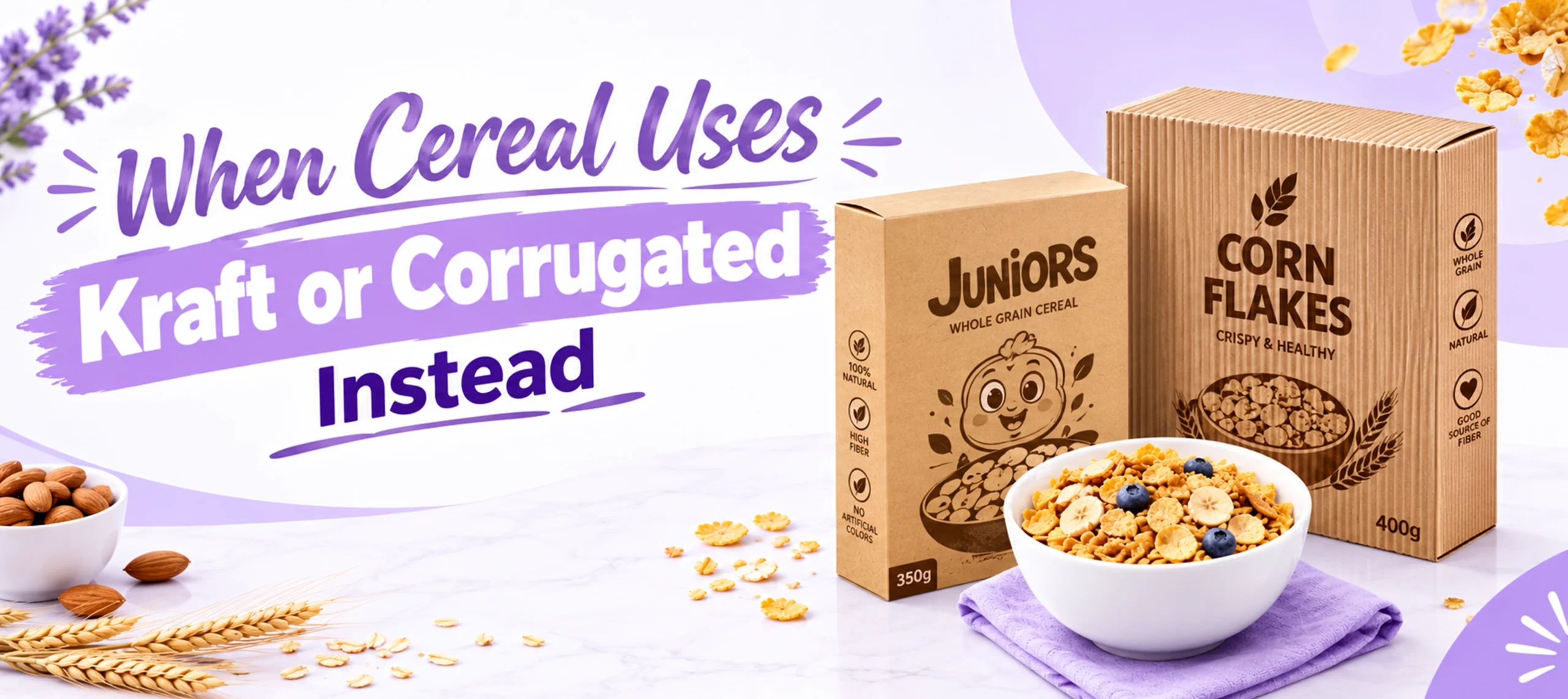
Two other materials come up often enough to be worth separating from the standard answer.
Kraft is unbleached brown paperboard. It is strong and it reads as natural, which suits granola, organic ranges and small batch brands. The catch is that it is brown all the way through, so printed colors sit on a brown base and go warmer and darker than they look on screen. There is no white ink in standard four color printing, so anything meant to be white will come out kraft brown unless a white underbase is printed first. Plenty of custom bakery boxes use kraft for exactly this look.
Corrugated is the fluted board used for shipping cases, and retail cereal cartons are not made from it. The case that carries twelve boxes to a store is. People often assume the cereal box itself is corrugated because both are “cardboard”, but a cereal carton is a single layer of paperboard with no flutes in it. You can feel the difference: a cereal box folds flat with a crisp crease, a shipping box has a visible wavy layer at the edge.
For food formats that need a different shape entirely, such as grab and go portions, custom gable boxes are a more common structure than a standard carton.
If you want the full comparison of board types beyond cereal, our guide to what rigid stock is covers the heavier end of the range.
Can a Cereal Box Be Recycled?
The carton, yes, in most places. The liner, usually not in your curbside bin.
Paper recycling in the United States runs at a genuinely high rate. The American Forest and Paper Association reported that in 2024, 60 to 64 percent of paper and 69 to 74 percent of cardboard available for recovery were recycled, with 46 million tons of paper recycled in total. CCNB is recycled fiber to begin with, so a cereal carton goes back into the same stream it came from.
The liner is the complication. Thin polyethylene film is not accepted in most household recycling collections, and left inside the box it can contaminate the paper load. Pull the bag out, flatten the carton, and put only the carton in the paper recycling. Some grocery stores accept clean plastic film at a drop off point.
This is worth knowing before you design a package that calls itself recyclable. The claim is true of the carton and not of the whole box, and being precise about that is better than being caught being vague. Coatings change the answer too: heavy lamination on a carton can make it harder to recycle, which is one reason waterproof coatings on cardboard are a tradeoff rather than a free upgrade.
Getting the Material Right for Your Own Boxes
Most of this comes down to three decisions: which board, how thick, and what liner.
Start from the product. A heavy value size box needs thicker board than a single serve. A product that goes stale quickly needs a better barrier than one that does not. A brand built on premium positioning may justify SBS where a supermarket range would not.
Then think about what the box has to say. The panels do a lot of work in this category, and the layout matters as much as the material. Our guide to what goes on each side of a cereal box covers that side of it.
At Custom Boxes Deals we manufacture in house rather than through third parties, and we print CMYK, Pantone or PMS, or leave stock unprinted. Materials include kraft, corrugated, rigid board, SBS, cardstock, food grade and grease resistant board, mylar and recycled stocks. Design support is free with no design fees, you get a free 3D mockup before production approval, and a real product video of the packaging before bulk production begins. Our minimum order is 100 units per design.
Frequently Asked Questions

What material is a cereal box actually made of?
Almost always CCNB, clay coated news back. That is recycled paperboard with a white clay coating on the printed side and a gray or brown back. The bag inside is a separate polyethylene liner.
Why is the inside of a cereal box gray?
Because the board is made from recycled paper fiber, which is naturally gray. Only the outside is coated white, since that is the side that gets printed and seen. Coating both sides would cost more for no benefit.
Are cereal boxes corrugated cardboard?
No. A retail cereal carton is a single layer of paperboard with no fluting. The shipping case that carries cereal boxes to a store is corrugated, which is where the confusion comes from.
How thick is a cereal box?
Usually somewhere around 16 to 24 pt, where one point is one thousandth of an inch. Smaller boxes run thinner and large value sizes run thicker. The right figure depends on your finished size and fill weight.
Is the inside of a cereal box food safe?
The liner is the food contact part, and materials that reach food through packaging are regulated by the FDA under a standard of reasonable certainty of no harm. The carton itself does not touch the cereal.
Can you recycle a cereal box?
The carton, yes, in most curbside programs. Take the plastic liner out first, because thin film is usually not accepted and can contaminate a paper load.
What is the difference between CCNB and SBS?
CCNB is recycled board, coated white on one side, gray on the other, and cheaper. SBS is virgin bleached board, white on both sides, better for fine printing, and more expensive. Standard retail cereal uses CCNB.

Anthony Kim
Hello, I'm Anthony Kim, a seasoned packaging consultant and designer. With a professional journey spanning over four years, I've evolved from a budding designer to a recognized expert in the field. Currently holding the position of Packaging Consultant, I've honed my skills in creating not just visually stunning packaging but also solutions that align with strategic business goals.
View all articles →