Request Your Custom Quote
Tell us what you need. Our team normally replies within one business day.
Types of Lamination: Films, Finishes and Trade Offs for Printed Boxes
 By
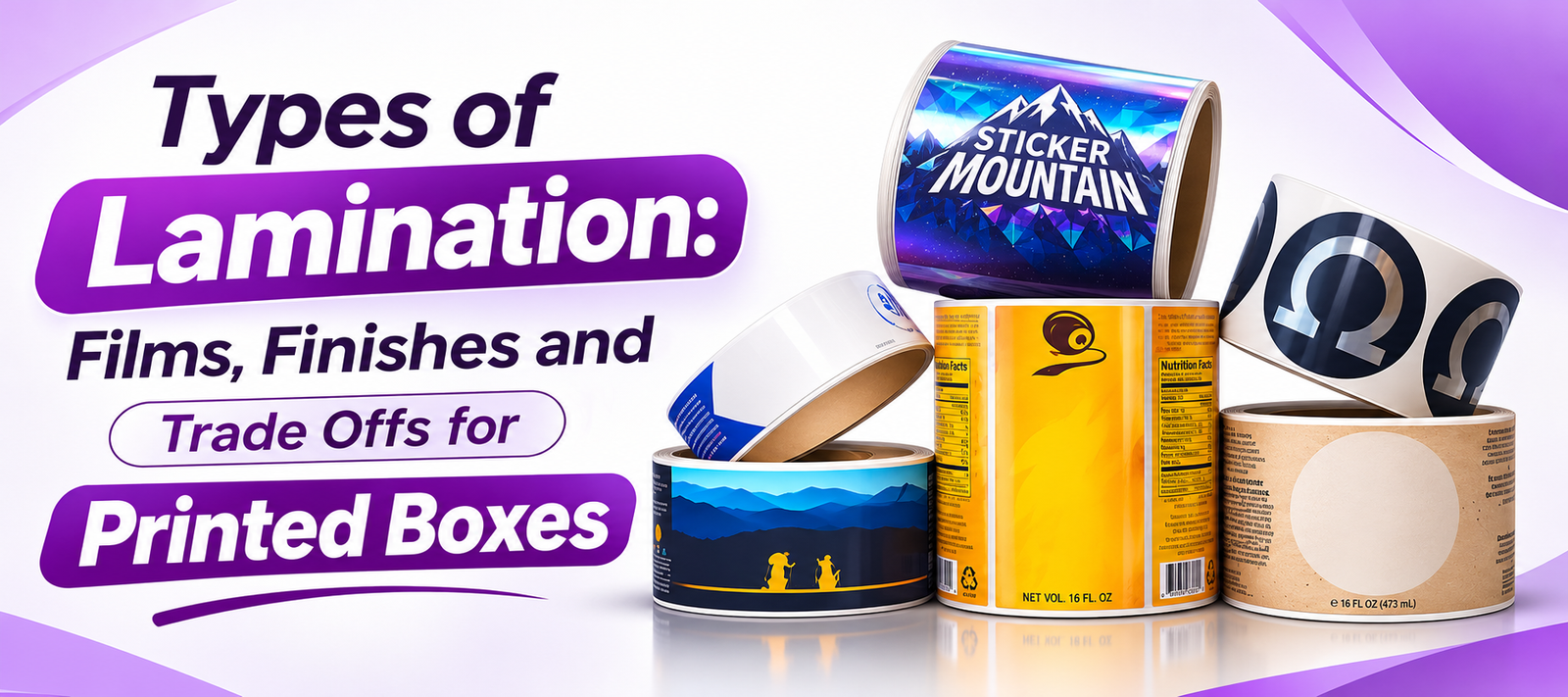
The main types of lamination for printed boxes are gloss, matte, silky matte, soft touch (also sold as velvet) and scuff resistant matte films. A lamination is a thin plastic film, often polypropylene (BOPP) or polyester (PET), bonded to the printed sheet, which protects the print and changes how the box looks and feels. A coating is different: it is a liquid applied on the press. Choose the film for the look you want, then check that it suits any spot UV, foil or embossing you plan, such as on a cardboard gift box with a matte finish.
Types of Lamination at a Glance
| Type | Look and feel | Trade off |
|---|---|---|
| Gloss | Shiny; makes colors look more vibrant | Reflects light |
| Matte | Non reflective; reduces glare | For more scuff resistance, there is a scuff resistant matte |
| Silky matte | A smooth, satin like finish | A standard film, like gloss and matte |
| Soft touch (velvet) | A soft, velvety feel | Slightly mutes printed colors |
| Scuff resistant matte | Matte, made to resist scratches and scuffs | A premium film |
| Metallized | A metallic look | A specialty film |
Sources: Cosmo Films, a lamination film maker, for the range; Wikipedia for gloss and matte; PostPress for soft touch’s color shift.
What the Film Is Made Of
Cosmo Films, which describes itself as the world’s largest producer of thermal lamination films, explains that a thermal lamination film is BOPP based, and that it “permanently bonds to paper or board” when heated under pressure. Its FAQ names two common materials:
- BOPP (biaxially oriented polypropylene), which it calls “lightweight, economical, and great for clarity”.
- PET (polyester), which it describes as stronger and more rigid, for premium or heavy duty uses.
For thicker packaging boards or heavy duty protection, it points to PET or nylon based films.
Thermal or cold. In thermal (hot) lamination, heated rollers bond the film to the sheet. In cold lamination, a film already coated with adhesive is pressed onto the sheet. A German label printer, Labelprint24, describes both and puts the heated rollers at “about 90 degrees”.
Lamination vs Coating
A coating is a liquid layer, such as an aqueous or UV coating, rather than a film. PostPress, a print finishing trade magazine, compared the two for soft touch finishes in 2022:
- Laminate. One of the most durable ways is to laminate the board with a matte BOPP film that has a soft touch surface. It adds scuff resistance and rigidity, and it does not stop the box from being die cut, stamped or spot varnished.
- Coating. Soft touch coatings can often be applied inline on the press, which usually makes them cheaper than a laminate.
- Color. Soft touch laminates cause “a slight shift in color”, so printed inks look more muted. PostPress says a coating does not.
Spot UV, Foil and Embossing on Top
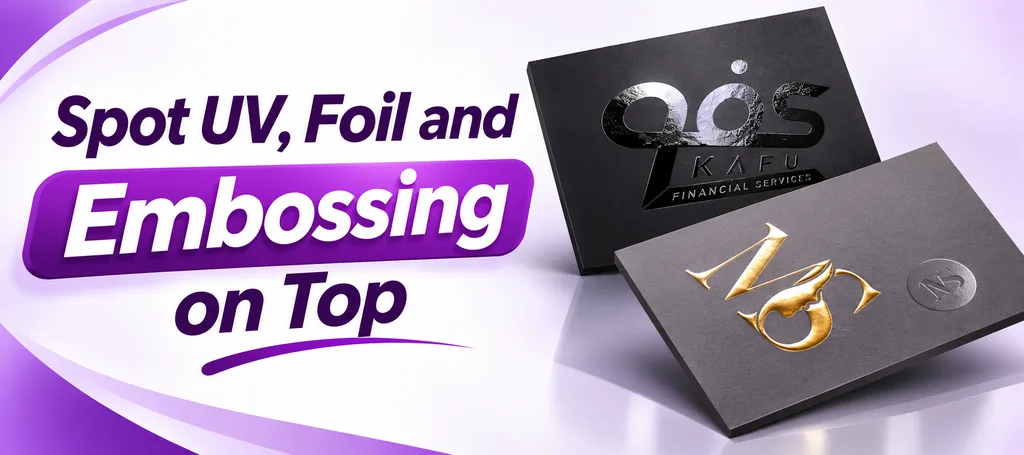
You can combine a laminate with a second effect, such as a spot UV logo on matte film. Cosmo’s advice is simple: if you plan embossing, foil stamping or spot UV, choose a film that supports them. Ask your printer which film they will use and test it with the effect. For more on each effect, see our guides to what spot UV printing is, embossing and debossing and what foil stamping is.
Lamination and Recycling
A bonded barrier or a film laminate changes how a pack is handled at end of life, and local recycling rules differ. PostPress notes that the plastic film can make packaging harder to recycle, although some recycling facilities accept laminated paper and board. It adds that a water based or UV cured coating does not affect the recyclability of the board underneath. If recycling matters to your customers, compare a coating with a laminate before you choose.
How to Choose a Lamination Type
- Look. Gloss for vivid color, matte for low glare, silky matte for a satin like finish.
- Feel. Soft touch for a velvety surface, accepting a slight color shift.
- Handling. Scuff resistant matte for boxes that are handled and shipped a lot.
- Effects. Confirm the film works with your spot UV, foil or embossing.
- End of life. Weigh a coating if recycling matters more than durability.
Lamination Finishes at Custom Boxes Deals
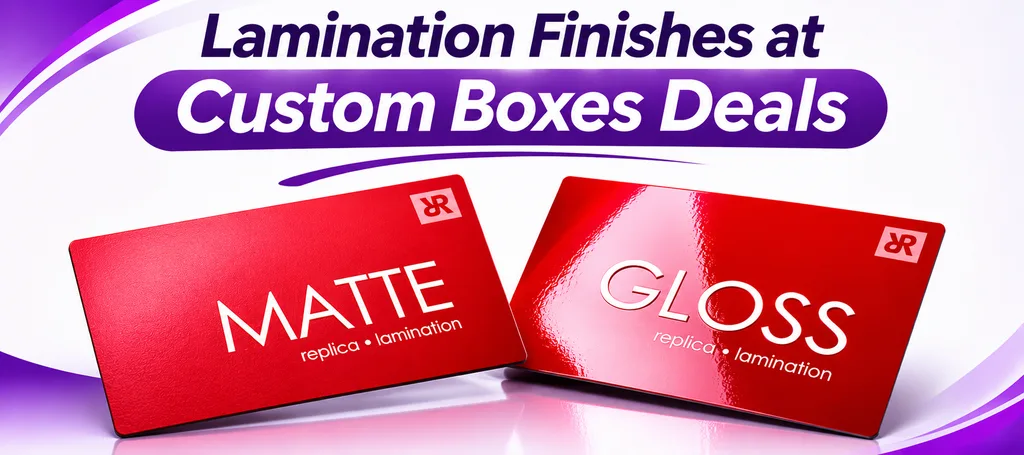
Our finishing options include matte or gloss lamination, Spot UV, foil and embossing, along with others where they suit the material and box style. Which finishes are available depends on the stock and the style you pick. Not every finish works on every material. Printing is CMYK, Pantone or PMS, or unprinted.
Frequently Asked Questions
What are the types of lamination?
Gloss, matte, silky matte, soft touch (velvet) and scuff resistant matte are the main finishes, with metallized films as a specialty option.
What is the difference between lamination and coating?
Lamination bonds a plastic film to the print. A coating is a liquid, such as an aqueous or UV coating, often applied inline on the press.
Does soft touch lamination change the colors?
Slightly. PostPress says soft touch laminates make printed inks look more muted.
Can you put spot UV or foil on laminated boxes?
Yes, if the film supports it. Cosmo Films advises choosing a film made for the effects you plan.
Does lamination affect recycling?
It can, and it depends on your local program. The film can make recycling harder, though some facilities accept laminated board.

Anthony Kim
Hello, I'm Anthony Kim, a seasoned packaging consultant and designer. With a professional journey spanning over four years, I've evolved from a budding designer to a recognized expert in the field. Currently holding the position of Packaging Consultant, I've honed my skills in creating not just visually stunning packaging but also solutions that align with strategic business goals.
View all articles →