Request Your Custom Quote
Tell us what you need. Our team normally replies within one business day.
What Are the Colored Dots on Food Packaging? A Complete Guide
 By
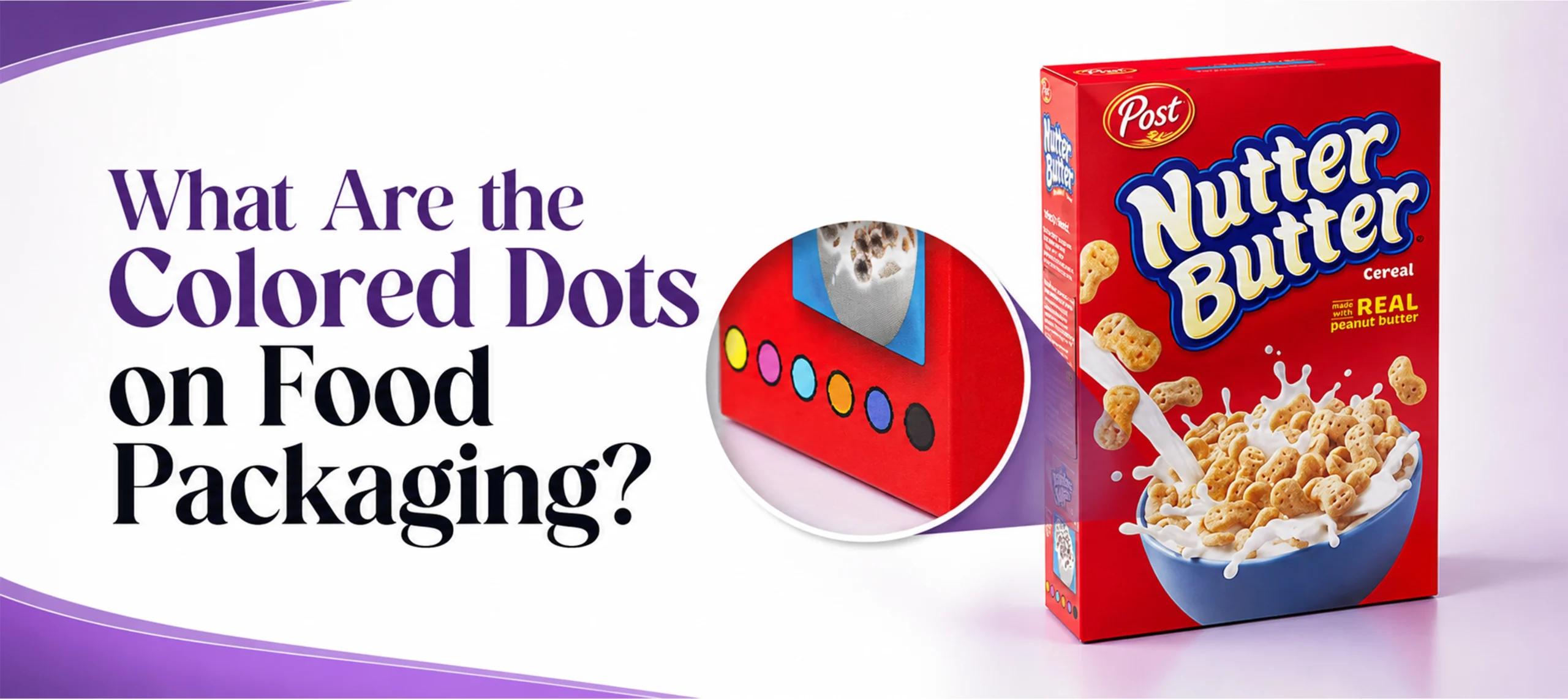
By Those little colored squares along the edge of a chip bag or the bottom of a carton are printer’s color blocks, also called process control patches or a color bar. They exist so the press operator can check that the ink is printing correctly. They carry no information for you as a shopper. They do not indicate flavor, ingredients, freshness, allergens or a use by date.
If you have read somewhere that yellow means one thing and green means another, that is a myth, and this guide explains exactly where it came from. There is a real reason people believe it, and it is worth understanding, because some colored marks on packaging genuinely do mean something. These are just not those. You will see them most often on printed film such as custom mylar bags, which is why chip bags are where most people notice them.
What the Color Patches Actually Measure
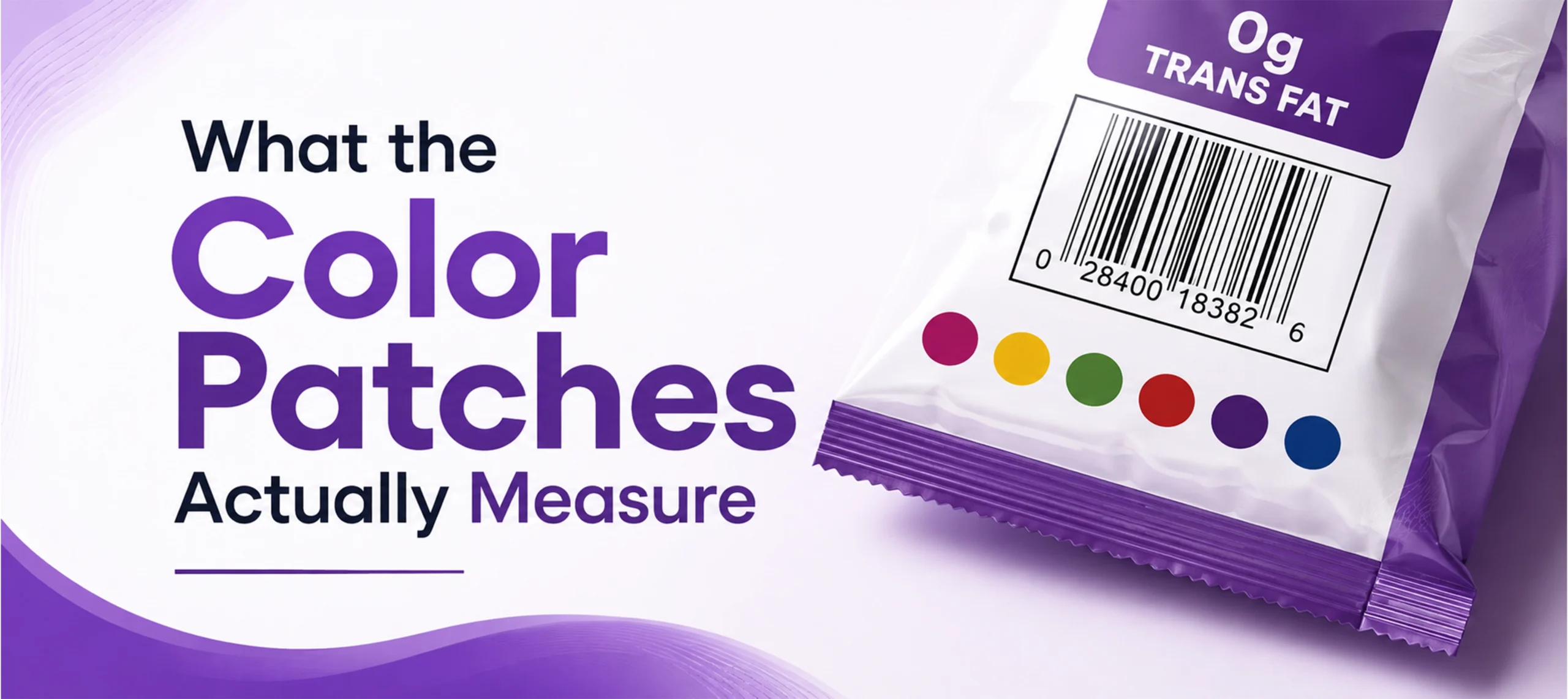
A press does not print one color. It lays down four or more inks in sequence, and each one has to land at the right density and in the right position. The color bar is how that gets checked.
Techkon, which makes color measurement instruments for the printing industry, defines it plainly: a color bar is a strip of standardized color patches that appears outside the live image area of a printed sheet, and its purpose is to help press operators and quality control teams monitor and maintain color accuracy during a print run.
By measuring those patches, the same source explains, printers can check ink density, dot gain, gray balance and color consistency in real time.
In plain terms:
- Ink density tells the operator whether a color is running too heavy or too light.
- Dot gain tells them whether the tiny printed dots are spreading on the material and making the image look muddier than intended.
- Gray balance tells them whether the three color inks are still combining into a neutral gray rather than drifting warm or cool.
- Registration tells them whether each ink is landing in the right position. If one is out by a fraction, the image looks blurred or shadowed.
- This all happens while the job is running, often on thousands of units. The patches are the operator’s instrument panel.
Why You See Them on Chip Bags but Rarely on a Cereal Box
This is the part that makes people suspicious. The marks seem to appear on some packages and not others, which feels like a code.
It is simply a matter of what gets trimmed off.
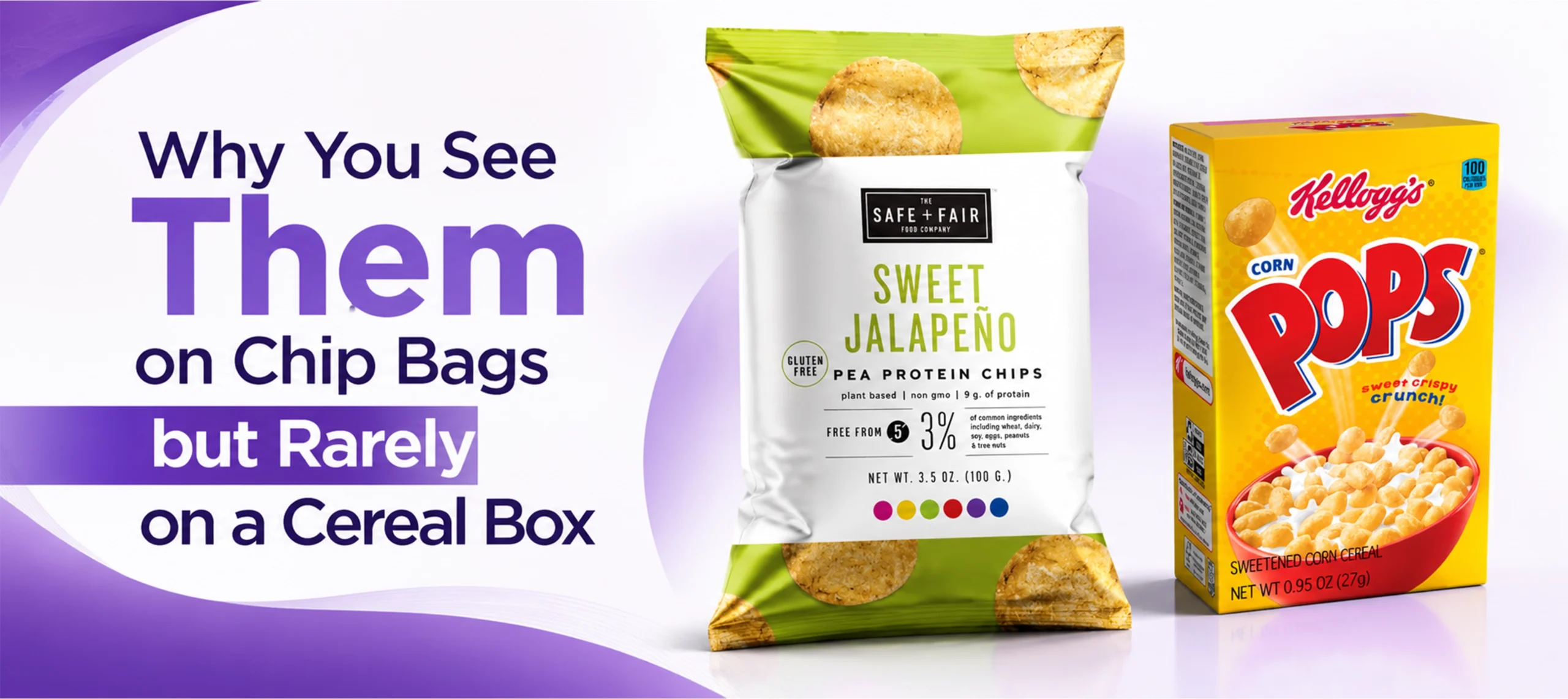
The color bar is printed outside the live image area, in the margin. On a folding carton, that margin is usually cut away when the box is die cut to shape, so a finished custom cereal box often shows no patches at all. The structural cutting line, set out in the dieline, decides what survives.
On flexible film there is often no equivalent trim. A bag is printed as a continuous web and sealed, so the margin containing the patches can end up on the finished bag, usually near a seal or on the back. That is why snack bags are where you notice them.
So the presence or absence of the dots tells you about the manufacturing format, not about the food.
The Myth: No, Yellow Does Not Mean Safe for Diabetics
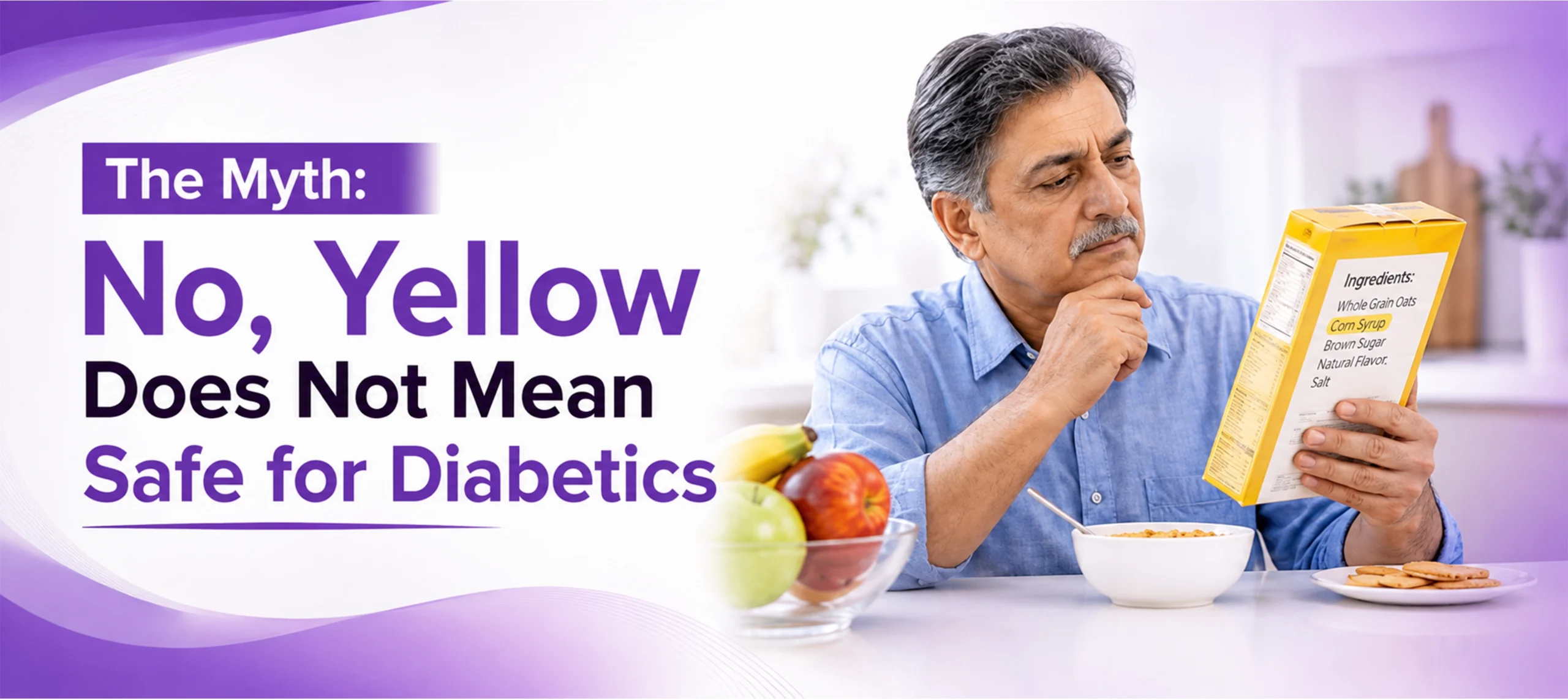
A version of this circulates widely, and it usually looks like a neat table: yellow for citrus, green for organic, red for spicy, blue for functional foods, and so on. Some versions add dietary claims, including that a particular color signals a product is suitable for people with diabetes.
None of it is true. Not loosely true, not true in some countries, not true for some brands. The patches are calibration targets. Their colors are the inks the press is running, which is decided by the artwork, not by the recipe inside the bag.
Two things make this easy to check for yourself.
The colors on the bar match the ink set, not the product. Two completely different foods printed with the same four inks will carry the same patches.
The bar sits in the margin, positioned for a measuring instrument. Real consumer information is placed where a shopper will look, and it is written in words.
Treat any dietary or health claim attached to these marks as false. That matters more than a design detail, because someone managing a medical condition could act on it.
Where the Confusion Actually Comes From

The myth persists because it is half right about something else. Some countries do put a mandatory colored symbol on food packaging, and it genuinely tells the shopper something.
India is the clearest example. Under the Food Safety and Standards (Packaging and Labelling) Regulations, 2011, vegetarian foods carry a green symbol and non vegetarian foods carry a brown one. That is a legally required consumer mark, and a shopper in India reads it exactly as intended.
So there are two different kinds of colored mark on packaging, and they get merged:
- A regulated symbol is placed where a shopper will see it, is defined by law, has one fixed meaning, and is usually a single distinct shape.
- A press control patch sits in the margin, is defined by the printer’s process, changes with whatever inks the job uses, and appears as a row or block of squares.
- Once you know both exist, the row of squares stops looking like a code. It is the difference between a road sign and a paint swatch on the back of it.
- Food service kitchens add a third source of confusion. Colored stickers used on prepped food, where one color means raw poultry and another means fish, are a real inventory system, and they have nothing to do with printed packaging either.
What on a Package Does Carry Real Information
If you want to know something about the food, everything useful is written in words, not encoded in color.
- The ingredients list gives the full contents in descending order by weight.
- The nutrition panel gives the numbers.
- Allergen information is called out in plain language.
- Date coding tells you about freshness, and the words next to it matter, since best before and use by mean different things.
- Certification marks such as organic or kosher symbols are named marks with published rules behind them.
On a printed carton, all of that lives on defined panels. Which information goes where is a design decision, and we cover it in our guide to what goes on each side of a cereal box.
What This Means If You Are Ordering Packaging

If you are buying printed packaging rather than shopping for snacks, the practical points are short.
You do not design the color bar. Your printer adds it, positioned for their press and their measuring equipment.
You can often control whether it shows on the finished item, and that is a conversation to have early rather than after the first run. On a die cut carton it usually disappears in trimming. On film it may not.
Its presence is not a defect. A package with visible patches was printed to a measured standard, which is a good sign rather than a bad one.
Finishes are applied after printing and change how color reads, which is a separate matter from the control patches. A spot UV finish is a good example, since it changes the surface without changing the ink underneath.
At Custom Boxes Deals we manufacture in house rather than through third parties, and we print CMYK, Pantone or PMS, or leave stock unprinted. Design support is free with no design fees, you get a free 3D mockup before production approval, and a real product video of the packaging before bulk production begins. Our minimum order is 100 units per design. Whether you are producing custom bakery boxes or custom pizza boxes, the printing side works the same way.
Frequently Asked Questions

What are printer’s color blocks?
Standardized patches of ink printed outside the main design so a press operator can measure how the job is printing. They are also called process control patches, color bars or eye marks. They are equipment for the printer, not information for the shopper.
What does a red dot on food packaging mean?
On a color bar, it means the press is running a red or magenta ink and the operator is measuring it. It says nothing about the food. If you are looking at a single distinct symbol rather than a row of squares, check the packaging rules for that country, because some regulated marks do use color.
What does a blue dot on product packaging mean?
The same answer. It is one of the inks being measured. There is no blue dot code for flavor or diet.
What does a black circle on packaging mean?
Usually the black ink patch, or a registration mark used to align the print. On some lines a solid mark also acts as an eye mark, a target that a sensor reads to position cutting or sealing correctly.
Do the colored dots show the expiration date?
No. Date information is printed in numbers and words, usually near a seal or on the base, and it is labeled.
Are colored circles on all food packages?
No, and that is about trimming rather than meaning. On a die cut carton the margin holding them is usually cut away. On flexible film it often is not, which is why snack bags show them most.
Why are the dots on the edge of the package?
Because they are printed outside the live image area, so they do not interfere with the design and so an instrument can measure them in a straight run.
What are the colored circles on chip bags?
The same press control patches. Chip bags are printed on film, where the margin carrying the patches frequently survives to the finished bag.
Are the colored dots useful to consumers?
No. They are useful to the printer. For a shopper, the ingredients list, nutrition panel, allergen statement and date code are the parts that carry real information.

Anthony Kim
Hello, I'm Anthony Kim, a seasoned packaging consultant and designer. With a professional journey spanning over four years, I've evolved from a budding designer to a recognized expert in the field. Currently holding the position of Packaging Consultant, I've honed my skills in creating not just visually stunning packaging but also solutions that align with strategic business goals.
View all articles →