
Request Your Custom Quote
Tell us what you need. Our team normally replies within one business day.
Business Card Dimensions: The Real Sizes, Sourced
 By
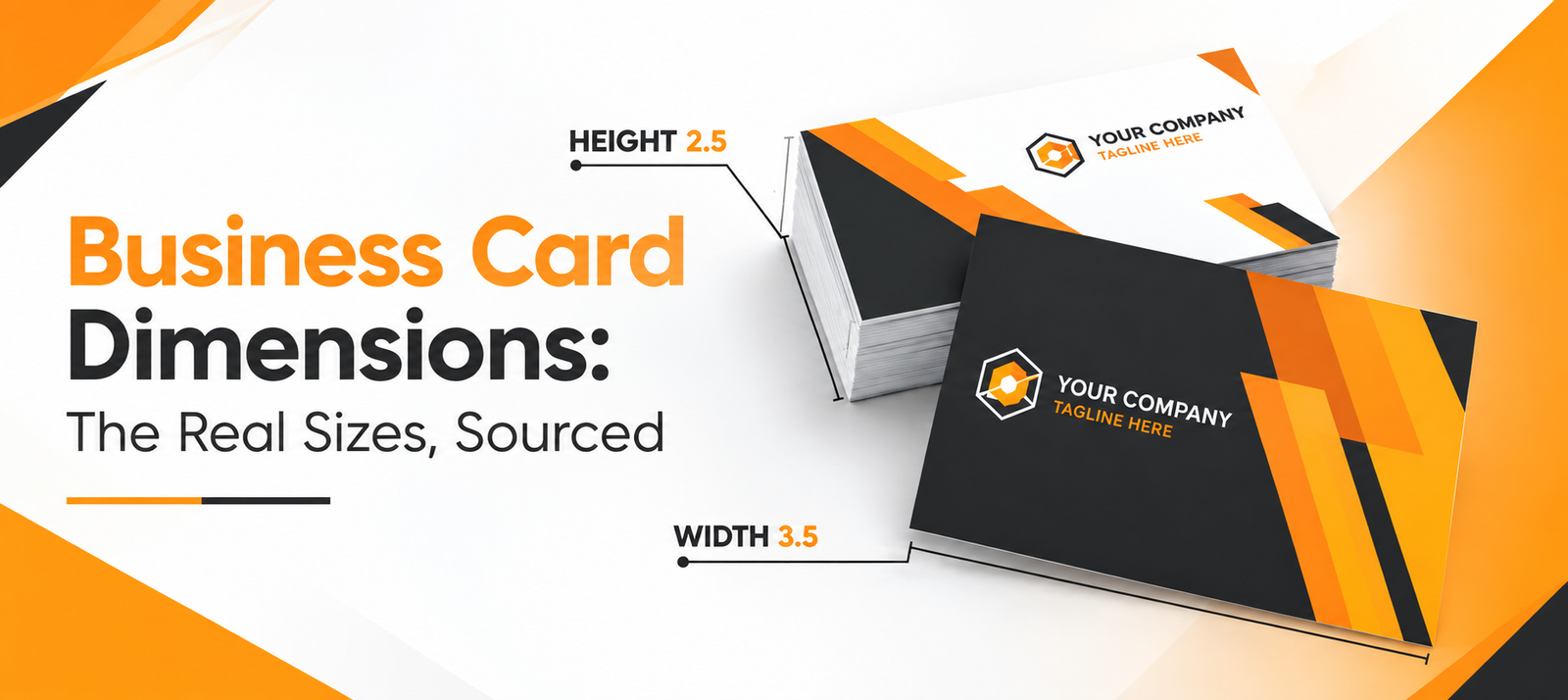
By The standard US business card is 3.5 inches by 2 inches. That much is settled and easy to confirm. Two other common claims about business card sizing are not as solid as they sound. Here is the full, sourced picture.
The Standard Size, and What It Converts To
3.5 by 2 inches converts to 8.9 by 5.1 centimeters, or 89 by 51 millimeters. This size slides into a standard wallet slot alongside a credit card. That is exactly why it became the norm. MOO, a real business card manufacturer, confirms the same figures for its own standard cards: 3.5 by 2 inches, 8.9 by 5.1 centimeters.
Around the World, Sourced
The UK and much of Europe use 85 by 55 millimeters, close to a credit card in size but genuinely not the same thing. Australia and New Zealand commonly use 90 by 55 millimeters. Japan uses 91 by 55 millimeters, a size tied to meishi koukan, the formal business card exchange ritual where the card itself carries real weight in a first meeting.
One precise claim is worth correcting directly. A widely repeated line describes the European 85 by 55 millimeter size as “the ISO CR80 standard.” It is not, not exactly. ISO/IEC 7810 defines the ID 1 format, also called CR80, at 85.60 by 53.98 millimeters, with a documented tolerance of no more than about a third of a millimeter either way. A European business card at 85 by 55 sits outside that tolerance. It is a real, separate print industry convention, close to credit card size, not the same numbered standard.
Mini Cards, Corrected
A mini business card is not simply a slightly smaller rectangle. MOO’s own MiniCard measures 1.1 by 2.75 inches, roughly half the height of a standard card. That is a real, meaningful size difference. A card described as “two by three inches,” a size repeated on at least one competitor page, is barely smaller than standard in one direction and identical in the other. That is not a mini card in any practical sense.
Setting Up the File Correctly
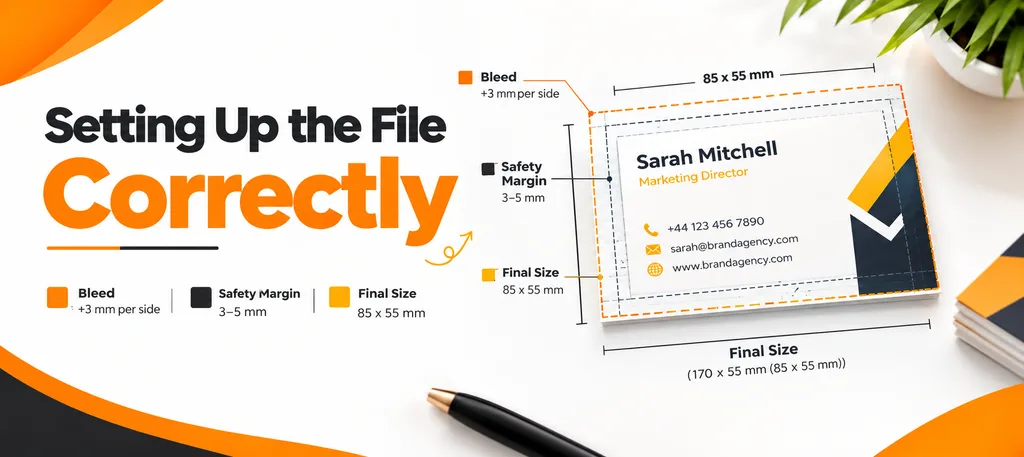
Getting business card dimensions right in the design file matters as much as knowing the size to order. A design set to the exact trim size risks losing text at the edges after cutting. Add bleed, extra design that extends past the trim line, on every side, typically about 3 millimeters or an eighth of an inch. Keep important text and logos inside a safe zone, roughly 3 to 5 millimeters in from the trim line, so nothing gets cut off if the trim shifts slightly during production.
Protecting Printed Cards
Cards that survive printing intact can still get bent or scuffed before they reach a wallet. Custom sleeves keep a finished stack flat and protected during storage or shipping, whether that stack is heading to an event or sitting in a desk drawer.
Business Cards on Custom Boxes Deals Packaging
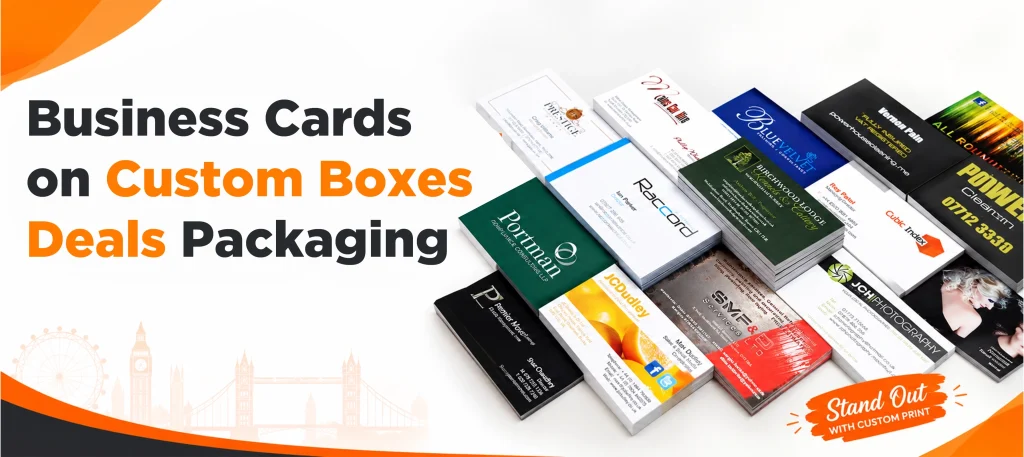
A folder business card format works directly with the sizing discussed above, built for a card that needs to travel or present well beyond a simple stack. Custom sleeves cover the everyday protection question once the cards themselves are printed and ready.
Frequently Asked Questions
What is the standard business card size?
3.5 by 2 inches in the US, which converts to 8.9 by 5.1 centimeters or 89 by 51 millimeters.
Is the European business card size the same as ISO CR80?
Not exactly. The European standard is 85 by 55 millimeters. The real ISO/IEC 7810 CR80 standard, used for credit and ID cards, is 85.60 by 53.98 millimeters, a genuinely different figure just outside the standard’s own tolerance.
What size is a mini business card?
MOO’s own MiniCard measures 1.1 by 2.75 inches, roughly half the height of a standard card. A card close to the standard’s own dimensions is not really a mini size.
What size is a business card in Japan?
91 by 55 millimeters, tied to meishi koukan, a formal business card exchange custom where card quality and presentation carry real weight.
How much bleed does a business card need?
About 3 millimeters, or an eighth of an inch, on every side, with important text and logos kept a further 3 to 5 millimeters inside the trim line.
How should printed business cards be protected before use?
A sleeve or protective packaging keeps a finished stack flat and free of bends or scuffs during storage or shipping.

Anthony Kim
Hello, I'm Anthony Kim, a seasoned packaging consultant and designer. With a professional journey spanning over four years, I've evolved from a budding designer to a recognized expert in the field. Currently holding the position of Packaging Consultant, I've honed my skills in creating not just visually stunning packaging but also solutions that align with strategic business goals.
View all articles →