Request Your Custom Quote
Tell us what you need. Our team normally replies within one business day.
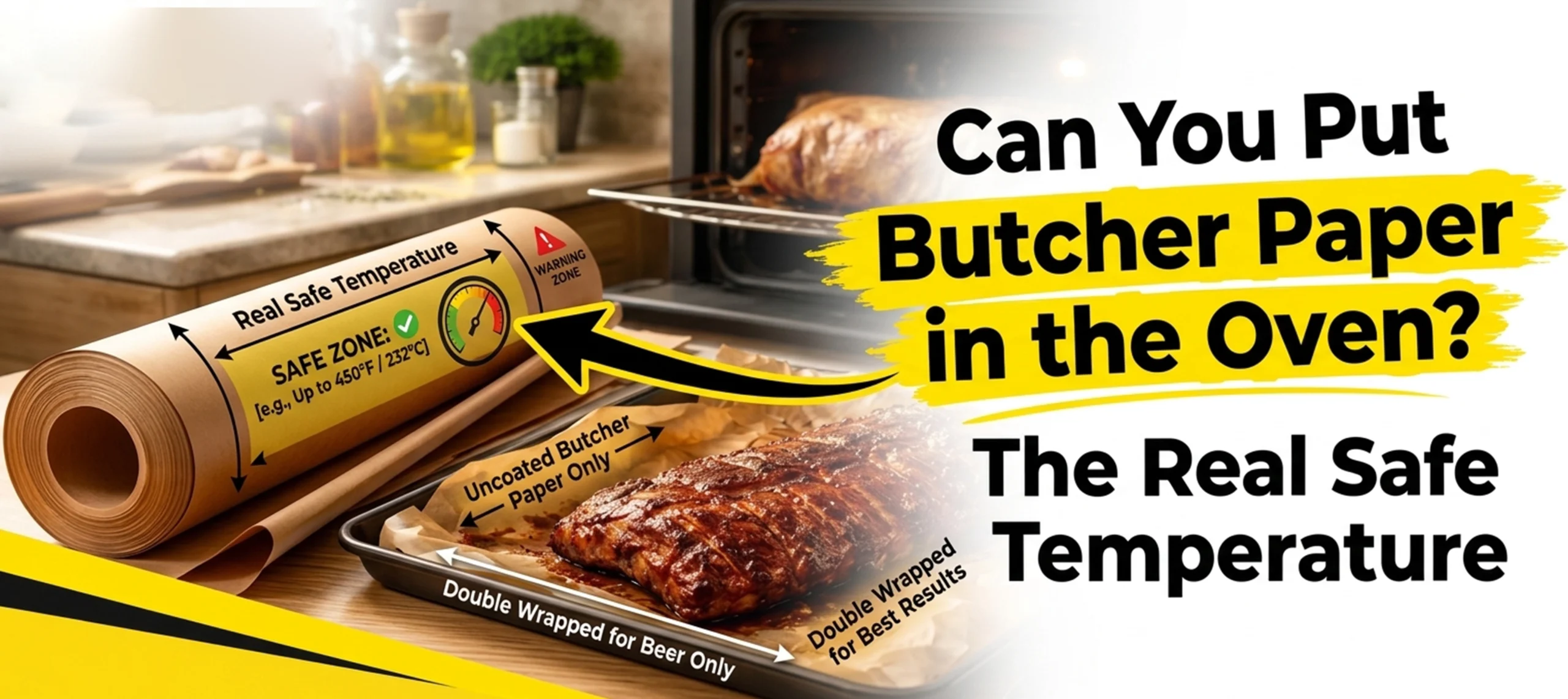
Can You Put Butcher Paper in the Oven? The Real Safe Temperature
 By
By Plain, uncoated butcher paper can go in a home oven. Wax coated or plastic coated butcher paper cannot. The coating melts. It can smoke well before the paper itself is anywhere near a risk. The harder question is the temperature ceiling. The number repeated across search results for that question is riskier than it looks. Here is a properly sourced answer instead of a repeated one.
It is the same kind of question as whether a cardboard pizza box can go in the oven: the material matters, the coating matters, and the dial setting only matters once those two are settled.
The Real Safe Temperature, Not a Repeated Round Number
Several pages researched for this piece state “up to 450°F for 3 to 4 hours” as if it were a settled fact. It is not. Treating it as one is the actual risk. There is no single authoritative ignition point for paper. The Physics Factbook’s entry on paper ignition and fire safety analysis built on it agree on one thing. The real number depends on the paper’s density, its moisture and how long the heat is applied. Likely ignition sits somewhere in roughly the 425°F to 480°F range under real world conditions. It is not one clean figure.
That puts “450°F for 3 to 4 hours” inside the ignition range itself, not below it. Hours unattended at that setting is a genuinely risky recommendation. The sensible answer is to leave a real margin: keep uncoated butcher paper at or below about 400°F, and check on it rather than walking away for hours. Treat 425°F as the point where ignition risk begins, not as a safe setting. The 400°F figure is not a measured limit. It is a margin chosen to sit clearly below the lowest point of the sourced range, which is the whole reason for having one.
Where “Fahrenheit 451” Actually Comes From
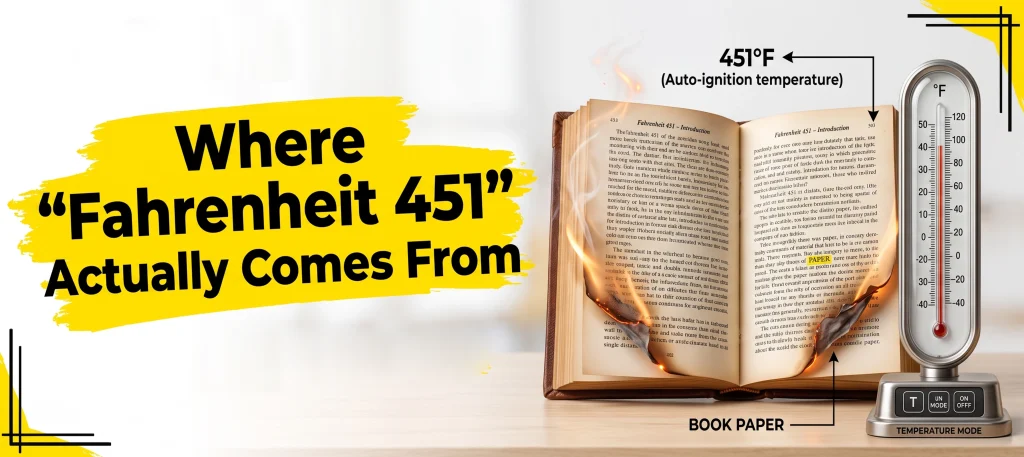
The famous number does not settle this either way. Ray Bradbury reportedly took the title from a fire official’s estimate of the temperature at which book paper catches fire. Whatever its exact origin, modern analysis treats any single figure as too precise for what is really a range. Paper is not guaranteed safe right up to 450°F. It does not reliably ignite exactly at 451°F either. Both framings overstate a precision the real science does not support.
Uncoated Versus Coated Butcher Paper
This distinction decides more than the temperature number does. Plain, uncoated butcher paper is sometimes called kraft paper or peach paper by pitmasters. It handles a conventional home oven at a moderate temperature. Wax coated or polyethylene coated butcher paper is a different product, the kind used to keep moisture out of a wrapped sandwich or deli order. The coating is not rated for oven heat. It can melt or smoke at temperatures well below any paper ignition concern. Checking which one is on hand before it goes near an oven is the actual safety step, not just the temperature dial.
Butcher Paper for Brisket and the Smoker
Most people asking this question are really asking about brisket. The Texas style wrap, sometimes called the Texas crutch, works like this. The brisket smokes unwrapped until the bark has set. Then it is wrapped tightly in uncoated pink or peach butcher paper and goes back on to finish. The wrap helps the meat push through the long stall, when the internal temperature stops climbing for hours as moisture evaporates from the surface.
Butcher paper is chosen over foil for a reason. Foil traps all the steam, which speeds the cook but softens the bark. Uncoated paper lets some moisture escape, so the crust holds up better while the meat still gets through the stall faster than it would unwrapped. That breathability is also why coated paper is the wrong choice here: a wax or plastic layer blocks the steam and cannot take the heat.
Low and slow smoking runs well below the range where paper ignition becomes a concern, so the paper itself is rarely the risk in a smoker. The risks are direct flame and hot spots. Keep the wrapped brisket on the grate, away from the firebox opening and any exposed flame, and move it to a rack or tray if the recipe finishes it in a kitchen oven.
Once the brisket has rested, slicing it straight onto the paper it was wrapped in is traditional in Texas barbecue joints. For service, the sliced meat usually moves to open paper food trays lined with a fresh sheet, which hold the sauce and juices in one place and keep the used wrap off the counter.
FSC Certification Is Not a Food Safety Standard
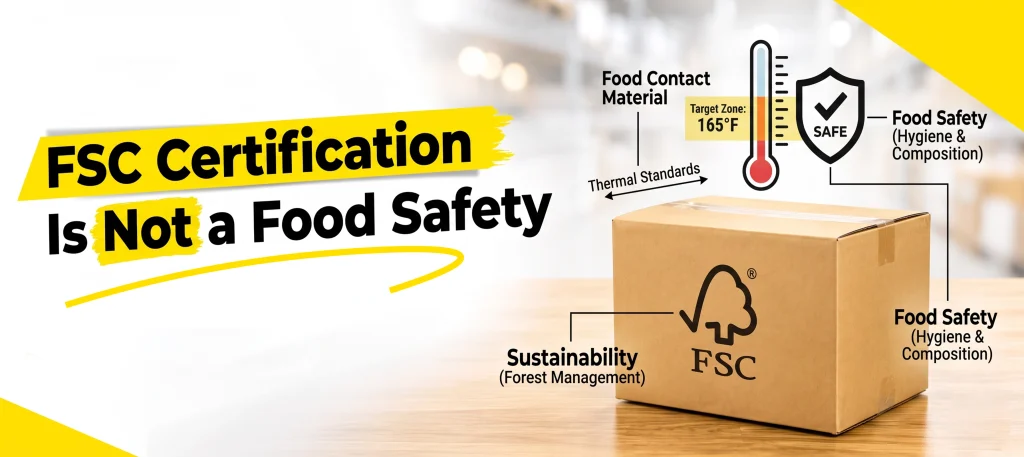
A packaging claim worth correcting directly: FSC certification does not mean a butcher paper is safe for oven heat. It is not a food safety credential of any kind. The Forest Stewardship Council certifies that wood fiber came from a responsibly managed forest. That is a sourcing and sustainability standard. It says nothing about heat tolerance or food contact safety. A butcher paper can be genuinely FSC certified, and that fact tells a reader nothing about whether it belongs in an oven. The two questions are unrelated. Treating one as an answer to the other is a real category error, not a simplification.
A Few Practical Tips
- Put wrapped food on a tray or rack, never directly against a heating element.
- Stay at or below about 400°F with uncoated paper, and keep the oven in view instead of leaving it for hours.
- If a recipe needs sustained high heat, use parchment paper. It is coated with silicone rather than wax and is rated for higher oven temperatures.
- Never put wax paper or plastic coated deli paper in the oven or smoker.
Choosing Paper Packaging for Hot Food
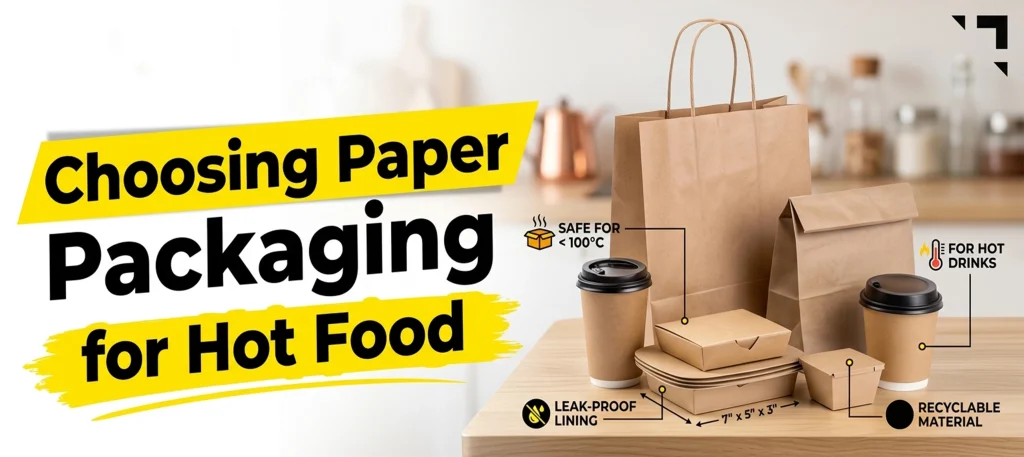
The same coated versus uncoated question comes up again when a restaurant, food truck or barbecue stand chooses paper packaging for serving. Here the job is different. Nothing is going into an oven. The paper has to hold hot, greasy food between the counter and the customer without soaking through too fast.
Plain uncoated board is fine for dry items. Anything with sauce, cheese or oil needs more thought. A coated face can improve grease resistance compared with an uncoated board, and grease resistant constructions are available depending on the specification. A burger sleeve for a sauced sandwich is a good example of where that choice shows up quickly, because the paper sits right against the food. An open tray for fries or sliced meat is another.
Choose the construction by the food, not by habit. The wettest, oiliest item on the menu sets the specification for the pack. If you are working out paper packaging for a menu like that, tell us what is going in it and how it will be served, and the construction will be confirmed with your quote.
Frequently Asked Questions
Can you put butcher paper in the oven?
Plain, uncoated butcher paper can go in a home oven. Wax coated or plastic coated butcher paper cannot, since the coating is not rated for oven heat.
What temperature is safe for butcher paper in the oven?
Stay at or below about 400°F and check on it rather than leaving it unattended for hours. Fire safety analysis places likely paper ignition somewhere in the 425°F to 480°F range, depending on density, moisture and exposure time. The 400°F ceiling is a margin kept clearly below the bottom of that range.
Can you use butcher paper to wrap brisket in a smoker?
Yes, if it is uncoated. The Texas style wrap goes on after the bark has set and helps the brisket through the stall. Smoking runs well below the ignition range, so the main risks are direct flame and hot spots, not the paper itself.
Is it true that paper burns at exactly 451°F?
No. Ray Bradbury reportedly took the figure from a fire official’s estimate, not from a precise modern measurement. The real ignition point is a range, not one fixed number.
Does FSC certification mean butcher paper is oven safe?
No. FSC certification confirms the wood fiber came from a responsibly managed forest. It is a sourcing and sustainability standard, unrelated to food contact safety or heat tolerance.
What is the difference between butcher paper and parchment paper for oven use?
Butcher paper, when uncoated, is a plain kraft paper. Parchment paper is coated with silicone specifically so it can handle sustained higher oven heat, which makes it the better choice for demanding recipes.
Can wax paper go in the oven?
No. Wax coated paper is not rated for oven heat, and the wax coating can melt or smoke at temperatures well below any concern about the paper itself.

Anthony Kim
Hello, I'm Anthony Kim, a seasoned packaging consultant and designer. With a professional journey spanning over four years, I've evolved from a budding designer to a recognized expert in the field. Currently holding the position of Packaging Consultant, I've honed my skills in creating not just visually stunning packaging but also solutions that align with strategic business goals.
View all articles →