
Request Your Custom Quote
Tell us what you need. Our team normally replies within one business day.
How to Ship Frozen Food: What the Dry Ice Rules Actually Say
 By
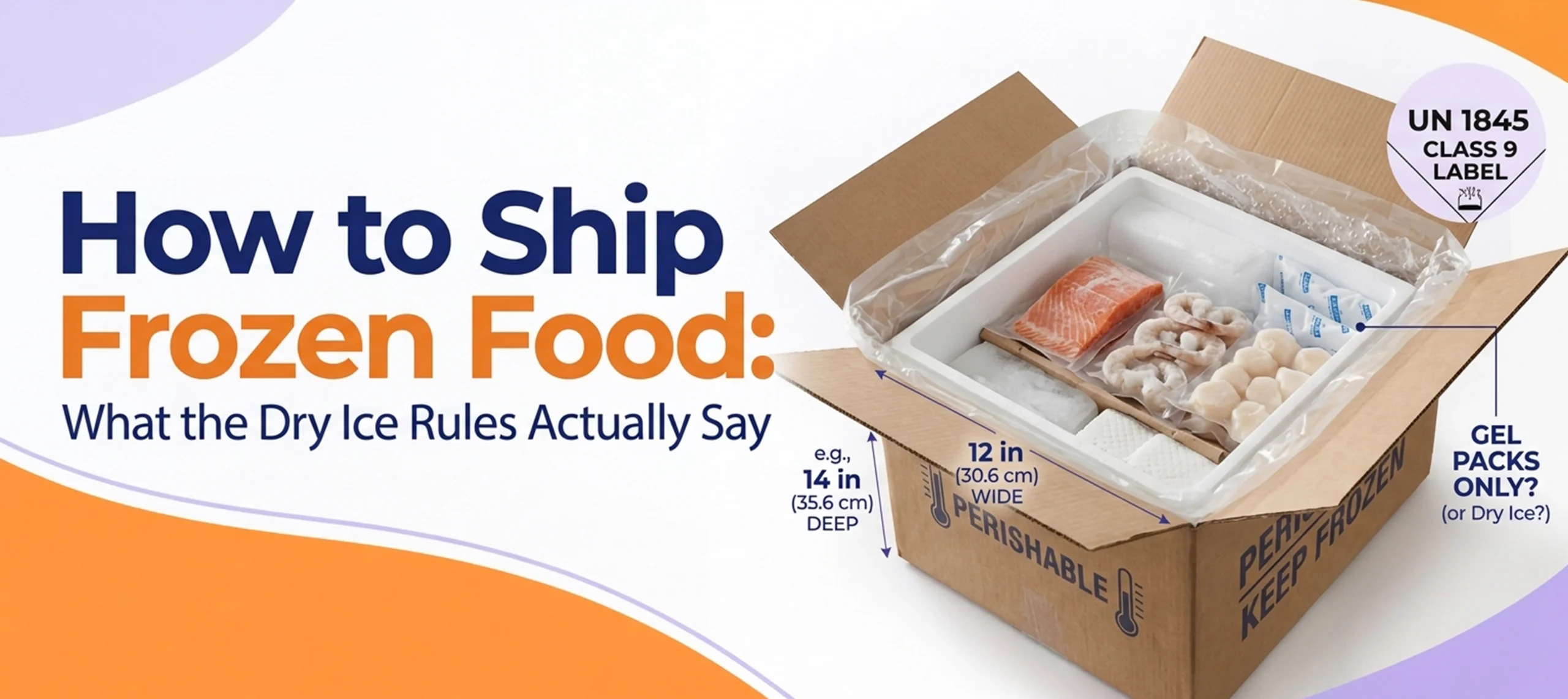
By Three things make a shipment work when you ship frozen food: enough insulation, the right coolant, and following the actual coolant rule. Two numbers repeated about that last part do not hold up once checked against the source. Here is the corrected version. One more piece holds it all together: an outer box sized around the whole assembly, the way meat gift boxes are built around a liner and coolant.
Why Frozen Food Needs Special Handling
Bacteria grow fastest between 40°F and 140°F. The USDA’s Food Safety and Inspection Service calls this range the “danger zone.” Food left in that range for more than two hours is a real risk. That is why a shipment needs enough coolant and insulation to stay under 40°F for the whole trip, not just when it leaves the building.
Insulation and Packing
Use an insulated foam container inside a sturdy corrugated outer box. Thicker walls hold the cold longer, and your carrier’s own perishable packaging guidance is the place to check for any minimum it expects. Line the foam with a watertight plastic liner in case anything thaws. Pack the coolant against all sides of the product, not just on top.
The outer box matters here too. Sized around the insulated liner and coolant rather than just the food, it keeps the whole assembly from shifting during handling. Fill any gaps inside the foam as well. Corrugated packaging inserts hold the product in its own position, so a block of dry ice cannot slide into it or open an air pocket as the coolant shrinks.
Dry Ice Versus Gel Packs, and the Real Numbers
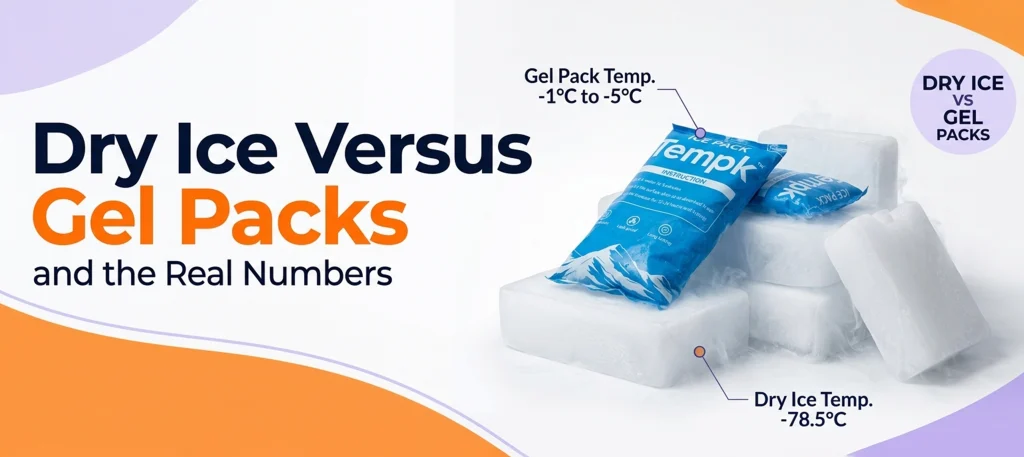
Dry ice sublimates at negative 109°F. That is cold enough to keep food genuinely frozen through a multi day trip. Gel packs work differently. Real cold chain shipping data puts a properly frozen gel pack at 32°F to 40°F for 24 to 72 hours, depending on gel quantity and insulation. That is a refrigeration range, not a freezing one. It tops out well below 60°F. A gel pack keeps chocolate or baked goods cool and intact. It does not keep raw meat or seafood frozen the way dry ice does.
The Dry Ice Rule People Get Wrong
The federal rule on dry ice, 49 CFR 173.217, sets a real threshold at 5.5 lbs. But it is not the one most guides describe. Dry ice used as a refrigerant, at any quantity, must be marked with the words “dry ice,” the name of the contents being cooled, and the net weight. What actually changes at 5.5 lbs is whether the package needs the fuller hazmat treatment: a shipping paper and, in most carrier practice, a Class 9 hazard label. Below that line, a correctly marked package skips those extra steps. Above it, the full requirements apply. “Over 5.5 lbs must be labeled” skips the part that matters for anyone shipping less.
USPS Has Its Own, Tighter Number
USPS Publication 52 caps dry ice at 5 pounds per mailpiece for domestic air transportation, not 5.5. Nearly all USPS mail moves by air. That half pound difference is the number that actually governs a USPS shipment, even though most general guides quote the broader 5.5 lb DOT figure as if it applied everywhere.
Timing the Shipment
Ship early in the week. A package that ships Thursday or Friday can sit in a carrier facility over the weekend with no transit happening. That is coolant time wasted before the trip even starts. Pay for overnight or two day service when the contents must arrive frozen rather than just cold.
Packaging a Frozen Food Business Can Order
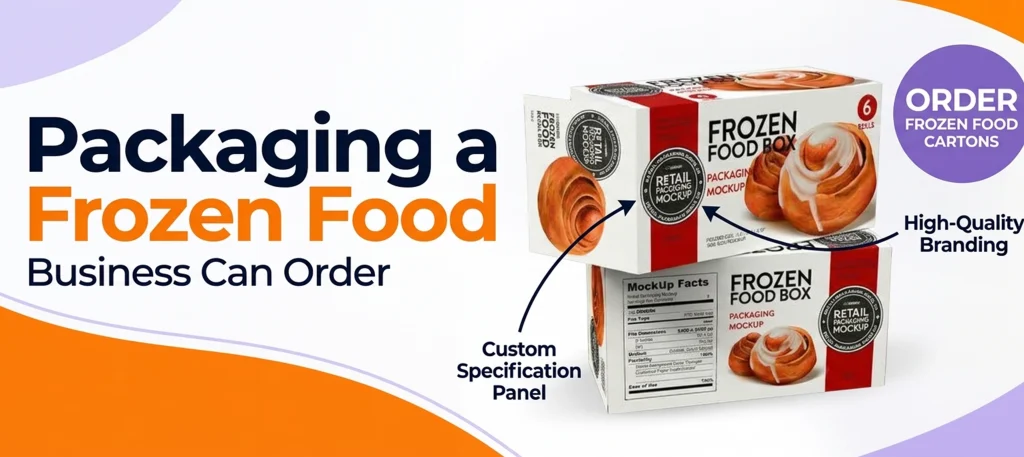
Coolant and the foam shipper usually come from a cold chain supplier. Custom Boxes Deals does not supply dry ice, gel packs or foam shippers. What we make is the packaging around them and inside them.
- The outer box. A corrugated box sized to the foam shipper, printed with your brand, so the insulated assembly does not rattle around in a generic carton.
- The retail pack inside. If the product is sold frozen in its own box, such as custom frozen pizza boxes, that pack travels inside the shipper. Freezer suitable options are available where the selected material supports it.
- Labels that cope with condensation. Thawing ice and cold packs leave moisture on every surface. Food labels can be printed on film based stock for packaging exposed to moisture or refrigeration. A branded label is not a substitute for the dry ice marking the rule requires, which still has to be there.
Send us the size of your foam shipper, what goes inside it and roughly how many orders you ship a month. We normally reply with a quote within 1 business day, and design support is free. Our minimum order is 100 boxes.
Frequently Asked Questions
Does dry ice under 5.5 lbs need any label at all?
It needs marking, not the full hazmat label. Dry ice used as a refrigerant must be marked “dry ice,” the contents it is cooling, and its net weight, regardless of quantity. The fuller hazmat requirements, including a shipping paper and typically a Class 9 label, apply once the package exceeds 5.5 lbs.
What temperature do gel packs actually maintain?
Real cold chain data puts a properly frozen gel pack at 32°F to 40°F for 24 to 72 hours, not up to 60°F. That range keeps refrigerated goods cold; it does not keep food frozen the way dry ice does.
Does USPS allow the same amount of dry ice as other carriers?
No. USPS caps dry ice at 5 pounds per mailpiece for domestic air transportation, a tighter number than the general 5.5 lb DOT exception most other guides quote.
Should I use dry ice or a gel pack?
Dry ice for anything that needs to stay genuinely frozen, like raw meat or seafood, over a multi day transit. Gel packs for anything that just needs to stay cool and intact, like baked goods or chocolate.
Why does shipping timing matter for frozen food?
A package sitting in a carrier facility over a weekend loses coolant time with no transit happening. Shipping early in the week and paying for overnight or two day service when the contents must arrive frozen avoids that dead time.

Anthony Kim
Hello, I'm Anthony Kim, a seasoned packaging consultant and designer. With a professional journey spanning over four years, I've evolved from a budding designer to a recognized expert in the field. Currently holding the position of Packaging Consultant, I've honed my skills in creating not just visually stunning packaging but also solutions that align with strategic business goals.
View all articles →