Request Your Custom Quote
Tell us what you need. Our team normally replies within one business day.
What Is Card Stock? Weights, Sizes and Box Uses
 By
By Card stock is paper heavy enough to hold its own shape. It sits between ordinary printing paper and thick paperboard, and it usually runs from about 65 lb cover up to 110 lb cover, which is roughly 176 to 300 gsm. It is stiff enough to stand up on a shelf, thin enough to fold cleanly once it is creased, and smooth enough to print on properly.
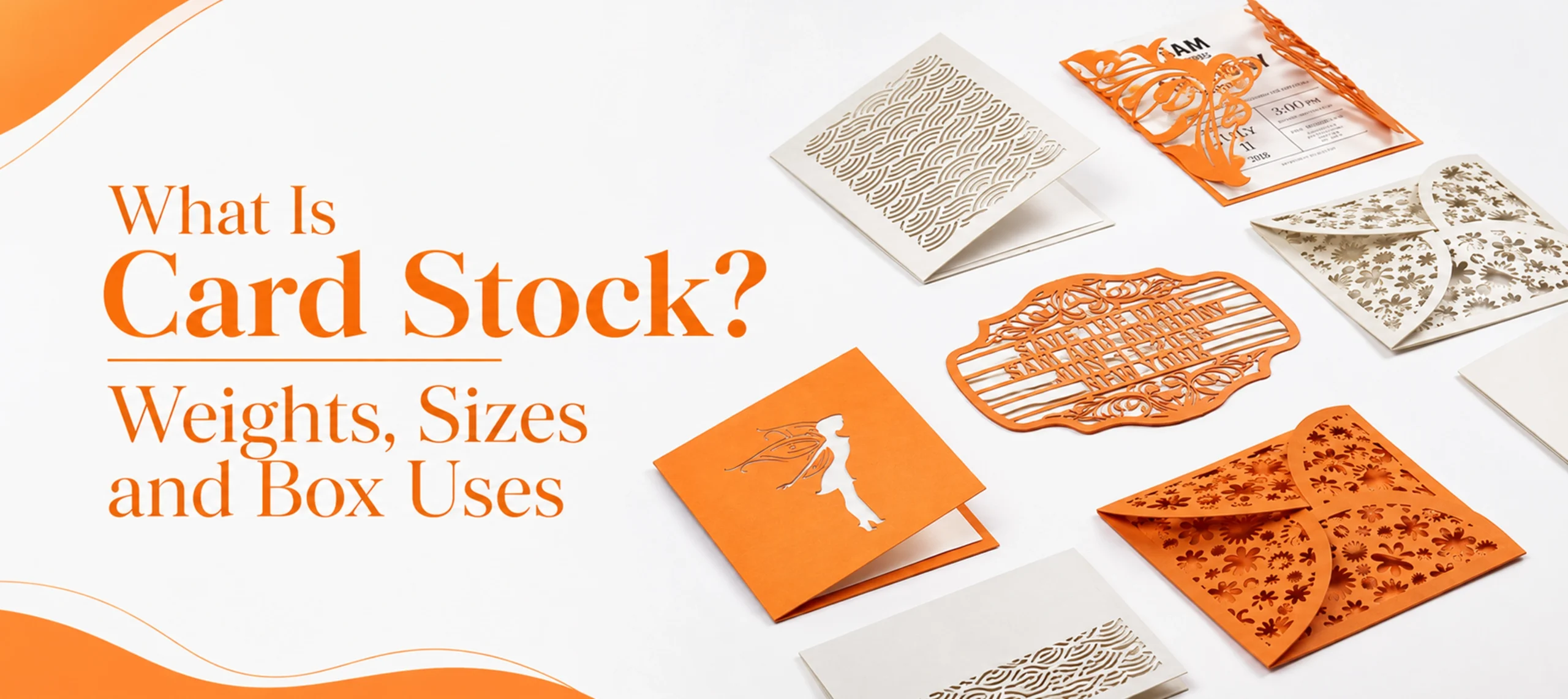
You already know it by sight. Business cards, greeting cards, invitations, playing cards, and a great many light retail cartons like custom sleeves are all card stock. The confusing part is not what it is. It is how it gets measured, because the American system uses the same number to mean two very different things.
The 80 lb Problem
Here is the single most common mistake in ordering card stock.
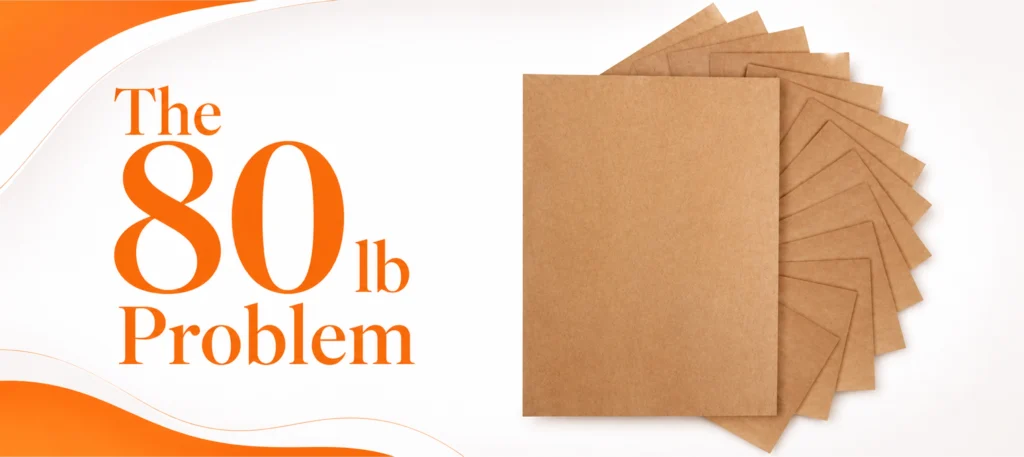
80 lb text and 80 lb cover are not the same paper, and they are not close. According to the University of Wisconsin Parkside’s paper reference, 80# text paper weighs 104 g/m2 while 80# cover stock weighs 218 g/m2. The cover is more than twice as heavy. One is a flyer. The other is a business card.
The reason is buried in how the pound number is calculated. Both are the weight of 500 sheets, but the two categories use different sheet sizes to weigh. That same source explains it directly: text stock is weighed as 500 sheets measuring 25 by 38 inches, while cover stock is weighed as 500 sheets measuring 20 by 26 inches. Different starting sheet, same pound label, completely different paper in your hands.
The School of the Art Institute of Chicago puts the practical warning plainly in its own paper guide: 80LB is listed in our text category and our cover category, but they are completely different paper. It lists 80 lb text as the stock for perfect bound books, posters and zines, and 80 lb cover for business cards.
So when you specify card stock, always say cover. “80 lb” on its own is not a specification. “80 lb cover” is.
Pounds, GSM and Points: Three Ways to Say the Same Thing
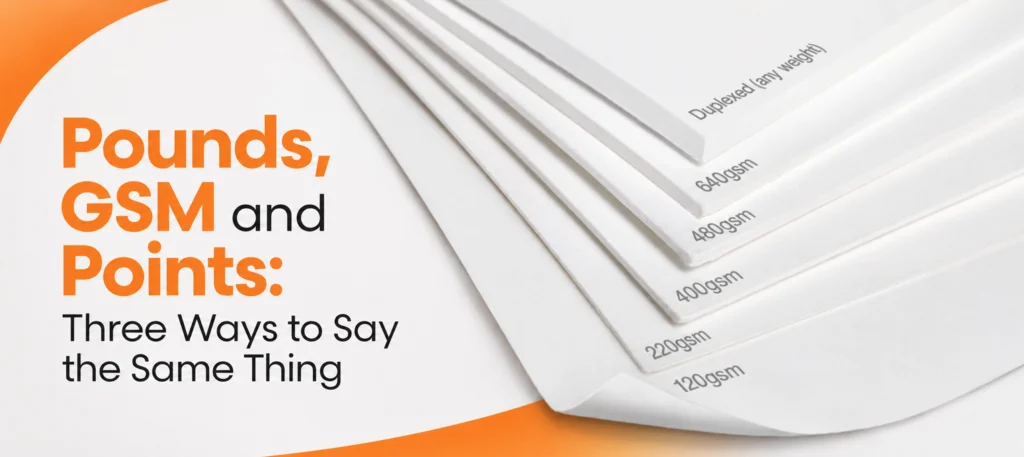
Three measurement systems are in use, and suppliers mix them freely.
Pounds, written lb or #. The US system. It describes weight, not thickness, and only means something when you also say which category it belongs to. Cover is the one that matters for card stock.
GSM, grams per square meter. The metric system, and the more honest of the two, because one square meter is one square meter no matter what category the paper belongs to. A gsm figure never needs a second word to make sense of it.
Points, written pt. This measures actual thickness, where one point is one thousandth of an inch. An 18 pt board is 0.018 inches thick.
Weight and thickness are related but not the same. Two sheets at the same gsm can differ in thickness depending on how tightly the fibers are packed, which is why a bulky uncoated sheet can feel thicker than a coated one of identical weight. If thickness is what you actually care about, and for packaging it usually is, ask for the point figure rather than the pound figure.
A rough orientation, not a conversion table: light card stock sits around 65 lb cover or 176 gsm, mid weight around 80 lb cover or 218 gsm, and heavy card stock around 100 to 110 lb cover, roughly 270 to 300 gsm.
Is Card Stock Strong Enough for a Box?
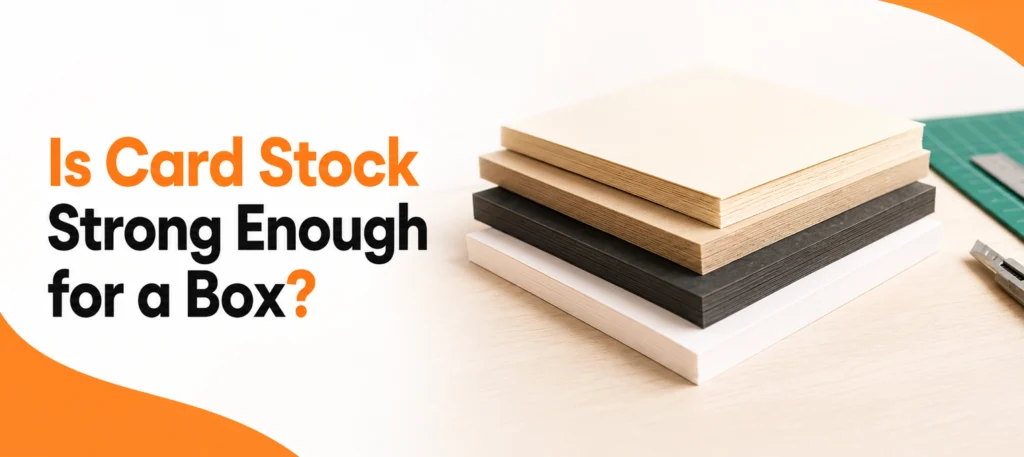
If you are packaging a product rather than printing an invitation, this is the question that decides your material.
The honest answer is that it depends on what the box has to survive, and there is a fairly clear line.
Card stock works for light retail packaging that is handled gently and shipped inside something else. Sleeves, small folding cartons, custom pillow boxes, and countertop pieces such as custom display boxes are all comfortable in card stock. Anything that holds a light product and sits on a shelf is a good fit.
Card stock starts to struggle once weight or stacking enters the picture. A box that has to carry real weight will bow in the panels. A box that gets stacked will crush. A box shipped on its own, without an outer carton, will arrive with soft corners. If you are filling something heavy, the answer is a thicker paperboard rather than a heavier card stock, which is the territory of a printed carton like custom cereal boxes.
Card stock is the wrong material for anything structural or premium in feel. A box that has to look and feel substantial when the customer picks it up needs rigid board, which is a different construction entirely and is covered in our guide to what rigid stock is. Heavier card stock does not become rigid board by adding weight. They are built differently.
A useful test before you commit: hold a sample of the stock at one corner and see how far it droops under its own weight. If it sags noticeably as a flat sheet, it will sag as a box panel too.
The Main Types of Card Stock
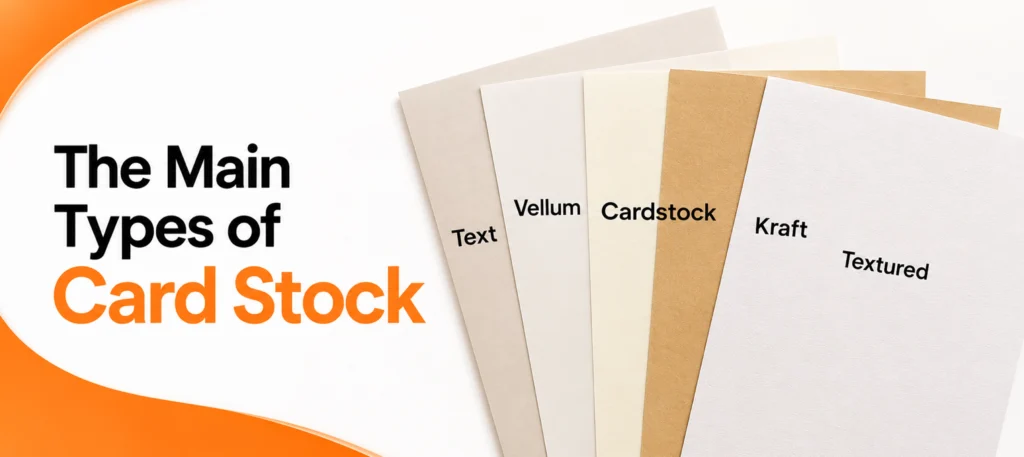
Card stock is sold in several surface types, and the surface matters more than most buyers expect, because it decides how your printing lands.
Coated card stock has a smooth sealed face. Ink sits on top of it rather than soaking in, so photographs stay sharp and colors stay bright. It comes gloss or matte, and it is the default for retail packaging.
Uncoated card stock is left open, so it absorbs ink. Colors come out softer and a little darker, and fine detail spreads slightly. It feels warmer in the hand and it takes writing, which coated stock resists.
Kraft card stock is unbleached and brown all the way through. Anything printed on it sits over a brown base, so light colors shift warm and there is no white unless white is printed first. Brands reach for it when they want a natural look.
Textured card stock carries a pressed pattern such as linen or felt. It reads as premium and it is common on gift and apparel packaging, but the texture breaks up fine detail, so keep small type off it.
Metallic and pearlescent stocks have a shimmer built into the sheet. They look striking and they are unpredictable to print on, because the sheen sits under your ink and shifts the color you get.
If color accuracy is the priority, choose coated. If feel is the priority, choose textured or uncoated and accept softer print.
Printing and Finishing on Card Stock
Card stock takes ink well, which is most of why it exists.
A coated card stock gives the sharpest result, because the coating holds ink on the surface instead of letting it soak in. An uncoated sheet absorbs more, so colors look softer and slightly darker, and fine detail spreads a little. Neither is better. A coated sheet suits photography and precise brand color, an uncoated sheet suits a natural or tactile look.
Finishes sit on top of the printing and change how the whole thing reads. Matte lamination softens color and resists fingerprints. Gloss deepens it. Foil and embossing both need enough thickness underneath to work against, so they suit the heavier end of the range. A spot UV finish picks out chosen areas with shine while the rest stays flat.
One practical point that catches people out: card stock has to be scored before it will fold. Bending it without a crease line will crack the coating along the fold and leave a white line through your artwork. That crease is part of the structural template, which is why the dieline matters as much as the artwork does.
Card Stock Against the Materials Either Side of It
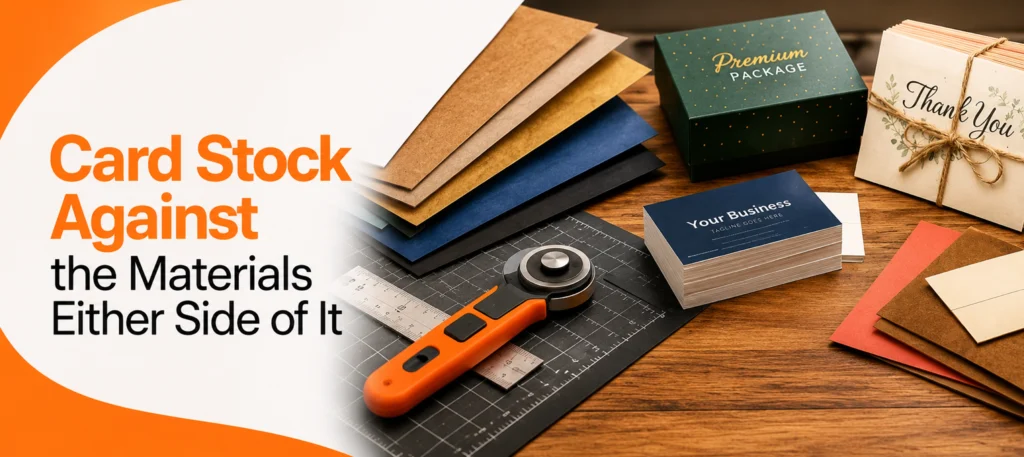
It helps to place card stock on a scale rather than describe it alone.
Below it sits ordinary text weight paper. Flexible, folds without scoring, no structure at all.
Card stock itself holds a shape, folds cleanly when scored, and prints well.
Above it sits heavier paperboard, the folding carton range, which is what most printed retail boxes are made from once they need to carry something.
Above that sits rigid board, which does not fold at all. It is cut, wrapped and assembled, and it is what gives custom rigid boxes their solidity.
Choosing between them is mostly a question of load and feel rather than looks, since all four can be printed to the same standard. If you are unsure which box style your product needs, the structure usually decides the material rather than the other way round.
Choosing Card Stock for Your Own Project
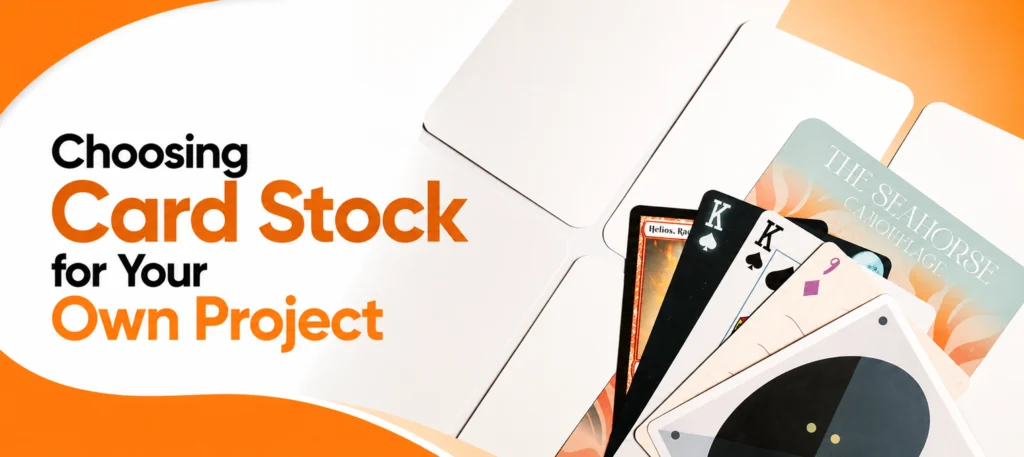
Three questions settle most of it.
What is going inside, and how heavy is it?
Weight rules out card stock faster than anything else.
Will the box ship on its own or inside an outer carton?
Shipping alone pushes you heavier.
Does it need to feel premium in the hand?
If yes, the answer is usually rigid board rather than more card stock.
At Custom Boxes Deals we manufacture in house rather than through third parties, and our materials include kraft, corrugated, rigid board, SBS, cardstock, food grade and grease resistant board, mylar and recycled stocks. We print CMYK, Pantone or PMS, or leave stock unprinted. Design support is free with no design fees, you get a free 3D mockup before production approval, and a real product video of the packaging before bulk production begins. Our minimum order is 100 units per design.
Frequently Asked Questions

What is card stock?
Paper heavy enough to hold its own shape, usually about 65 lb to 110 lb cover, or roughly 176 to 300 gsm. It is thicker than printing paper and thinner than paperboard, and it needs scoring before it will fold cleanly.
What is the difference between 80 lb text and 80 lb cover?
They are different papers despite the same number. 80 lb text is about 104 gsm and 80 lb cover is about 218 gsm, more than twice as heavy. The pound figure comes from weighing 500 sheets, and the two categories use different sheet sizes, so the numbers are not comparable. Always say cover.
Is cardstock the same as cardboard?
No. Card stock is a single heavy sheet of paper. Cardboard usually means corrugated board, which has a fluted layer sandwiched between two liners. Card stock is much thinner and has no flutes.
What weight card stock should I use for a box?
For a light retail box, the heavier end of card stock, around 100 lb cover. For anything carrying real weight or shipping on its own, move up to a folding carton board instead. The fill weight decides this, not the look.
Should I ask for lb, gsm or pt?
Ask for points if you care about thickness, which for packaging you usually do. GSM is the least ambiguous weight measure. Pounds are fine as long as you also say cover.
Can card stock be used for shipping boxes?
Not on its own. It will arrive with crushed corners and soft panels. Card stock packaging is normally shipped inside a corrugated outer box.
Why does card stock crack when I fold it?
Because it was folded without being scored first. A crease line has to be pressed into the sheet before folding, or the coating splits along the fold and shows a white line.

Anthony Kim
Hello, I'm Anthony Kim, a seasoned packaging consultant and designer. With a professional journey spanning over four years, I've evolved from a budding designer to a recognized expert in the field. Currently holding the position of Packaging Consultant, I've honed my skills in creating not just visually stunning packaging but also solutions that align with strategic business goals.
View all articles →